How the fiduciary rule is affecting 401(k) rollovers
The advice environment for participant rollover choices is muddled as plan providers struggle to gear up for the DOL’s rule.


Follow Us
© 2026 Arizent. All rights reserved.

The advice environment for participant rollover choices is muddled as plan providers struggle to gear up for the DOL’s rule.
As the fiduciary rule creates challenges to old ways of growing retirement assets, it’s time to consider another source of growth: portability solutions.

As the fiduciary rule creates challenges to old ways of growing retirement assets, it’s time to consider another source of growth: portability solutions.
Retirement plan fiduciaries must seek continuous financial education to fulfil their duties, says adviser John Ludwig.

Just as a pilot is required to build flight hours and perform daily inspections, so too must plan fiduciaries seek continuous financial education, says columnist John Ludwig.
Despite recent lawsuits against the Department of Labor on the matter, the regulations will go into effect as planned, predicts adviser Robert Lawton.

Despite a recently launched lawsuit against the DOL, the rules will go into effect as planned, says adviser Robert Lawton.
The U.S. Chamber of Commerce, SIFMA, FSI and other groups are asking a Texas court to vacate the Labor Department's new regulations less than a year before the rule goes into effect.


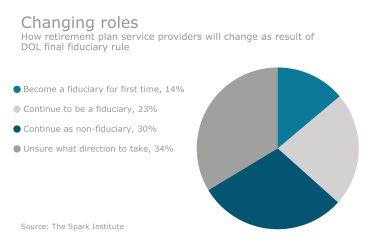
New regulation leaves about a third of retirement plan service providers unclear of their professional status, finds a new industry survey.

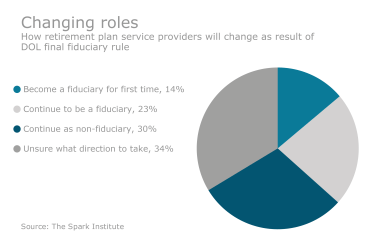
New regulations herald widespread changes in professional roles and business models for retirement planners and wealth managers.
A closer reading of it sends a clear signal to plan sponsors that they should aim to keep participants invested in a qualified defined contribution plan throughout their working lives.
A closer reading of it sends a clear, if unstated, signal to plan sponsors that they should aim to keep participants invested in a qualified defined contribution plan throughout their working lives, according to Retirement Clearinghouse’s Spencer Williams.
As fiduciary awareness grows, CITs, which often have lower fees than mutual funds, are poised for growth.

As defined in the new rule, investment advice includes recommendations to an employee benefit plan, plan fiduciary, participant or beneficiary, or an IRA, HSA, or education savings account owner.

As fiduciary awareness grows, collective investment trusts, which often have lower fees than mutual funds, are poised for growth.

As defined in the new rule, investment advice includes providing investment or investment management recommendations to an employee benefit plan, plan fiduciary, participant or beneficiary, or an IRA, health savings account, or education savings account owner.