No salary ranges could mean no applicants
A new report from workplace insights platform Monster revealed that employees' expectations have shifted and leaders will need to act soon.


Follow Us
© 2026 Arizent. All rights reserved.

A new report from workplace insights platform Monster revealed that employees' expectations have shifted and leaders will need to act soon.
Employer-provided home-saving accounts and educational resources can help workers achieve an increasingly elusive milestone in the current affordability crisis.


As salary budgets aren't expected to grow in 2027, employers are looking for new ways to attract and retain workers through smarter compensation and workforce strategies.


Weakening a managerial role can lead to lower engagement, higher employee turnover, and reduced organizational effectiveness.

Benefit leaders will still need to play a significant role in keeping early tech jobs attractive and accessible to young professionals.

Standing in the way of employees' demands and stalling the wider adoption of popular hybrid and remote work models are tradition and mistrust.

Peer relationships and modern training methods help young workers develop the skills and confidence that keep them safe and eager to stay in skilled trade occupations.


As companies incorporate more AI technology into daily workflow, they must also continue to invest in their employees' development.

Financial services company Manulife launched its Global Impact Week in an effort to build a long-term workforce.

A new survey reveals how HR and benefit leaders can tailor recruiting and retention efforts to the youngest generation.

Organizations' leave policies often don't take women's caregiving and child care responsibilities into account.

Young people are already facing a challenging labor market and tech innovation is only making it worse.

The series of application questions have potential to discourage or exclude qualified candidates.

Build a scalable nationwide hiring process for remote roles with strategies for compliance, consistency, and attracting top talent across multiple states.

Employers increasingly view benefits as an investment in engagement, productivity and retention, and are reassessing plans accordingly.
With AI resumes everywhere, more employers are leaning on work trials to watch how candidates actually work before making hiring decisions.

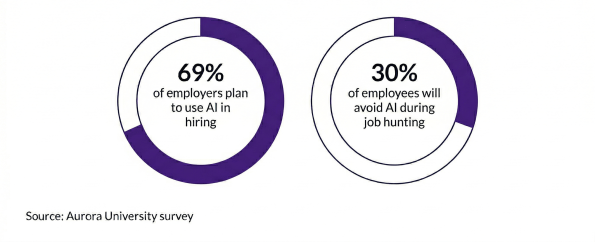
The founder of voice-AI interview platform Ezra explains why human-like communication tools actually increase an applicant's chance of getting hired.
A majority of graduates are willing to accept lower salaries for job security as economic uncertainty and AI concerns shape early career decisions.

Two-way communication with voice-AI platform Ezra allows employers to share valuable information about their company, and acquire insight into candidate benefit needs as well.

These requirements may not be present on job postings, but research shows they are still favored in the hiring process.