Exclusive research: How to help parents stay present and productive at work
Working parents need supportive resources that help them balance their job and family responsibilities.

Follow Us
© 2026 Arizent. All rights reserved.

Working parents need supportive resources that help them balance their job and family responsibilities.
Pharmacy cost management is one of the toughest challenges employers will face in 2026, according to new data from Employee Benefit News.


Data and feedback from working caregivers empowers benefit leaders to provide better support.
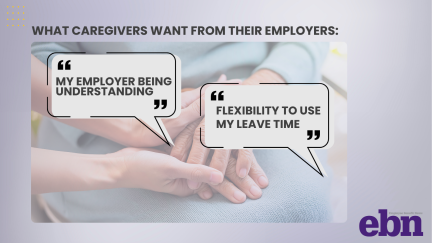
New research explores the state of caregiving among employees, highlighting their biggest concerns and points to how employers can help. Read EBN's latest editorial report to learn more.

Understanding who employees trust can help employers target their benefits offerings.

Healthcare costs are burdening employers and employees alike. What can be done to manage price increases and improve employee health outcomes?


Meaningful progress on DEI initiatives has a real effect on the workforce. We examine the dynamics that drive this conclusion and what it means for companies.

Today's employees expect their benefits to address an increasing number of challenges. What does that mean for employers? They must rethink what they offer as well as how they communicate about it.

Reducing financial stress can drive employee engagement and productivity.

The caregiver crisis is challenging workers' ability to manage stress and productivity across their personal and professional lives. Employers can help.

While employee and employer perceptions of healthcare benefits are on the whole positive, some needs continue to be unmet and costs keep rising.

Exclusive Arizent research found that more than 95% of employees think they have something to learn from people who are different from them. But only 66% think that diverse companies make better decisions. We explore the disconnect.


Many employers suspect that caregivers need more support from the workplace, but most companies are still hesitant to commit to expanding their offerings.

Until employers rethink their policies and benefits, the challenges of the Great Resignation on businesses and employee well-being will persist.

Despite BLM, #MeToo and other movements for equality and justice, employers don't understand enough about the impact of neglecting DEI on company health.


Employers and employees don't agree on what a return-to-normal looks like in a post-COVID world. But to move forward with success, they must see eye-to-eye.
COVID-19 economic pressures have pushed more adults living paycheck-to-paycheck to want their income early, calling into question the value of decades-old payroll practices — and highlighting disparities along economic, racial and gender lines.

Despite decades of corporate talk and experimentation, digitization strategies remain largely piecemeal, unfocused, and ineffective. Is change finally coming?

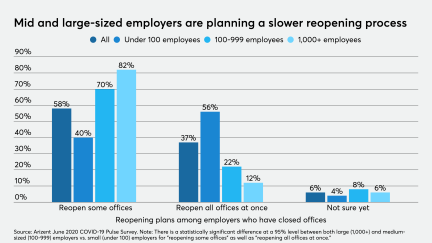
Our third monthly survey found almost six out of 10 employers report that their plans for the return to work are stymied by uncertainty — specifically, a lack of clarity on the right timing, and persistent questions about how to provide a safe environment for their employees.
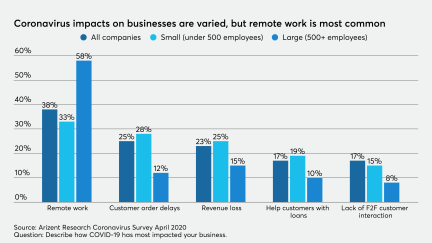
Our second monthly survey found a smooth transition to remote work and digital customer access channels — but technology issues still arose. The pandemic has highlighted the importance of having a strong digital presence across all retail sectors, including financial services.