4 critical questions to ask during a market downturn
Clients can often retire smoothly even during a downturn if they diversify and rebalance their portfolios properly, as well as pay off debts and maximize their Social Security benefits.


Follow Us
© 2026 Arizent. All rights reserved.

Clients can often retire smoothly even during a downturn if they diversify and rebalance their portfolios properly, as well as pay off debts and maximize their Social Security benefits.
Millennials should start setting money aside early and consistently, but without depriving themselves.

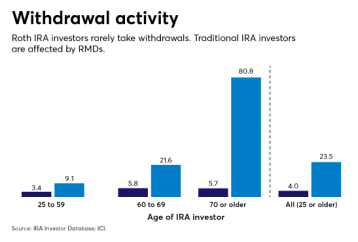
Failing to take the mandatory distribution on time may push retirees to a higher tax bracket.


The holidays are fast approaching, which means it is time to start doing some year-end tax planning.

Social Security benefits will increase 2.8% next year, but some retirees will not see a rise in their retirement paycheck because of Medicare's hold-harmless provision.

Retirees could end up paying taxes on the majority of their Social Security benefits when certain conditions are met.

Scammers can learn quite a bit of information from social media so don’t think that just because they know a couple pieces of information about you and your family that they are legit.

Employee education is key when it comes to Roth contributions. Here’s what employers and benefit advisers need to know.

Employee education is key when it comes to Roth contributions. Here’s what employers and benefit advisers need to know.
Workers should consider contributing enough to their 401(k) plans to get their employer's match before making contributions to an IRA.

Market valuations may not be a reliable tool to use to make investing decisions so it can be prudent for savers to assume low investment returns, says an expert.

Conventional wisdom says to wait as long as possible to claim retirement benefits, but there are exceptions to the rule.

Trying to time the market is a “fool’s game,” but preparing for a possible downturn as retirement approaches can be a smart move.

High-net-worth clients can bump into income limits when it comes to making Roth IRA contributions, but they can find other tax-saving strategies to save for retirement.

Waiting until your 70th birthday is the much-discussed strategy to maximize benefits. But in some circumstances, you won't miss out if you file earlier.

The guideline used a specific set of assumptions: a retirement lasting 30 years with savings in a tax-deferred account and nothing left for heirs. Change just one and your “safe” withdrawal rate may differ.
Many single baby boomers opt to stay put in retirement because they have no children who would advise them to move to an assisted living or continuous care community.

Seniors are likely to be in a lower tax bracket in the few years after retirement, creating a "sweet spot" for them to convert some of their traditional 401(k) or traditional IRA assets into a Roth account.

Although volatile markets mean opportunities for some investors, most clients will be better off ignoring market corrections if they are investing for the long term.

82% of surviving spouses could have collected a higher benefit if they did things differently with their filing, according to a new report.
