How employees feel about retirement amid inflation and recession concerns
The majority of employees feel confident about their retirement savings, though are fearful of cuts to Social Security.


Follow Us
© 2026 Arizent. All rights reserved.

The majority of employees feel confident about their retirement savings, though are fearful of cuts to Social Security.
As inflation cools, Social Security's annual cost-of-living adjustment is projected to decline in 2026. Seniors say the benefit bump won't be enough.


The sharp reversal of Biden-era policy that capped overpayment recovery at 10% of a person's monthly benefit is expected to recover $7 billion over 10 years.

In a panel discussion, three financial advisers explained why the products are often misunderstood and how to assist clients in evaluating their policies.


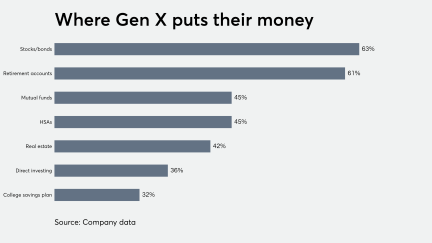
While retirement readiness among Americans has improved in general, Gen Xers are struggling with housing, college and medical costs, a survey finds.

“By and large, many simply have not yet saved enough to retire comfortably.”
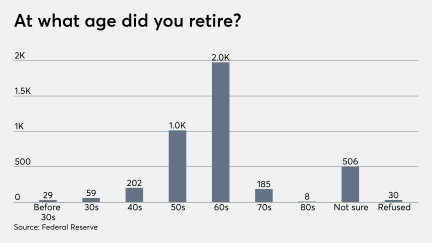
Financial planners should at least consider modeling early retirement to prepare clients for the possibility of uncertainty, says Morningstar.

Clients should think of the years as empty buckets and keep the amount of income into each bucket level per year.
Chances are high that one or both parents who have left the workforce ahead of their full retirement age are still working out of necessity.

Workers need to have saved a certain amount at a certain age to stay on track for securing their retirement.

Age discrimination, unpredictable life shocks and involuntary retirement casts serious doubt on the “work longer” thesis.

These employees will need bigger savings than other age groups to fund a longer retirement horizon, according to a study.
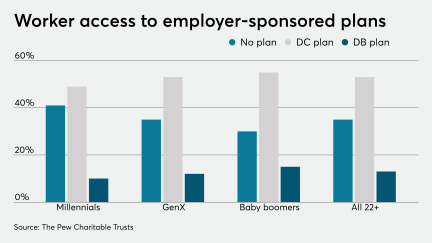
Before saving for retirement, young employees are advised to pay down high-interest debts and build an emergency fund, an expert says.


Employees have to increase their risk exposure to ensure they don’t outlive their savings.


The property should allow them to live close to their loved ones and fit their financial plan, according to a CFP.

Careful planning can help prevent workers from shrinking their benefits based on misperceptions.

Dual-income couples benefit less from Social Security.

As much as 46% believe Medicare will cover the costs of long-term care.


Asset reserves are projected to become depleted in 2035, a year later than previously estimated.

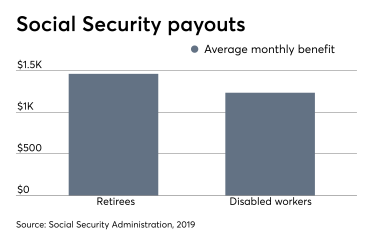
A proposal to increase payroll taxes is facing opposition from some lawmakers who believe millennial workers cannot afford to bear the brunt of higher payroll taxes.