Here’s how the timing of Social Security could ruin employees’ finances
If retirees intend to rely heavily on Social Security for income, they should consider adjusting the timing of their bills to the date that they will receive their benefits.


Follow Us
© 2026 Arizent. All rights reserved.

If retirees intend to rely heavily on Social Security for income, they should consider adjusting the timing of their bills to the date that they will receive their benefits.
Mutual fund costs have fallen to 48 basis points in 2016 from 77 basis points in 2000 for plan participants, according to data from Investment Company Institute.

Rents have increased an average of 3% annually over the 14-year time period of the study, while incomes have declined .1% annually.

Whether the husband takes reduced benefits has no impact on the spousal rate, although it could effect potential widow's benefits, according to a Social Security expert.

Retirees should delegate the management of their finances to their children before they reach advance years and their health starts to decline.


Medicare premiums will increase for high-income retirees because of the change in the income brackets that will serve as basis for determining these premiums for their Part B and Part D coverage.

Workers with a high-deductible health plan will be better off setting up a health savings account, which offers tax benefits for savings earmarked for future medical expenses.

Clients should determine the benefits they would receive if they file at age 62, at full retirement age, and after their full retirement age.

Inflated client expectations mingled with fears of congressional cutbacks are making retirement planning even more complex.


Many employees expect to collect more than they actually will, which can prompt them to retire and file for benefits early and, in turn, reduce their actual payouts.

Instead of amassing $1 million in savings, clients should consider asking themselves if they are prepared financially for several decades of retirement.

Many retirees kept their financial assets for at least 20 years after retiring, according to a study by the Employee Benefit Research Institute.
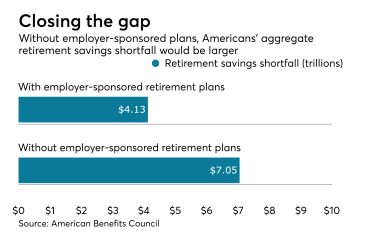
Employees have to change their retirement goals and strategies over the years, starting off heavily in stock allocation while in their 30s.

Employees who think they have lost their retirement assets are advised to seek help from the DOL or nonprofit pension counseling centers funded by HHS.

Even if an employee does not use the triple-tax-advantage of these accounts, the benefits are still valuable.

People looking to retire but wanting to keep a part-time gig will benefit from a new law that gives a 20% deduction for “pass-through entities.”

A study has found that while millennial employees are saving for retirement, they are making mistakes that can be easily corrected.
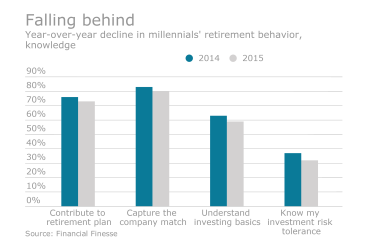
Workers aged 35 have to set aside 11.69% of their pay to keep up with those in their 20s socking away only 6% of their salary.
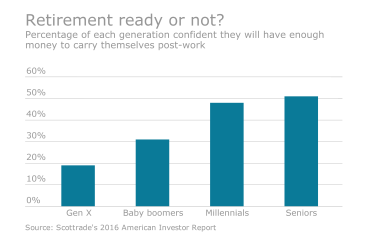
The bill aims to help workers think in terms of lifetime income — as opposed to accumulated balances — by requiring benefit statements to include income estimates at least once a year.

In a bull market's later stages, some types of investments work better than others. Find out which ones they are.