Healthcare: The barrier to retirement employers are helping tear down
Employers are embracing HSAs, and forging new trails, to help curb the cost of healthcare.

Follow Us
© 2026 Arizent. All rights reserved.

Employers are embracing HSAs, and forging new trails, to help curb the cost of healthcare.
The company’s new offering aims to help small and midsize employers more easily add and manage perks to attract and retain talent.


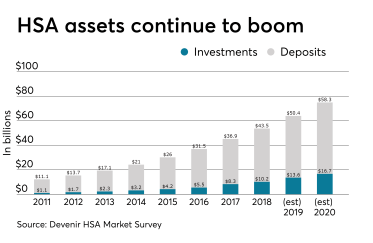
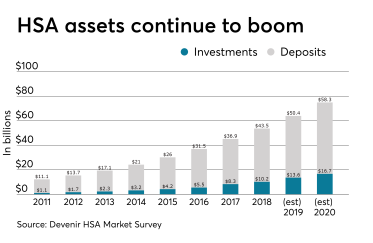
The number of health savings accounts has topped 25 million, and employer contributions also have increased after several years of decline.

About 39,000 employers, representing 9 million employees, will be able to access CommonBond’s student loan benefits through the retirement provider.


It’s the ideal time to reboot the conversation with employees about health savings accounts and the array of tax advantages they offer.

Seven in 10 respondents in a new survey who work with an adviser have a retirement savings goal.
These firms employ nearly half of U.S. workers, and fewer than half of those firms don’t offer a retirement plan.
The financial institution agreed to sell a retirement plan services unit to Principal Financial Group as the bank streamlines operations in the wake of scandals.

Seven in 10 respondents in a new survey who work with an adviser have a retirement savings goal.
The company, which has more than 700,000 accounts, now allows employees to view their election amounts and total account, investment and cash balances, among other updates.

“It’s an extension of their brand,” Financial Finesse CEO Liz Davidson says.
Definite steps are needed to improve worker prospects: Employees should save more. Clients should offer auto-enrollment. And Congress should make it all easier.
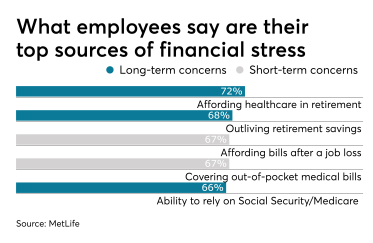
Definite steps are needed to improve worker prospects: Employees should save more. Employers should offer auto-enrollment. And Congress should make it all easier.
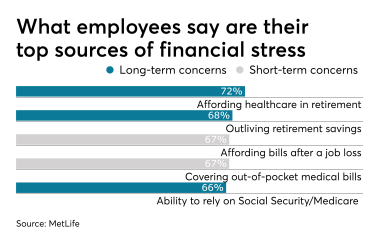
Backers say the Secure Act could help the “black hole” of retirement savings — the 50 million Americans without an employer savings plan.
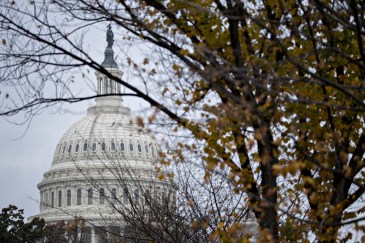
The legislation gives tax credits to small employers automatically enrolling workers and makes it easier for companies to partner to offer joint plans.

Some clients assume this generation doesn’t invest in benefits like 401(k)s, but the reality is much more complicated.

“It’s an extension of their brand,” Financial Finesse CEO Liz Davidson says.
Some employers assume this generation doesn’t invest in benefits like 401(k)s, but the reality is much more complicated.
The good news is that this new estimate from the Government Accountability Office is slightly better than prior years.

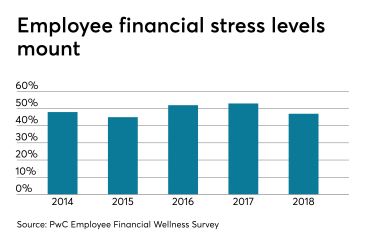
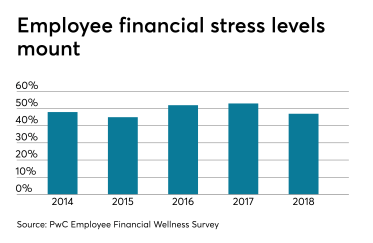
The sandwich generation is feeling the impact of financial stress the most, and looking to employers for help.