Benefits Think The biggest flaw in employers’ 2021 healthcare plans
HR is leaning on education in the hopes they can teach employees how to choose high-quality, low-cost healthcare on their own.

To the extent rising vacancy rates persist and lead to lower rents, it becomes an opportunity for companies to take advantage of their leverage and splurge on more space at a discount.
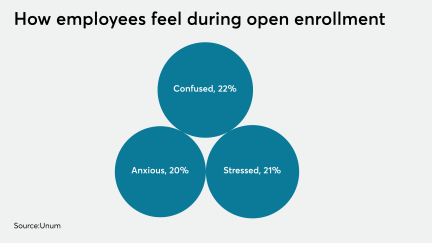
When deploying an active open enrollment process, a well-timed strategy can have a powerful impact on adoption.
The death of Justice Ruth Bader Ginsburg injects new uncertainty into the fate of the Affordable Care Act as the landmark health-care law heads to a third showdown before U.S. Supreme Court.
A coalition of employers is on a crusade to cut company spending on drugs nationwide by simply noting the cheaper choices already available, drawing the ire of drugmakers.
Among the quarter of American employees still working at home because of the pandemic, a majority were in jobs such as computer science, legal and finance.
Pinterest canceled a large office lease at a building to be constructed near its San Francisco headquarters, marking one of the most significant moves yet by a big tech company to scale back real estate plans amid the COVID-19 pandemic.
The company will sell stop-loss insurance, a type that helps cover unexpectedly large claims against employers who self-fund their health-benefit policies.
In a world where it feels like health is out of the individual’s control, we all want, at the very least, to feel control over our coverage.
Uber and Lyft were ordered to convert their California drivers from independent contractors to employees with benefits but the ruling won’t be the last word, as the companies vowed to appeal the preliminary injunction.
Returning to work during the COVID-19 pandemic requires striking a balance between safety and productivity. Here’s how employers in the healthcare, insurance and manufacturing industries did it.
Business travel is changing in the midst of the coronavirus pandemic. Find out what industry leaders are doing to keep employees safe.
While it does not solve all problems, virtual care offers a highly flexible, low resource approach that, with many patients, can deliver a positive care experience with equal or better quality at lower cost.
The insurance provider is expanding its efforts to provide users with a digital first healthcare experience.
Business travel, which makes up 60% to 70% of industry sales according to estimates by the trade group Airlines for America, is under threat in the wake of an unprecedented collapse in passengers that started four months ago.
The cuts are needed because the coronavirus pandemic is still battering demand for flights, the company told employees Wednesday.
The ride-hailing company is also revamping its services to be more inclusive and equitable, while offering anti-bias training for riders and drivers.
For most employers, just 1% of their members are driving 40% or more of pharmacy benefits costs.
The retail giant is looking to hire Medicare insurance agents to get the new venture off the ground.
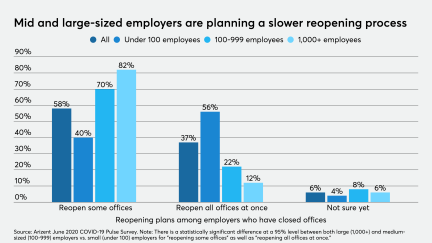
Our third monthly survey found almost six out of 10 employers report that their plans for the return to work are stymied by uncertainty — specifically, a lack of clarity on the right timing, and persistent questions about how to provide a safe environment for their employees.