The 10 worst states for employees to retire
Texas, Rhode Island and New York all made WalletHub’s list of worst states for retirement. Is your state on the list?

Follow Us
© 2026 Arizent. All rights reserved.

Texas, Rhode Island and New York all made WalletHub’s list of worst states for retirement. Is your state on the list?
Despite early withdrawals, U.S. employees managed to save more for retirement last year.


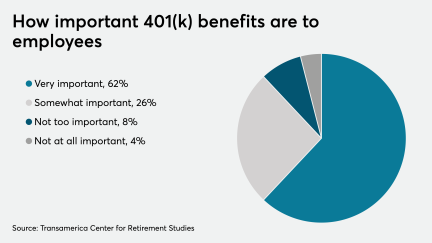
Just 23% of employees surveyed felt their employers were making a “significant effort” on financial wellness, and only 20% of employees expressed the same sentiment about retirement preparedness.
Our panel of experts have identified these 12 credits, deductions and more as worth particular attention this year.

While we all hope for an end to the pandemic, and a return to economic and social normalcy, in 2021, interest rates are likely to stay at their near-zero levels for the foreseeable future. Every dollar will count for retirement-savers.
The rule permitting a plan sponsor to allow qualified individuals to delay their loan payments that may generate the most lasting impact for plan sponsors.
Employees in non-health related professions who are at the highest risk of contracting COVID-19 include teachers and bus drivers.

“The pandemic has laid bare the widening gap between the financially secure and insecure in this country,” says Yanela Frias, president of Prudential Retirement.

In addition to maxing out your 401(k) and 529 savings plans, add to your health savings account and make year-end charitable donations.

If the federal government embraced the model of states like California and Oregon, as many as 40 million more workers might start saving, researchers say.
This year’s presidential election and COVID-19 have reminded us that many things are out of our control. But the power to help millions of Americans save more for retirement is in the hands of plan sponsors.
In unique circumstances, contribution limits to a Roth IRA do not apply. Here’s why.

Many employees, particularly women, are likely to become unexpected caregivers at some point. Companies should do more to ease their burden, says a top retirement and wealth specialist at Bank of America Merrill Lynch.
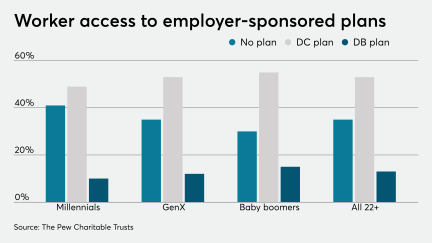
Employers shifting from defined benefit plans to defined contribution plans has made putting money away more complicated.
Meredith’s Tim O'Neil wins the 2020 Benny Award as the Editor's Pick for his work of improving employees’ overall wellness, adapting benefits in times of crisis.


While labor groups demanded cost of living increases amid the pandemic, HR newcomer Talika Johnson convinced them contributions toward retirement savings would be of greater benefit to employees.

How each presidential candidate tackles workplace-related issues will have long-lasting ripple effects for employers.
State retirement plans are about reaching the underserved, not about competing with the private sector, officials say.
Older American workers are feeling more unsettled than ever as the COVID-19 pandemic marks the second major financial setback they’ve endured in little more than a decade.

Saving for retirement is undermined when employees are also building up debt at the same time.