Strategies to close the retirement gap for Latinx employees
The COVID-19 crisis is creating greater challenges for certain employee demographics, impacting their ability to save for retirement.

Follow Us
© 2026 Arizent. All rights reserved.

The COVID-19 crisis is creating greater challenges for certain employee demographics, impacting their ability to save for retirement.
With rates likely to remain low, investors, and especially participants in sponsored 401(k) plans, need every dollar they can save to achieve their goals in retirement.
Retirement security in the U.S. is facing elevated threats of lower interest rates, recession, income inequality and climate-related natural disasters.

These advisers and strategic consultants have diverse backgrounds and a drive for excellence that goes beyond the traditional broker responsibilities.
To protect client nest eggs, advisors must know which savings vehicles are protected — and they’re not all created equal.
The original purpose for a 401(k) plan was not supposed to be the primary retirement vehicle for U.S. employees, says Harry Dalessio, the head of institutional retirement plan services at Prudential Retirement.
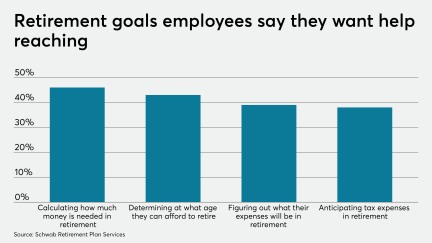
The financial planning tool gives participants mobile access to their mutual fund retirement accounts and offers a series of features that make retirement planning easier.
A comprehensive guide to how these provisions affect employees' retirement plannings from organizations of all sizes.
Defined contribution plan participants will seriously diminish their retirement savings if they prematurely cash out all or part of their 401(k) savings account balances.
If the court ends up making this choice, intended family members may lose out — all for want of filling out a one-page form.
While recessions are almost impossible to predict, employers can plan for the financial impact caused by workforce adjustments that inevitably happen every year.
Early retirement is on the rise during the coronavirus pandemic. Here’s how employers can support employees and offset talent loss.

Financial practitioner Aaron Brown takes a look at the logic behind modern day 401(k) plans.

The carrier will take a charge of as much as $3.3 billion to cover the costs of early retirement and voluntary separation plans for employees, as it scales back operations amid a plunge in travel.
A rise in equity and bond markets has fueled a partial bounce back in corporate pensions, according to data from Willis Towers Watson.
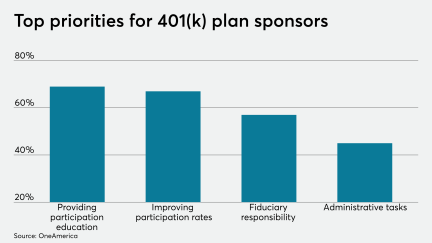
Amid economic uncertainty of the pandemic and following the passage of the SECURE Act, momentum could be building for retirement income in workplace plans.
Early retirement has been a key driver in the decline in labor-force participation due to COVID-19.
Transparency around compensation is key in closing the gender pay gap, and thus the retirement income gap for the future, as it creates accountability for employers and trust with employees.
The pandemic is affecting one of the best perks of workplace retirement-savings plans: company matches to employee 401(k) contributions.

Years from now, terminated employees may discover they have less income in retirement due to an automatic rollover or automatic cash-out from a previous employer.