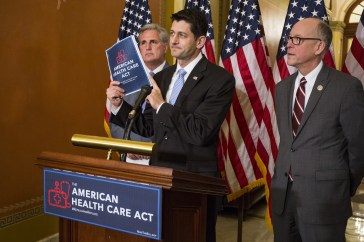
Benefits Think How employers should proceed after the AHCA’s collapse
Although the new healthcare plan flamed out, the impact of its failure could affect executives until the next alternative is offered to replace the ACA.
Follow Us
© 2026 Arizent. All rights reserved.

Although the new healthcare plan flamed out, the impact of its failure could affect executives until the next alternative is offered to replace the ACA.
Although the new healthcare plan flamed out, the impact of its failure could affect executives until the next alternative is offered to replace the ACA.

How the outcome of the case could affect the impact of the Americans with Disabilities Act on clients’ wellness programs.
How the IRS facilitates employer information filings required by the healthcare reform act.

How the IRS facilitates employer information filings required by the healthcare reform act.
The federal government has issued new guidance to clear confusion about when an HRA is considered integrated with a group health plan, which could have major implications for employers.
Commentary: The Affordable Care Acts reporting requirements are challenging, and carriers, employers and advisers have scrambled up a steep learning curve. Here are five predictions about how compliance will unfold in the coming months.
On Jan. 1, 2015, the Affordable Care Acts employer shared responsibility rules went live for many employers. Despite final rules and regulation from the government, here is a partial list of unresolved items that would benefit from additional guidance.
As the Affordable Care Acts employer mandate becomes effective, applicable large employers that utilize third-parties are faced with figuring out of what it means to make an offer of minimum essential coverage.
In a surprise move, CMS has delayed its enforcement of the use of health plan identifiers in HIPAA transactions. What does this mean for your employer clients and HIPAA compliance?
Many of your employer clients will soon face hefty penalties under the ACA for failing to make an offer of health care coverage. Legal experts clarify what that offer of coverage must be.
The Affordable Care Acts employer shared responsibility requires large employers to offer group health plan coverage or face the prospect of having to pay money to the government. As a result, more and more employers are considering these strategies to help reduce or eliminate their exposure to penalties.
Over the last year, skinny plans have gained some acceptance among employers under the employer shared responsibility provisions of the Affordable Care Act. And while a skinny plan might be limited to preventative services only, the skinny plans appearing in the marketplace generally include a handful of other features.
Variable hour and other part-time employee determinations are tough. Heres how to advise your employer clients on what to do and what not to do.
Legal analysis: Are employees hired through a staffing firm or professional employer organization considered full-time employees under the ACA? Answering this question wrong could cost your clients a great deal.
A handful of recent guidance items that the Departments of Labor, Health and Human Services, and Treasury have issued make some important changes related to the regulation of excepted benefits. These changes are driven in large part by the insurance market reforms and other provisions of the Affordable Care Act (ACA). For the most part, these changes should be welcomed by both employers and employees as they endeavor to comply with the ACA.
A recent Federal Court decision turned back a potentially debilitating challenge to the Affordable Care Acts rules governing premium subsidies. The decision, Halbig v. Sebelius, has consequences for large employers, i.e., those that are subject to the Acts employer shared responsibility or pay-or-play rules.
In 2011 (for calendar year plans), changes made by the Patient Protection and Affordable Care Act will call into question the approaches to post-termination medical benefits for executives.