Retirement planning tips in the time of coronavirus
Clients are advised to keep some of their savings in cash and focus on their long-term prospects.


Follow Us
© 2026 Arizent. All rights reserved.

Clients are advised to keep some of their savings in cash and focus on their long-term prospects.
To ensure their investments stretch as long as they live, clients are advised to develop a sustainable withdrawal plan and consider annuities.

Aside from refinancing, retirees are advised to consider downsizing their homes to reduce overall spending.

To start, these clients are advised to start saving as early and contribute enough to their 401(k)s to qualify for their employer's matching contribution.

“It is really as important for plans to get people thinking about income rather than just accumulation,” an expert says.
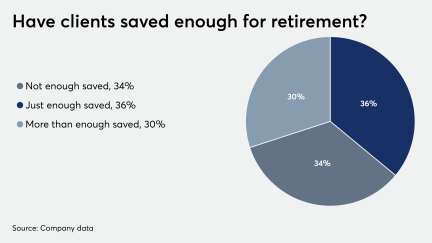
Older clients who have lost a job prior to retirement are advised to first consider filing for unemployment insurance and begin making revisions to their budget.

Seniors choosing between traditional and Roth IRAs must account for their current and future tax rates.

Pre-retirees may consider funding a Roth account to take advantage of tax-free compounding and tax-exempt withdrawals in retirement, an expert writes.

Taking advantage of catch-up contributions is one of several methods that can help them get back on track.

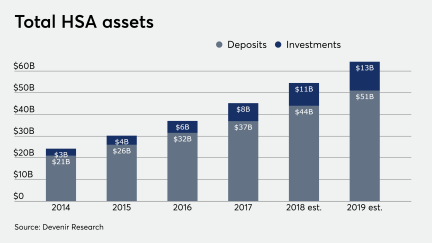
The HSA has become increasingly valuable for future medical expenses, "and the triple tax benefit simply can’t be ignored,” an expert says.
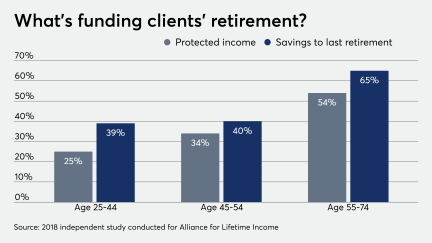
While it’s recommended they have at least three sources when they retire, just 6.8% of savers have done so, according to a report.
While there are strategies to help reduce risk, clients should recognize the order of investment returns is crucially important, an expert writes.

Many pre-retirees leave the workforce sooner than anticipated as a result of various factors, such as job loss and illness.
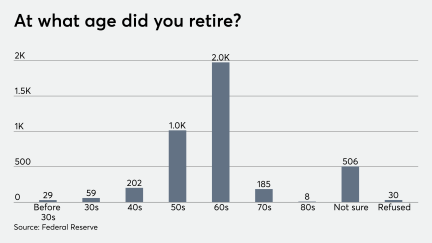
Investors who plan to retire early are advised to start saving as soon as possible and diversify their earnings with multiple sources of income.
This rise of the so-called grey divorce has created a number of uncommon and complex issues for retirement accounts.

It is important for entrepreneurs to have an exit strategy and to take control of their debt.

Ill-prepared investors are advised to vigorously plan their expenses and aggressively save in their 401(k)s and IRAs.
“By and large, many simply have not yet saved enough to retire comfortably.”
Contributing to these accounts makes sense for clients who anticipate higher tax rates in the future.

Over half of account holders neglect to move their funds, resulting in penalties and fees.