- Key insight: Help top-performing employees avoid pushing themselves to the point of exhaustion and burnout.
- What's at stake: What happens to company culture when leaders refuse to model healthy behavior under pressure.
- Supporting data: Leaders believe 69% of top-performing employees are struggling at work.
Source: Bullets generated by AI with editorial review
When he was selected by the Detroit Lions in the 2008 NFL draft, linebacker Caleb Campbell was dubbed "America's athlete" by an ESPN analyst, but rather than excited, he felt overwhelmed.
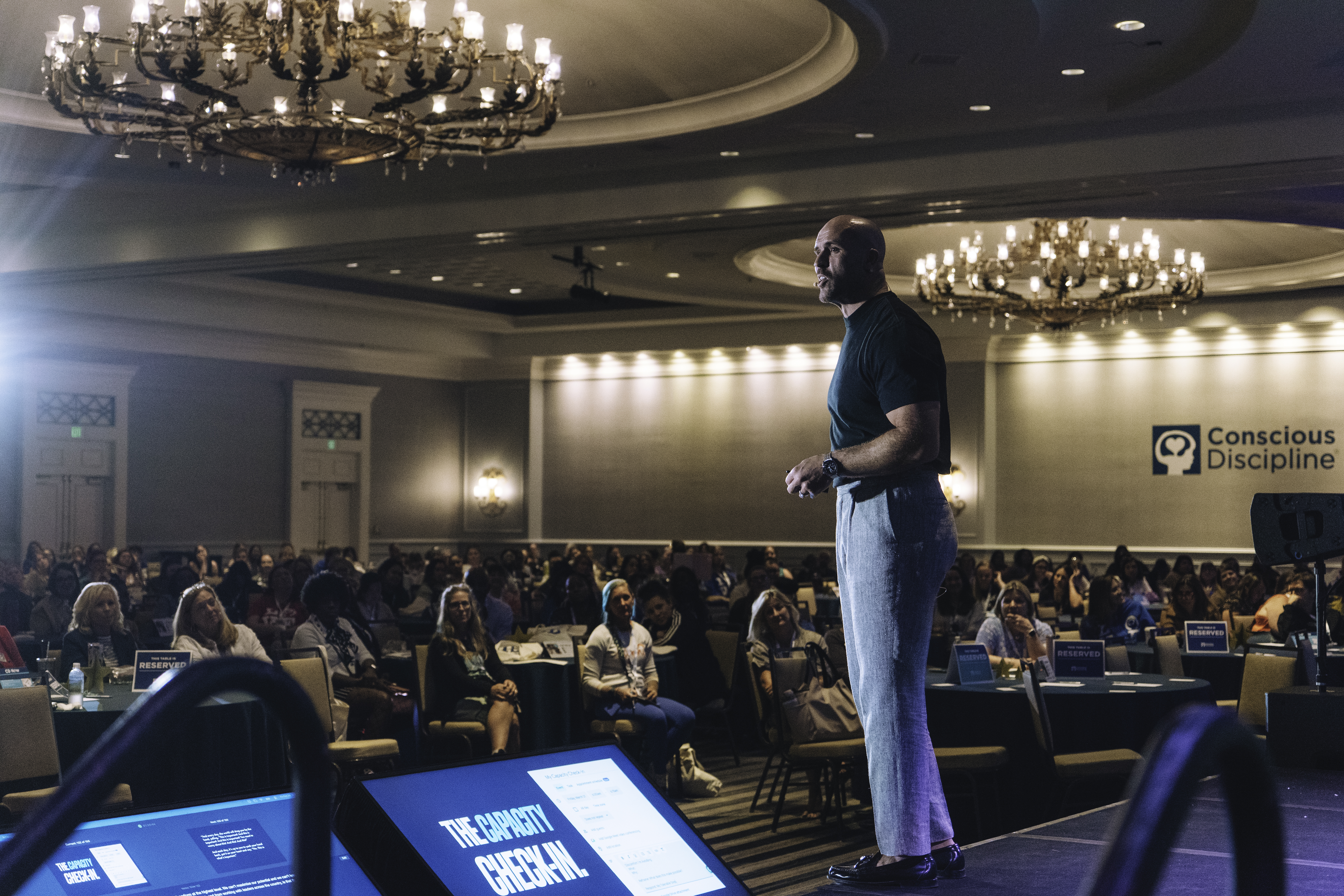
Campbell spent his college career and much of his 20s in the spotlight, receiving a Division I scholarship to West Point where he served as team captain and would become an Army officer, and later playing professional football. Now he speaks to leaders about the internal challenges that led to him leaving the NFL, and how they can develop the inner strength needed to handle stress and sustain success.
"Have it together all the time"
Born in a small town in Texas, Campbell grew up working to be the best both on and off the football field. It brought him high school accolades, college success, and an NFL contract. While being acknowledged so favorably on Draft Day was a monumental moment, Campbell said, internally he struggled to manage the heightened pressure to perform.
"What I heard was, Caleb, you better have it all together all the time," he said. "This was a pivotal moment in my trajectory of success, because leading up to this point it was all about the growth that would allow me to step into the dream. And now … it was all about managing the image of being somebody special, somebody important, so I would spend the next several years trying to live up to [that expectation], trying to be who I thought I was supposed to be, and who I thought people expected me to be."
Read more:
Shortly after getting drafted, Campbell's NFL dreams were put on hold following a change in military policy. "Two and a half hours before I was scheduled to sign my contract and report to training camp, the Department of Defense called and rescinded the policy that they signed my sophomore year allowing me to play and serve simultaneously, and I was ordered effective immediately to return back to active duty," he explained. He spent the required two years building on the skills he would need when he returned to the NFL, and signed with the Lions again in 2010.
"I found myself playing in my first NFL game, turning a childhood dream into a reality. But I realized that all of the external effort — the bigger, the faster, the stronger — all of the strategies and the tools that I implemented, none of it alleviated the internal exhaustion from the fears, anxieties, stress and pressure that I was carrying," he said. "I was having panic attacks behind closed doors and coping in really unhealthy ways, but [in public] I had a smile on my face like I had it all together."
After three years, Campbell chose to walk away from his NFL career. "I realized if something didn't change, it was probably only a matter of time before the burnout and the soul exhaustion that I was carrying would lead me to make decisions that would have a massive effect on my life. I moved to Canada. I became a janitor of an organization, slept on a basement floor of a boiler room for the next five years, and engaged in essentially free therapy in exchange for washing windows and cleaning toilets and vacuuming floors."
It was an opportunity to take "a hard look at the inner dynamics of my life, the person behind the performance, the person behind the achievements, the person behind the accolades, and just have a real honest conversation and begin to heal," Campbell said. During this time he was invited to speak about his experience, and went on to develop his framework for helping leaders strengthen their ability to work under pressure, rather than simply push through. As a keynote speaker and leadership coach, he has worked with companies such as Google, LinkedIn and USAA.
"I realized that through all of the letting go and the healing and the willingness to embody authenticity and lean into the edges of vulnerability and become myself again, it created the opportunity to step into what I would call the purpose of my life, and I haven't stopped speaking since," he said.
Read more:

A growing issue among high performers
"They normalize stress. They pride themselves on endurance. They push through exhaustion until their mind, body or relationships can't keep up," Ifeoluwa Abegunde, a wellness coach, RN and burnout recovery expert wrote in an article for Medium. As a result, high performers burn out "slowly and silently," she explained.
A survey of 689 HR directors and executives by research and training firm Leadership IQ revealed that 69% of top performers are struggling with issues like carrying more than their fair share of work, covering for underperformers, and
"When a culture solely values productivity and performance, [we may be] dealing with stress and fear and anxiety from the demands of our lives professionally and personally, and we feel really stretched thin … but we're just going to push that to the side. We're going to perfect this facade. We're going to show up and do everything we can to survive the day, so that we can measure up to what the culture values," he said.
Read more:
Leaders' role in setting the tone
Campbell calls on leaders to look at how they behave in stressful situations, reminding them that for their own wellness and that of their team, they need to "be aware of what they're going through and learn how to work with their own fear."
"When you're feeling vulnerable, exposed, and the pressure is at an all-time high, do you defend, deflect and deny? Do you point the finger and place blame? Do you use shame to make other people feel small in hopes that it sparks something in them? Or are you modeling authenticity, allowing yourself to be fully seen in that moment? If you can reclaim awareness, agency, and authenticity, it's going to do wonders for your culture."
When leaders display this type of vulnerability, "it's a signal for everyone else that this is allowed here, this is prioritized, and that in and of itself is so incredibly important," Campbell said. "I strongly believe, and I'll die on this hill, the growth of a team or the growth of an organization will never outpace the inner growth of those leading that team or that organization, so there is a responsibility on the leader to do their inner work."
When high performers at all levels are valued as people first, they are more likely to handle their workload, stressful situations, and employer expectations in a healthy, sustainable way, said Campbell.
"The world is changing, and becoming a human again is the competitive advantage," he said. "Knowing how to meet the human behind the performance, behind the productivity, is what's going to create the workplaces and the cultures that people want to be a part of."