Benefits Think The mental health agenda has changed, most benefits systems haven’t
Today's complex stressors require clearer access pathways and a company-wide commitment to mental health support.

Workers often hide mental health struggles out of fear of judgment or career consequences. Experts say employers must build cultures where asking for help feels safe.
A preventative and proactive approach offered as a stand-alone benefit will help avert crises and the accompanying ripple effect on well-being and productivity.
Employees managing these conditions lead to high overtime, an average of 10 missed a year and rising stress and depression levels.
Organizations are struggling to crack the code on young professionals, but a few changes to their strategy could make all the difference.
Women's health benefits expanded rapidly around support and navigation, but preventing pregnancy complications now demands more clinically integrated care.
Only 14% of workers let managers know they're struggling, according to a Headspace report, highlighting a missed opportunity for intervention.
As Men's Health Month concludes, data and expert advice provide leaders with multiple ways to support their male employees in these four main categories of concern.
Lack of a clear definition for modern mental health support can make it hard to know what to look for or how to create an impactful strategy.
Workplace mental health support works best when leaders know how to respond. Use manager training to make support easier to find, trust, use and refine.
Using real-world data to quantify differences between mental health and physical health care, this index turns parity from a checkbox into a strategic conversation.
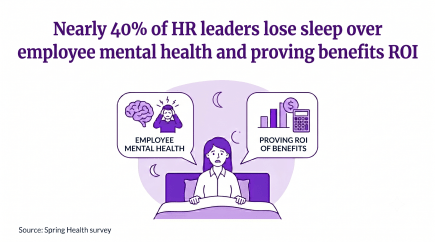
A look at what's weighing on employees, the types of benefits and internal shifts that help, and the business impact of getting it right.
Quit Vaping app founder Jonathan Kopp is bringing digital tools for vaping and alcohol addiction into employee wellness plans.
Project 55 is helping organizations empower their workforce with mental health education and resources.
Survey of college students and young adults finds rising mental health concerns, with many relying on AI tools and citing cost as a barrier to care.
Just 17% of employees plan to get an annual physical this year, down 45% from 2024, as a nationwide survey signals a steep decline in preventive care use.
Employers say they're doing enough on benefits, but employees disagree as costs rise and communication gaps leave many workers feeling unsupported.
Employers who provide consistent, intentional mental health support create a healthier workforce and better business outcomes.
The automotive services company is the nonprofit's first corporate partner to dedicate funding entirely to services such as counseling and trauma-based care.
A new Modern Health survey finds most workers fear AI-related layoffs, rising stress, and increased reliance on substances to cope with workplace pressure.