Employees, employers differ on top workplace stressors
The disconnect is leading to treatments that don’t get to the root of the cause, new research finds.


Follow Us
© 2026 Arizent. All rights reserved.

The disconnect is leading to treatments that don’t get to the root of the cause, new research finds.
If your workplace wellness program isn’t aligning with employer strategy and culture, don’t plan on it being successful.

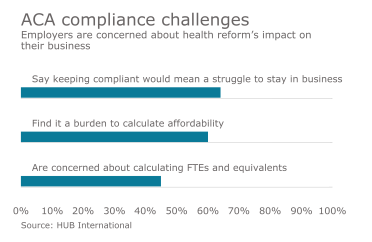
Employers are struggling to keep up with Affordable Care Act requirements — a top priority in HUB International survey.
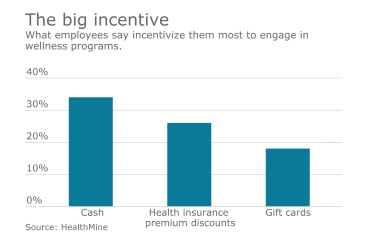
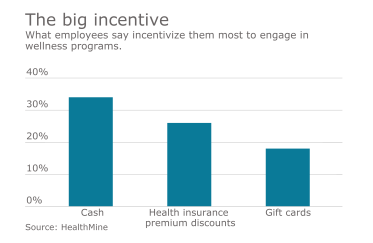
Despite mounting evidence that cash and other incentives can significantly boost participation, the majority of these programs fail to provide meaningful inducements.
In the pursuit of reduced workplace anxiety, firms are weighing just how to deliver corporate-based serenity.


An innovative program has employees shedding pounds without giving up their favorite food.

Four ways employers can help employees who suffer from celiac disease to avoid cross contamination in the office and on business travel.

Many employers are looking past ROI on healthcare expenses and utilizing the plans to attract talent.
Employers can harness the power of technology when encouraging employees to make healthier decisions.
Many employers are looking past ROI on healthcare expenses and utilizing the plans to attract talent.
Despite mounting evidence that cash and other incentives can significantly boost participation, the majority of these programs fail to provide meaningful inducements.
Employers can harness the power of technology when encouraging employees to make healthier decisions.
Using incentives and teamwork, Bazaarvoice breathed new life into its workforce.
An upcoming compliance date for new SEC rules will affect retirement plans; here’s what sponsors need to know.

The agency’s Deputy Associate Chief Counsel responds to questions concerning three different types of wellness incentives and their tax status.


More companies want to have a ‘net positive’ impact on their community, and are turning to their employee health initiatives to make it happen.

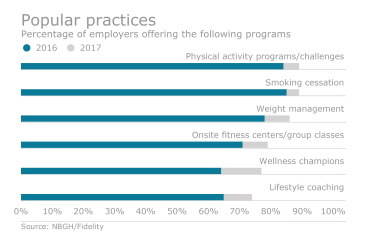
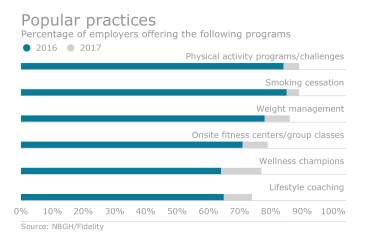
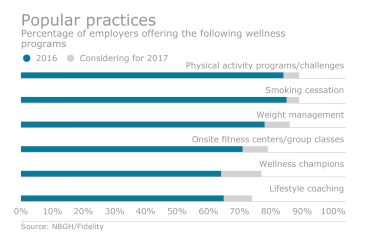
The majority of employers plan to continue or even expand their well-being programs in the next three to five years, according to recent research from the NBGH and Fidelity.

The agency’s Deputy Associate Chief Counsel responds to questions concerning three different types of wellness incentives and their tax status.

Too many initiatives focus solely on physical health, ignoring the other pillars such as financial, social, community and career well-being, says NFP’s Deb Smolensky.

Too many initiatives focus solely on physical health, ignoring the other pillars such as financial, social, community and career well-being, says NFP’s Deb Smolensky.