
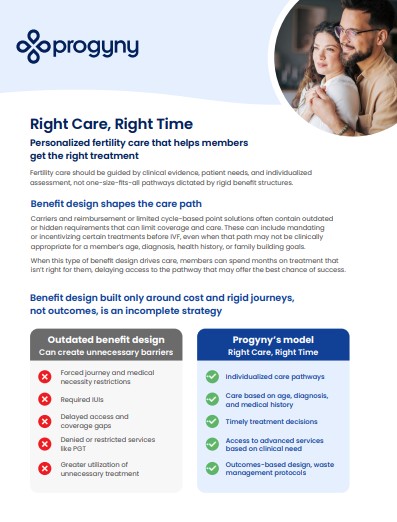
For employers, the lowest-cost cycle isn’t always the lowest-cost path. A cheaper starting point can become far more expensive when it leads to failed cycles, multiples, NICU admissions, and added emotional strain — driving up total spend while eroding the member experience. Benefit design built around cost and rigid journeys alone, rather than outcomes, leaves employer and member value on the table.
This research brief examines how individualized, evidence-based care pathways can improve clinical outcomes, shorten time to pregnancy, and reduce avoidable downstream costs — helping benefits leaders assess whether their current approach is set up to deliver both a better member experience and stronger cost control.
Download this research brief to learn:
- How restrictive benefit design can delay the right care and raise downstream costs
- Why the lowest-cost cycle isn’t always the lowest-cost path
- The factors that should shape an individual’s care pathway — age, diagnosis, health, and goals
- Questions to pressure-test your current fertility benefit design