
Web Seminar The great healthcare reset: 2027 and beyond
As healthcare costs continue to rise, employers may need to rethink how care is financed, delivered, and supported. Dr. Tom Lee, founder and CEO of Galileo, joins healthcare entrepreneur Dave Chase for a candid conversation about what needs to change and what a more sustainable approach to employer healthcare could look like. Together, they will […]
Web Seminar Integrated virtual primary care moves the point of care upstream—before cost is created
Every dollar your health plan spends starts somewhere — a doctor’s office, an urgent care, or an ER. That first point of care is where critical decisions get made, and where the trajectory of cost and outcomes is often set. Primary care is the most effective front door to the healthcare system. But for millions […]
Web Seminar From cost containment to care strategy
GLP-1 spend is on most benefits teams' agendas this year. If it's on yours too, this session is for you.
White Paper Healthcare that businesses trust
Employees care a lot about their healthcare plan. President of JEDCo Brands David Trapp heard that message loud and clear when he changed the benefits at his trusted licensed apparel wholesale company. By returning to CareFirst BlueCross BlueShield, Trapp gave his employees what they need to be their best, so he can be sure his […]

White Paper Achieving alignment with your pharmacy benefits manager
New research: How employers are approaching pharmacy benefit management and the outcomes reported by organizations that have already moved to these PBMs.
Infographic HR is ready to move from AI pilots to real impact
Find out what HR leaders are saying about AI, and how it is already embedded in their core workflows, particularly in data analysis, reporting, recruiting, and talent processes.
Case Study Why WakeMed is using Calm Health to support the mental health of high-risk patient populations
When they determined that uncontrolled mental health issues are a common root cause of poor health outcomes, they turned to Calm Health.
Other 2027 Benefit stakeholder cheat sheet
Get the inside track on CEOs, CFOs & HR in 2027—speak their language, solve their challenges, and win more accounts.
Web Seminar 6 spending controls for employee benefit design
Today's benefits leaders are under pressure to deliver programs employees value while keeping costs, compliance, and administration under control. Yet most benefit programs have evolved over time across vendors, account types, and policies.
Report What new data reveals about ICHRA adoption at large employers
ICHRA adoption among employers with 1,000+ employees jumped 178%. What benefits leaders should know.
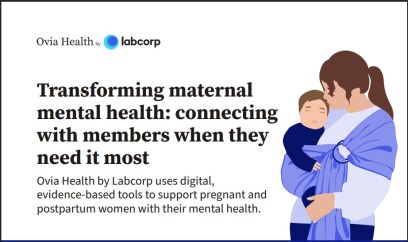
White Paper Supporting working parents through maternal mental health challenges
For employers looking to better support employees through pregnancy, postpartum, and maternal mental health challenges.
Playbook Unlocking value: Addressing benefits, AI, investment and workforce challenges
Healthcare is no longer a once-a-year benefits renewal—it's becoming a CFO-grade risk that can disrupt forecasts, force trade-offs, and limit investment in wages, growth, and workforce transformation.

Infographic Leave compliance just became employers’ #1 benefit priority… is your program keeping up?
Not long ago, leave and time-off policies were among the most stable parts of an employee benefits program — slow to change, easy to administer, rarely a source of legal risk. That era is over.
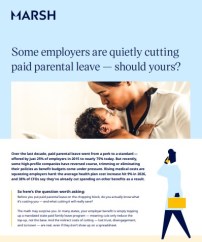
Infographic Some employers are quietly cutting paid parental leave — should yours?
Over the last decade, paid parental leave went from a perk to a standard — offered by just 25% of employers in 2015 to nearly 75% today. But recently, some high-profile companies have reversed course, trimming or eliminating their policies as benefit budgets come under pressure.
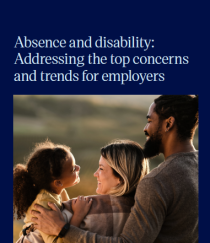
Planning Guide Absence and disability: Addressing the top concerns and trends for employers
In a fast-changing workplace, leave policies are a defining part of the employee experience—shaping culture, supporting wellbeing, and strengthening engagement and productivity.
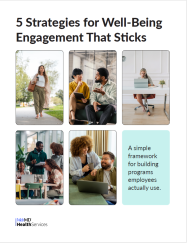
Guide 5 Strategies for well-being engagement that lasts
The HR and benefits leaders' guide to improving participation, reach and sustained engagement in workplace well-being.
Web Seminar The insomnia blind spot: Why first-line care is still out of reach
CBT-I is recommended as first-line treatment for chronic insomnia. So why are nearly 97% of treated patients receiving prescription medication instead?
Web Seminar Rethinking health insurance with self-funded captives
Self-funding 101: The case for taking control of costs
Web Seminar Countdown to unbundling: What you need to know for 2027
If you're trying to plan your 2027 renewal, benefits and health spend around a rule that isn't finished being written, you're not alone.
Web Seminar Affordability is a long game. Payability delivers today.
Healthcare affordability has been the organizing principle of benefits strategy for decades — and that work matters. But there's a gap no negotiated rate can close: 38% of insured employees delayed or skipped care last year because they couldn't pay when it was needed. Not because they lacked coverage. Because they couldn't pay.