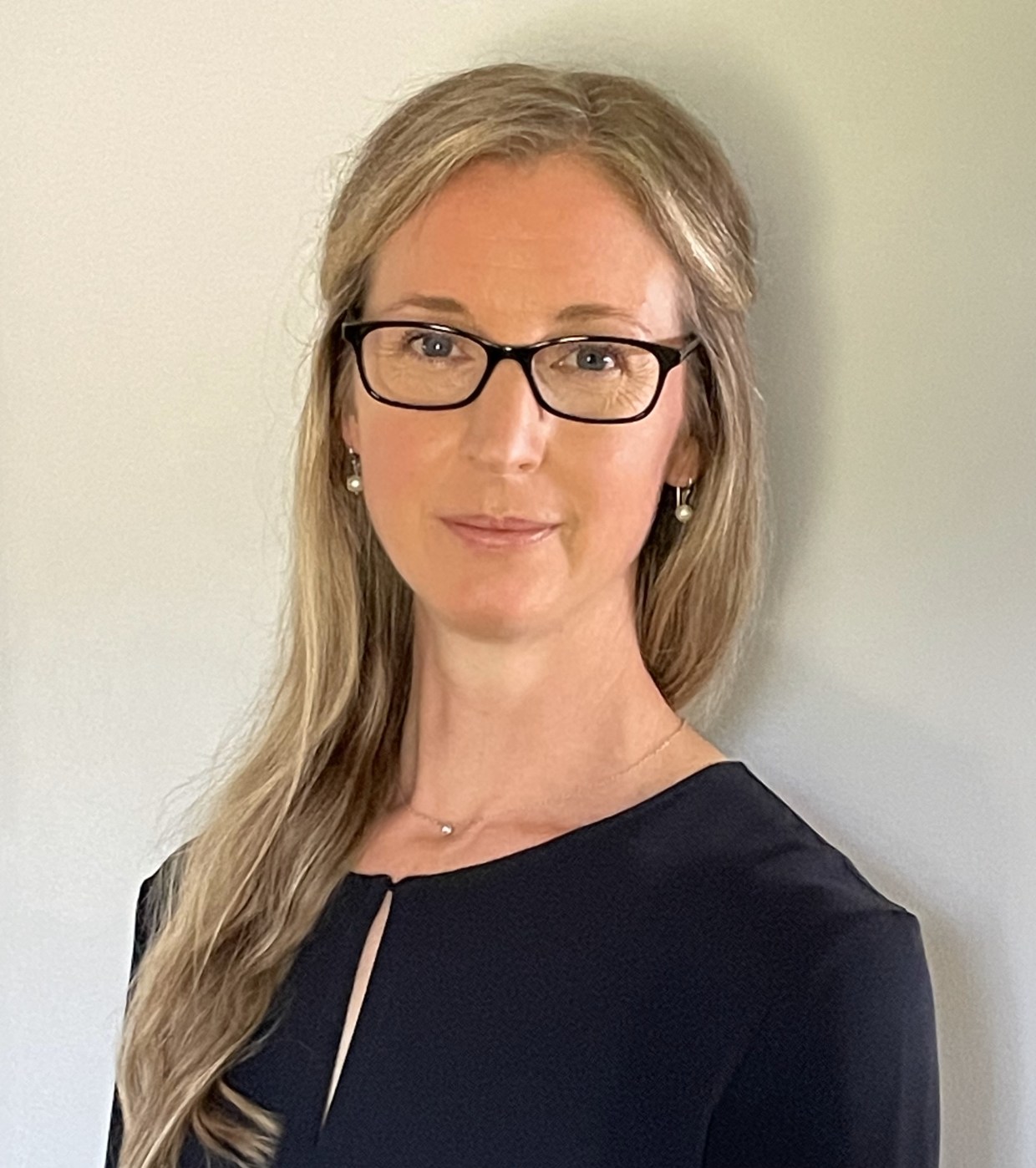
Day Two Keynote: Leading With Civility in a Divided World


In an era of heightened political and social tensions, workplace civility has never been more critical. In this candid fireside chat, SHRM Chief Human Resources Officer Jim Link joins EBN's Alyssa Place to explore how HR and business leaders can foster a culture grounded in respect, empathy, and open dialogue.

Jim will share actionable strategies for promoting civil discourse across teams—including the importance of active listening, collaboration, curiosity, and constructive feedback. The conversation will also cover how to set expectations for behavior, encourage civic participation without partisanship, and build training programs and policies that support a more inclusive and communicative workplace.


Key takeaways include:

  • Why civility is a foundational element of healthy workplace culture
  • How to practice and model effective, respectful communication
  • Ways leaders can support civic engagement while remaining neutral
  • Practical tools and approaches to foster empathy, trust, and collaboration
Join us for an inspiring and timely conversation on the power of words, actions, and leadership in shaping a more respectful workplace.

Transcription:
Transcripts are generated using a combination of speech recognition software and human transcribers, and may contain errors. Please check the corresponding audio for the authoritative record.

Eric Silverman (00:10):
Good morning. Oh, come on. I know it was a Vegas night, but good morning. Not going to work. We're going to do it again. Good morning. All right. Raise your hand if you partied like crazy last night. Raise your hand if you don't remember last night. Raise your hand if it is still last night.

Ed Ligonde (00:35):
Maybe they don't remember how to raise their hand. Could be a thing. Before you get started, Eric, I actually just wanted to share with everyone: today is actually Eric's 20-year wedding anniversary. And he chose to spend it with you guys. So yeah, I just wanted to give him a round of applause.

Eric Silverman (00:50):
That's true. The wife is sleeping upstairs quietly. She's going to make it another cool day. Ed and I and my wife went to Bruno Mars last night. Anybody check out the Bruno Mars concert last night? Oh my gosh. It is a recommended choice, let me just tell you. He puts on quite the show. Am I right?

Ed Ligonde (01:08):
Absolutely.

Eric Silverman (01:09):
Yeah. Alright. So guys, yesterday was fantastic. By all means, I hope everybody got to all the sessions that they wanted to go to. And I hope you're super pumped and excited for today's sessions. We have a full day planned and I want to remind you of some quick housekeeping things and what's on the agenda for today. First off, today we're going to do a bunch of good stuff: research on the state of pharmacy management, choice-based benefits panel. We're going to do a panel session on women's health benefits. We have a lunch session on how employers can support the management of obesity in their organization, attracting top talent beyond the basic benefits. Let's see, Dave Ross's whiteboard session, which is always very popular and well attended—I'm sure this year will be no different. And then I am going to be on a closing panel actually, with a few of my colleagues this late afternoon about musculoskeletal (MSK) challenges and what I personally dealt with with my back surgery earlier this year and my colleagues going through similar but yet different things. It's going to be a great day. We're excited. Ed, do you have anything to say since you always think I'm doing it all and I am doing your job?

Ed Ligonde (02:29):
Thank you, I guess. Is that what you wanted?

Eric Silverman (02:31):
You're welcome. I just wanted to hear you say it.

Ed Ligonde (02:33):
Just like Eric, asking for more and more stage time. But anyways, just again, a quick reminder to try to support the sponsors. Of course, none of this would be possible without those guys, so make sure to go into that room. Obviously you can get some coffee, but have a good conversation, maybe learn a little something about some new point solutions that are out there. And then again, supporting the speakers, trying to keep this room as full as possible. Just quick reminders on how to support. Anyways, that's enough of us talking. I'd love to introduce our awesome fireside chat this morning with Jim Link and Alyssa Place. This conversation couldn't be more critical, especially as we go into today. Jim Link is the Chief Human Resources Officer, and Alyssa Place is our editor-in-chief. So let's welcome them to the stage.

Eric Silverman (03:26):
Thanks everybody. Make it a great day.

Jim Link (03:31):
Nicely done.

Alyssa Place (03:36):
Alright.

Jim Link (03:37):
I like the music.

Alyssa Place (03:38):
I know, they've been really making some choices with the music this week.

Jim Link (03:41):
I would've picked Back in Black or something like that, AC/DC. Look at all these benefits folks. I do love me some benefits folks. That is for sure. How are y'all doing? Alright, good. Well, I think you and I are more awake than some of these folks are.

Alyssa Place (03:56):
I know. I love this morning energy. I'm Alyssa Place, editor-in-chief of Employee Benefit News. This is Jim Link, CHRO from SHRM. It's also Jim's 31st wedding anniversary. So again, this is a very hot ticket that we're all leaving our partners for this benefits conference.

Jim Link (04:11):
We had a big week at the Link house. Last Wednesday, a week ago yesterday, we got our first granddaughter. My daughter turned 22 Saturday, and then our 31st wedding anniversary was Tuesday.

Alyssa Place (04:26):
Wow. And now you're speaking here.

Jim Link (04:28):
Well, I'm on vacation this week. For anybody who doesn't know me, what happens is whenever I'm on vacation too long, I get all itchy and scratchy. So my wife wants me to do these little jaunts and then come back, which I will do tonight. I will land in Atlanta at 8:30 tonight and then resume vacation.

Alyssa Place (04:49):
Well, we have such an interesting conversation. I'm really excited about the energy. We're going to be talking about civility in a divided world. Obviously this is something that's very top of mind; it's been top of mind for the last couple of years certainly. We're going to talk about the ways benefit leaders and HR professionals can foster productive and respectful conversations, and even if considering something like an all-out ban is something that you or SHRM would recommend. So we're going to dive into all of that this morning. I really just want to start by defining what civility is in the workplace.

Jim Link (05:28):
What we found is that civility really is in the eye of the beholder. When we ask people what an act of incivility is in the workplace, we receive some very interesting answers. Those answers range from tonality or even implied tonality in an email exchange—and those were, as you might expect, the most frequent thing that we saw reported—all the way down to physical acts of violence. Fortunately, as the research would indicate, the further you go down, the less likely you are to see those things. High frequency of tonality in emails and dialogue, water cooler chatter, those types of things—lots of those reported acts of incivility to the tune of more than 200 million a day. That's right, a day. These numbers are staggering, all the way down to those lesser reported incidents of violence or harm.

Alyssa Place (06:32):
I think that's interesting because there is a sense of the perception piece, which makes it very difficult to set ground rules. Can you explain how to navigate the perceived element of this, where someone might say, "I got a hostile vibe," and someone else is just like, "Oh, I put a period instead of an exclamation point"? What are we talking about here when we're really talking about that sense of incivility?

Jim Link (06:58):
We absolutely are seeing those things. I'll give you a recent example. This happened two or three weeks ago; an employee brought an email to me and said, "Can you believe what this person said?" I read that email and honestly didn't see anything wrong with it. Now, I didn't have any context to that particular situation. As I asked more about what they perceived to be uncivil about that exchange, it wasn't just that exchange—it was everything leading up to it which made it uncivil in that employee's eyes. So any one moment in time may or may not be an act of incivility. But what's important for all of us as practitioners is that we set that culture, establish that tonality, and role model that behavior.

(08:08)
That's what civility is and what it is not. I think as a society, we've kind of forgotten that. There are things happening in our world today which indicate that acts of incivility are headline-grabbing. At the end of World News Tonight, they talk about something positive, but the entire 29 minutes leading up to that is generally not. There's this balance of what happens in a workplace. I think we get to set that tone and we've probably shirked that responsibility a little bit. My belief is it's time to reestablish that. Let's define what's acceptable in our work cultures, role model that behavior, and set that expectation. I believe that the workplace is where real societal change almost always begins. There's no reason why we can't do this here.

Alyssa Place (09:17):
And when you say that HR leaders are perhaps shirking that responsibility, what do you mean by that? Is it just too hard, or is the workforce too distributed? Do they not know how to wade into these topics?

Jim Link (09:32):
I think it's all of those things. I think we've also navigated away from this idea about what is expected of us at work. I'll say something controversial. We've talked for a long time about bringing your whole self to work. Well, folks, I don't want your whole self at work. I want your professional business self at work. I want the person who's going to show up, do what you need to do every day, leave the drama at home, and then go. Is that an unreasonable expectation? I don't think so, but I believe we've navigated to this idea that coddling and permitting that type of behavior is okay in a workplace. I just don't believe that. The idea here is to set the standard, whatever's right in your particular culture, and do it well.

Alyssa Place (10:39):
So let's talk about how we do that. Can you talk me through some ways that HR leaders and benefit managers can set the tone?

Jim Link (10:52):
The first is to know what your culture is; I call that cultural clarity. There are different workplaces, and even in the same company, there are different subcultures. That's perfectly fine. What I suggest is that you lay the foundation for what those cultural norms are. One of them is a very simple one: work hours. What is a work hour? Does that mean people stroll in whenever they want to, or do you want people there between eight and nine in the morning and go home between five and six? I don't care, there's no right or wrong answer, but that's the beginning. You set an expectation of what's required and you demand adherence to that. That's cultural clarity.

Another one is a sense of urgency. In some organizations, every request is a burning platform; in others, it's more planned and structured. Know what that is and make sure new employees know what that cultural clarity is. Human resources professionals sit in the best place to begin. If we relied on a production manager or CEO to set those standards, would they have the same wealth of knowledge of what happens out there? Likely not. I think we should own this cultural clarity, define it, establish it, and make sure we have the buy-in from senior leadership. You have to train and educate people, hold them to those expectations, and make it part of your new employee orientation and selection processes.

Alyssa Place (13:52):
So much of this conversation about incivility is really about communication. Can you talk about the importance of having empathy and an open mind with a group of people who might be coming from very different backgrounds?

Jim Link (14:18):
It's a great question. I think the best way to think about this is to determine what your tolerance is for communication in general. The source of much incivility is tied to how, where, and why people communicate. One of the questions I often get asked is related to controversial conversations. Remember there was an election last November, and our civility index rose to record high levels in Q4 of last year. Most of it was driven by political discourse, though there were race, gender, and generational implications as well. It got a little bit better in Q1 and Q2, and then it went back up again in Q3.

(16:05)
When you ask people why it's going back up, a lot of it doesn't have to do with the workplace; it has to do with what's happening in the world around us. Political action is causing a lot of perceived incivility. Change happens usually first at work, then in communities, then in society. Whatever it is that has gotten lost, it's up to us to reclaim that by setting expectations. You can say in your workplace that you're not going to talk about political stuff, but I guarantee you that rule will be broken. At SHRM, our recommendation is that you don't outlaw it or ban it. Instead, set the parameters under which it can occur. We believe you should set civil guardrails. You can certainly disagree without being disagreeable. There are key questions you can ask. One I always ask people who want to get into a powwow with me is: "Are you open to another idea?" If they say yes, you actually already have the upper hand as the communicator. You've already set the expectation of that requirement in that culture.

Let's not forget technology is making this worse. There's a thing I call "tech bravery." There are things people will type on a keyboard or text that they would never ever do in person. This idea of technological bravery gives people some perceived right to comment on things they would never do in face-to-face discourse. That's just chicken. My view is if we do it right, technology can enable us to be better communicators and employees.

Alyssa Place (20:29):
It sounds like HR and benefit leaders are already doing so much, and now they're also expected to be mediators, conflict resolution people, and therapists. I've found myself dealing with issues that asked me to be a little more than just a boss, and I wasn't given training for that. What does that training look like?

Jim Link (21:08):
You're right. I'm convinced that I was a priest in another life because of the stuff people feel compelled to tell me that I really don't want to know. All that means—and I bet this is true for many of you—is that whenever you hear those things, you carry that stuff with you. I have tried to compartmentalize that. I imagine a five-drawer filing cabinet and I imagine it as a file, and I put it in one of those drawers and shut it. Then whenever I need to deal with it, I do. Now, I've gotten better at that over the years, but still, we all suffer with that. I hope all of you are taking the time to take care of yourself. If we go down, we take others with us.

(23:33)
I'm a believer that one of the greatest benefits you can offer your employees is life navigation capabilities. I'm not talking about Employee Assistance Programs; I'm talking about something that happens before that. Particularly with younger folks in the workplace, that ability to navigate through life's circumstances is something that got lost somewhere in translation. At SHRM, we put in one of those life navigation tools and it is the third most utilized benefit in our organization, after 401(k) and healthcare. I would never have thought it. It's often the dependents who are utilizing it, and they tend to be younger, female, and diverse. SHRM offers resources like mental health ally certifications, but most of us are not trained healthcare professionals. 1 We often get called upon to navigate and help others, so let's do that well by first taking care of ourselves.

Alyssa Place (25:56):
Stress and burnout are certainly adding to this sense of gloom and doom. What are some ways that technology can actually be helpful in establishing civility policies or just checking your own words?

Jim Link (26:34):
How many of you are utilizing some generative AI tool on a weekly basis? That's about what we see out there. This has so much capability. I can't remember the last time I wrote a video script or a CEO report from scratch. That's the basic stuff, but now I'm starting to use it as a coach, a counselor, and an advisor. You have to be a little bit careful. If you work in a business association like I do, you don't want all of our research going into the large language model. We have two: one that sits behind our firewall and then other free tools. We should be the expert users of that technology.

(28:58)
Asking for clarity in the way you write a sentence or checking for tonality is great. I use mine to ask: "How do I convince the CEO of X?" I'm often stunned by what I get. A year or so ago, I was trying to write an op-ed piece and I dropped it into our "SHRM GPT" and said, "Make this sound better." It came back with an admittedly better piece. Then I said, "Make it sound like it came from Jim Link," and it produced an outcome. There were words I used that I saw getting played back to me because it looked at the universe of stuff I've produced publicly. It's a little spooky, but the capability is ours to use. It's still not the best at analytics, but it can help you think about how to utilize data to present a better business case. You can anonymize data to avoid HIPAA concerns and look at usage patterns to find the best usage of your money.

Alyssa Place (31:39):
Are you hopeful that civility is an ideal that employers can strive for, or are we just holding on and hoping for the best?

Jim Link (32:02):
I'm convinced if we don't try to do this, who's going to? Every house needs a foundation, and the foundation for me is civility. Then there are at least four pillars in every organization built on that. First is a culture of learning, because that means you're hiring lifelong learners who continue to grow. A culture of learning leads to a culture of innovation. If you are not innovating, you're eventually going to die. A culture of innovation leads to a culture of collaboration. If you get those three right, the fourth one is a culture of inclusion.

(34:07)
Learning, innovation, collaboration, inclusion—all built on a foundation of civility. If you think of a four-legged stool, those are the four legs. If an employee is sitting upon that stool, they're actually going to feel like they're operating in a culture of care. There's nothing wrong with that. Those of you who work in benefits day in and day out, this is part of your DNA. You really build a culture of care.

Alyssa Place (35:15):
You started by talking about a rude email. How did you resolve that?

Jim Link (35:25):
I was honest and told the person, "I don't get it. Give me more context." It actually was about the context. If you took that email exchange alone, it looked like a supervisor was asking an employee to do something with a specific deadline—management 101. I sat down with that employee and we went through it sentence by sentence to deconstruct it. It took someone to say, "Think about this from another lens rather than just your own." That turned out to be impactful. Was the email perfect? It was not. But should that person have felt as though it was an uncivil communication? The answer was no, but they did. I needed to help that person understand how we operate as an organization. It worked out, and now when I see that individual, I ask how their perspective is. This person was a younger employee on her second job out of college who just needed to understand how to navigate that expectation. I wanted to take the time to be civil with that person as well.

Alyssa Place (38:20):
That's all the questions I have. I do want to leave time for our audience to ask Jim questions.

Jim Link (38:39):
We have all kinds of opportunity. Thank you all for being here. All right, somebody ask me a question.

Audience Member 1 (39:41):
In today's workplace, how do you handle it when things are posted online?

Jim Link (40:05):
We highly recommend that you as an employer establish upfront what is permissible for an employee to comment on. Anything that reflects badly on the organization is subject to disciplinary action. I would get in front of it. I can tell you one example where an employee who was a branch manager for a long time—highly successful—got into a traffic jam in Texas. The employee got out of the car and used racial slurs against the person who slighted them. This award-winning employee was out of her ever-loving mind, and it got filmed and posted. It wasn't long before the company's name was connected to that employee. The company fired her on the spot. Was that the person the organization had seen for 12 years? Perhaps not. But the employer had to respond. Setting boundaries upfront is clear about what is allowed. Interesting times where almost anything you do can be published. I'm glad in my wilder days that none of that was around. Thank you all so much, it's been a pleasure.

Alyssa Place (43:18):
Thank you.