3 ways to refresh your workspace to be more productive at home
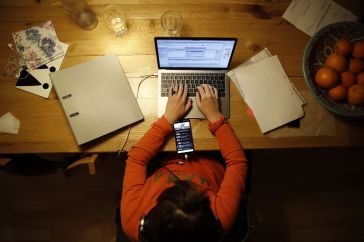
While remote work has presented challenges to productivity and mental health, there are ways to improve your workspace and routines to feel more focused.


Follow Us
© 2026 Arizent. All rights reserved.

While remote work has presented challenges to productivity and mental health, there are ways to improve your workspace and routines to feel more focused.
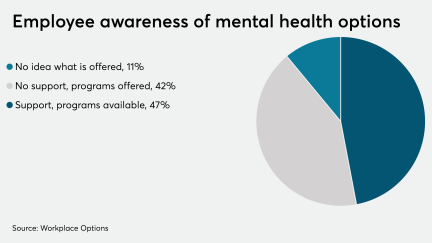
You know your employees best — but when it comes to their mental health, how do you realistically “meet employees where they are?”
Employers should embrace their critical role in stemming productivity loss. Start by taking a fresh look at your benefit packages.
The coffee giant has introduced several new mental health benefits including free Headspace subscriptions and 20 mental health sessions with a therapist a year for free.


High levels of stress associated with loss and trauma increase employees’ risk for physical and mental health problems including diabetes, heart disease, anxiety, depression and substance misuse.

Employees are cautious about discussing their mental health at work, but addressing these challenges can improve outcomes and lower healthcare costs.

Seventy five percent of employers reported being directly affected by opioids, often as contributing to workplace accidents, lost productivity, staffing issues, missed workdays, and increased care and leave costs.

Major depression is just one of hundreds of conditions where employers struggle to improve outcomes and costs.

Tech companies are leading the way on allowing employees to work from home permanently. The model is starting to take hold in other industries as well.
Organizations addressing the post-pandemic return to work will be required to assemble teams of specialists in safety, security, HR and risk management to aid in the challenge.

Employees are struggling to improve their mental health as the coronavirus is still a main concern, combined with the racial injustice crisis the country is facing.

Employee mental health is vital to a company’s performance, but the pandemic is worsening wellness as time passes and long-term effects compound, driving more insomnia, stress, anxiety, depression, and post-traumatic stress.
Out of the employees surveyed in the U.K., the U.S., Singapore and the United Arab Emirates, those in the U.S. are the most likely to lie to their employer about their reason for taking a sick day.

Corporate messages and social media outreach may be well intended, but diversity experts say companies need to do more to support Black employees in a time of crisis.

Employee mental health is a workplace crisis, with frontline workers struggling with increased anxiety and depression during the coronavirus pandemic.

With an eye on boosting internal mobility and promoting strong mental health, more employers are investing in learning and development.

Leading through this crisis requires empathy for what people are going through now and understanding how living through this crisis will shape people’s expectations around work and non-work lives.

Around 63% of workers say their company could do more to support their emotional and mental health during the COVID-19 pandemic. Within this group, 22% said their company’s response was “barely adequate,” “a disaster” or “non-existent.”

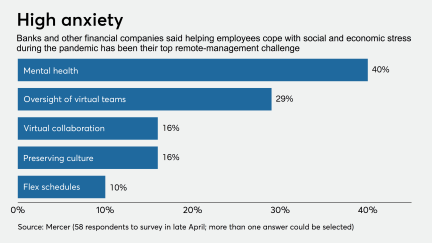
Demand has soared for mental health services as bank employees put in long hours, supervise kids while working at home and endure personal crises. Citi, BofA, Fifth Third and others are getting creative to help them decompress during the pandemic.

Those who are bereaved need comfort from each other and extra effort needs to be made to reach out and encourage employees to take advantage of their EAPs.