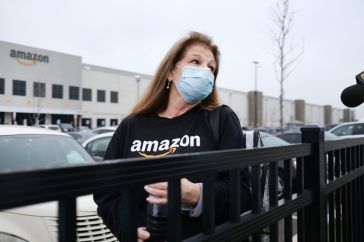
Amazon plans to launch 20 employee health centers
The online shopping giant is partnering with Crossover Health to provide primary care to its workforce.

Follow Us
© 2026 Arizent. All rights reserved.

The online shopping giant is partnering with Crossover Health to provide primary care to its workforce.
The initiative aims to promote a culture of acceptance around returning to the workplace and the rising mental health issues as a result of the COVID-19 pandemic.

Now is the time to reimagine your enrollment process and ensure you have the tools in place to communicate your benefits clearly.

The coffee giant has introduced several new mental health benefits including free Headspace subscriptions and 20 mental health sessions with a therapist a year for free.

When considering how to adapt workplace wellness initiatives, employers must ensure workers have the resources necessary to meet their health and well-being goals, from wherever they are.

The insurance companies plan to launch a new health plan in Q4 to help employers recuperate from COVID-19 losses.

Employees are cautious about discussing their mental health at work, but addressing these challenges can improve outcomes and lower healthcare costs.


“Silence is not going to work,” says Tammy Fennessy, director of benefits for American Eagle Outfitters. “We view silence as an acceptance of racism — it’s not helping the cause.”
Seventy five percent of employers reported being directly affected by opioids, often as contributing to workplace accidents, lost productivity, staffing issues, missed workdays, and increased care and leave costs.

Major depression is just one of hundreds of conditions where employers struggle to improve outcomes and costs.

Organizations addressing the post-pandemic return to work will be required to assemble teams of specialists in safety, security, HR and risk management to aid in the challenge.

Employees are struggling to improve their mental health as the coronavirus is still a main concern, combined with the racial injustice crisis the country is facing.

Employee mental health is vital to a company’s performance, but the pandemic is worsening wellness as time passes and long-term effects compound, driving more insomnia, stress, anxiety, depression, and post-traumatic stress.

Out of the employees surveyed in the U.K., the U.S., Singapore and the United Arab Emirates, those in the U.S. are the most likely to lie to their employer about their reason for taking a sick day.

Corporate messages and social media outreach may be well intended, but diversity experts say companies need to do more to support Black employees in a time of crisis.

Employee mental health is a workplace crisis, with frontline workers struggling with increased anxiety and depression during the coronavirus pandemic.

A benefit start-up unveils a new platform that consolidates maternity and parental benefits into one.

In order to maximize the plans fiduciary responsibilities, a contract with appropriate terms and definitions must be in place to allow the plan to exercise their right to carve-out prior authorization.

Around 63% of workers say their company could do more to support their emotional and mental health during the COVID-19 pandemic. Within this group, 22% said their company’s response was “barely adequate,” “a disaster” or “non-existent.”
“It is critical for employers to actively demonstrate their commitment to mental health parity. Fear and stigma can only be overcome when employees believe their workplace provides a safe environment,” says Dr. Eric Hart, chief medical officer of Healthstat.