Benefits Think Healthcare is a problem. This employer has a solution
Asking difficult questions, pushing for transparency, and challenging how prices are set have helped a healthcare provider offer better coverage to its employees.
Follow Us
© 2026 Arizent. All rights reserved.

Asking difficult questions, pushing for transparency, and challenging how prices are set have helped a healthcare provider offer better coverage to its employees.
New research: How employers are approaching pharmacy benefit management and the outcomes reported by organizations that have already moved to these PBMs.
Why medical specialty drugs are outpacing pharmacy spend, and what self-funded employers can do about it.
Part one of this two-part series looks at the background, transparency solutions and how to understand PBM profitability.
With the current high-cost and high-pressure prescription drug landscape, employers are being forced to rethink how they manage pharmacy benefits – everything from the procurement process to evaluating ongoing service levels, performance, and costs. For many, this may mean shifting from a traditional pharmacy benefits manager (PBM) model to a transparent PBM model.
Direct-to-employer carve-outs can make drugs like GLP-1s more affordable for companies and more accessible for employees.
Pharmacy cost management is one of the toughest challenges employers will face in 2026, according to new data from Employee Benefit News.


HR and benefits leaders have a significant opportunity to expand their playbooks with proven methods to overcome their most intractable challenge.
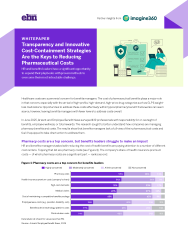
Without the right contractual terms in place, hidden costs may mar pooled purchasing power at the expense of employer clients.


The incentives to encourage non-generic brands will encourage pharmacies to keep them in stock and increase their profits, says UnitedHealth's CEO.

Laws such as Florida's Prescription Drug Reform Act could unravel many of the invaluable protections ERISA has provided.

Learn about Stop Loss industry claim trends, including the impact of gene and cell therapies, and how they are affecting claim costs for self-funded employers.

Biologics are one of the fastest growing category of drugs—and one of the most expensive—making it challenging to balance cost with safety and efficacy. And it's even more challenging to incorporate unbranded biologics and biosimilars into benefits plans.
Here’s how healthcare company, Capital Rx, is bringing pharmacy benefit management solutions to consumers in the wake of rapidly increasing drug costs.


Should employers increasingly consider cutting out the middle man in the prescription drug procurement pipeline?

In order to maximize the plans fiduciary responsibilities, a contract with appropriate terms and definitions must be in place to allow the plan to exercise their right to carve-out prior authorization.

Drugs used to treat chronic conditions are being tried on coronavirus patients; CVS wants to ensure there’s enough to go around.


Following critical feedback and possible IRS conflicts, an HHS FAQ walks back recent pharmacy rules.

Following critical feedback and possible IRS conflicts, an HHS FAQ walks back recent pharmacy rules.
Drugstore are trying to keep Amazon from wresting away their piece of the $333 billion prescription-drug industry.