Managers and employees have different attitudes about their COVID workplace
While 77% of managers feel like their employer genuinely cares about their overall well-being, only 55% of employees do, according to data from Limeade.


Follow Us
© 2026 Arizent. All rights reserved.

While 77% of managers feel like their employer genuinely cares about their overall well-being, only 55% of employees do, according to data from Limeade.
It is critically important that leaders recognize and find creative ways to overcome the not-so-virtual burnout to engage effectively with colleagues and customers, while also remaining productive.
As firms are preparing for what safe work will look like on the other side of the pandemic, it will be crucial to go beyond standard protocols.
Being distracted by everything going on can lead to an uptick in worksite accidents and other risks, as well as reduced productivity and focus.

No two parents are dealing with the exact same set of problems — that means parents within the same company are having very different experiences and therefore need different kinds of support.

From the “Start, stop, continue” method to declining weekly meetings, these tips help employees be more productive and find their purpose at work.


Seventy percent of Black Americans do not receive mental health treatment. To combat stressors unique to this workplace population, employers must address discrepancies in their employee benefits.

Caregiving is our collective duty — it’s no longer just on each individual, but on everyone, including our institutions, to do their best.

Many leaders still have the mentality that if they want something done right, they should just do it themselves.

In today’s remote world, employers need technology to create inspiring work cultures. Here’s how tech firm WorkProud helps companies rev up their employee culture.


One out of four women said they may downshift their careers or leave the workforce entirely, threatening decades of career progress for female employees.

“There's just not a lot of discussions happening and I think sometimes employees are left blind,” says Amanda Baethke, director of corporate development at Aeroflow Healthcare.

Nearly one-third of respondents said they would be uncomfortable getting back to offices, shops and factories, while half said their greatest concern was contracting the disease at work.
“No one should have to choose between voting and earning a paycheck,” says Dan Healey, head of human resources at SAP North America.

Employee mental and cognitive health has deteriorated since the start of COVID-19, but managers can intervene by taking some important steps.

Bosses should do more to make the work-from-home experiment palatable and safe for all involved by subsidizing utility bills and workspace equipment, and changing managerial habits, with more trust given to employees.
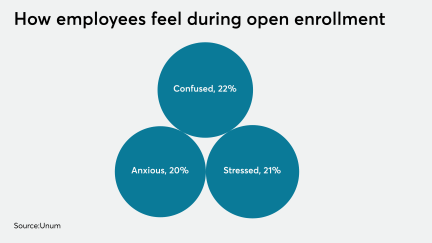
This year’s open enrollment will require new strategies and better tools for employees to make the most informed decisions regarding their benefits.
Employees who may have thrived in a social office setting are suddenly finding the alone time unsettling, while others may wish they were alone as they share workspace with a partner and/or their children.

Mobile-first communication can help employers better communicate with their non-desk workforce.

It is up to employers, in conjunction with employees, to make the call on returning to the office, and there is no point in forcing it if remote working hasn’t hurt productivity and profitability.