- Key insight: Discover how employer caregiving support is emerging as a strategic recruitment and retention lever.
- What's at stake: Unaddressed caregiving needs risk higher turnover, productivity loss and recruitment disadvantages.
- Expert quote: "Offerings go unused without targeted communication," explains UrbanSitter CEO Lynn Perkins.
- Source: Bullets generated by AI with editorial review
This is part two in a series on new research by EBN on the state of caregiving in the workplace.
Research has made the caregivers' challenges clear. Now it's time to translate their feedback into action.
Along with employees' increased willingness to
Read more:
Employer help and understanding
When asked what would ease the strain of their caregiving responsibilities, financial assistance, mental health support for themselves, backup care and assistance with daily tasks were popular caregiver responses. "Someone to sit with my wife so I could shop, go to the doctor, or take care of chores away from the house," said a respondent.
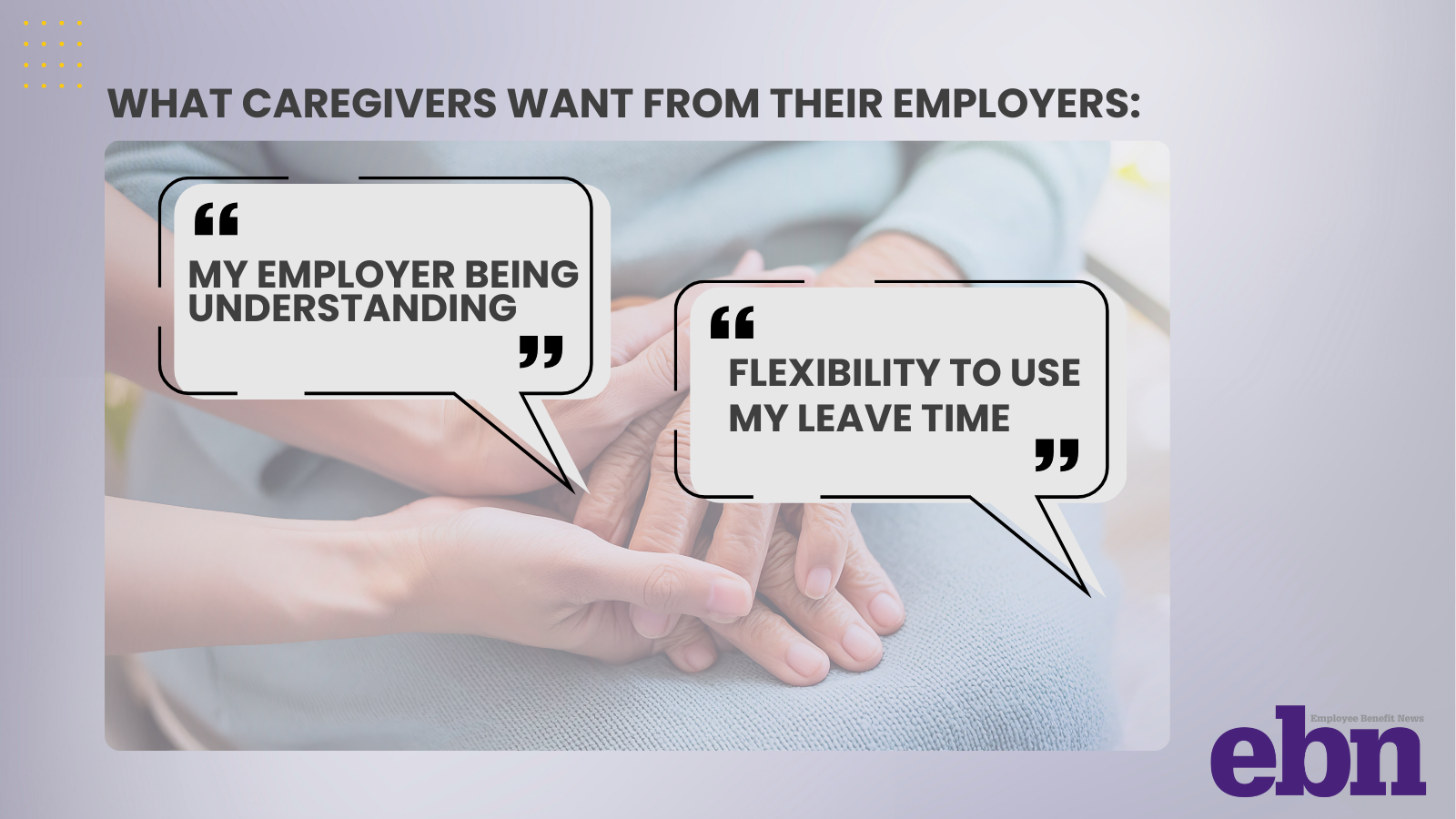
But also present were free resources, such as flexibility, help with navigating the healthcare system, employer empathy and a community of caregiver peers with whom they can relate. "My employer being understanding," one respondent said. "Having someone to talk to when I'm lonely," said another.
Responses were broken down by generation and income level, which can help benefit leaders narrow down the needs of specific workforce populations.
Respondents were also asked which commonly-wanted benefits were already provided by their employer, and the responses can further help leaders form a plan for better support: Many benefits are already offered but possibly underutilized, and a good number of employees said they weren't sure if certain offerings were available, hinting at the need for better benefits communication.
Read more:
Support drives sustainability
In addition to caregiving impacting their personal wellness, such as increased stress and financial strain, many survey respondents reported that their work was negatively affected as well. While women make up the majority of caregivers in the U.S., EBN's research shows a growing number of men are now balancing this role along with their jobs, especially for their partner or children. A study by The Guardian Life Insurance Company of America reflects these findings, revealing that men accounted for 57% of workers juggling work and caring for a loved one.
A recent study of working parents by caregiving connection platform UrbanSitter shows a lack of support is hindering career progress: Nearly 70% said they've made at least one career change due to caregiving challenges, including reduced hours or responsibilities, turning down promotions, changing jobs or leaving the workforce entirely.
Offering a benefit that helps people navigate child care challenges more easily, and communicating its advantages, can remove a great burden from parents' shoulders, says UrbanSitter CEO Lynn Perkins. Just like EBN survey respondents who reported they didn't know if they had access to certain benefits, employers risk having offerings unused if they don't market them well to their workforce.
"It's about tailoring the message to the right audience within the company," she says. "We don't see this being done as well as it could be. For instance, it is very rare that we're included as part of the return-to-work materials that you get when you come back from parental leave, or when you come back from taking care of a parent."
Read more:
The positive impact of offering supportive benefits are also clear: For example, according to research from Harvard Business School, providing employees with caregiving support can lead to a reduction in turnover by at least 5%, with a predicted ROI of 2 to 1.
Caregiving can impact any employee. By offering benefits and an attitude of support, leaders can help keep them active and engaged in the workforce. Stay tuned for part three of this series, focusing on key strategies for helping working parents.