How employers can support mentally, financially strained caregiver staff

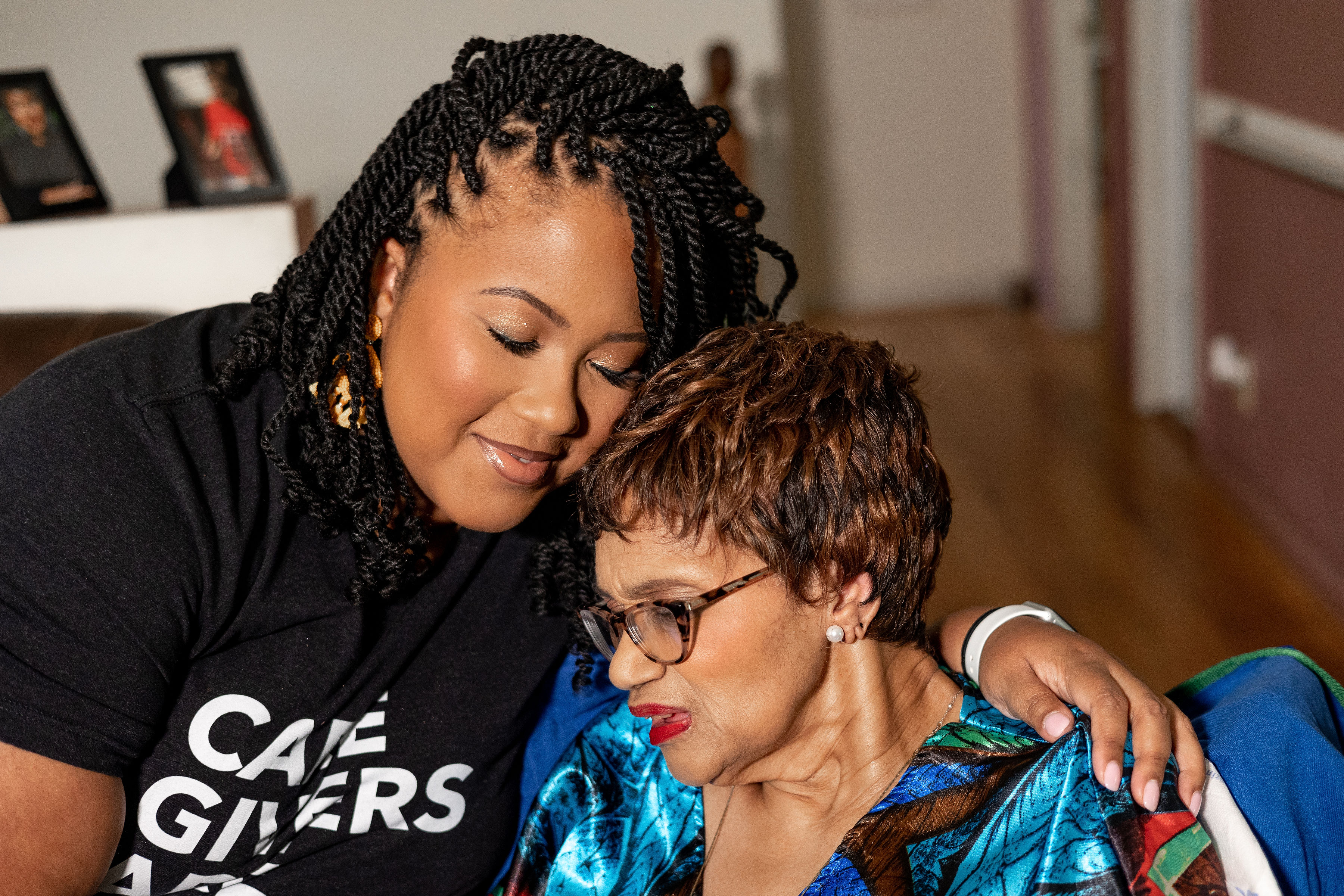
A woman hugs her mother.
Jessica Guthrie and her mother, Constance Guthrie. Jessica has spent the last 12 years taking care of her mother.
Provided

Key Insight: Learn how rising unpaid caregiving is shifting employer cost and workforce retention dynamics.
What's at Stake: Worsening caregiver strain risks higher healthcare costs and labor shortages for employers.
Forward Look: By 2030, 26 states will have ≥20% aged 65+, intensifying long-term care demand.
Source: Bullets generated by AI with editorial review

Processing Content

The cost of caring for America's aging population is straining caregivers, with 77% saying they have been financially overwhelmed, according to a new survey. 

The findings from medical device supplier Aeroflow Urology also highlight the emotional toll on caregivers: 76% say their mental health has been affected since taking on the role in tandem with their careers. 

"Caregiving is the ultimate, often invisible, sacrifice that serves as the backbone of American healthcare," said Mica Phillips, vice president of Aeroflow Urology. "These results indicate the country is failing our caregivers, and that true financial and systemic support is crucial to preventing more severe complications."

By 2030, 26 states are projected to have at least 20% of their populations aged 65 and older, according to U.S. Census projections, intensifying demand for caregivers as most older adults live with multiple chronic conditions. A 2025 report from the National Alliance for Caregiving and AARP estimates that about 63 million Americans currently serve as family caregivers. 

Seventy-three percent of respondents to Aeroflow's survey said they have been providing care for more than five years. The survey was conducted in April and polled more than 1,000 Americans who are providing regular, unpaid care and assistance to someone due to a disability, medical condition, or older age.

A 'critical shortage' of support

Balancing work with caregiving is a challenge for many caregivers, with 57% of survey respondents saying they have reduced their work hours. Another 11% were forced to leave their jobs entirely. 

"Caregivers are being forced to choose between their intended career paths or whether to support their family members in their time of need," Phillips said. 

Forty-two percent of caregiving households earn less than $75,000, yet they face significant monthly out-of-pocket costs. One out of four caregivers spends more than $500 a month on caregiving supplies, and more than half (57%) report their loved one has suffered from a more severe complication due to not having enough resources or assistance.

Most (77%) use additional government assistance programs alongside Medicaid and insurance coverage, including SNAP (38%) and Supplemental Security Income (45%). 

Read more: The hidden strain of special-needs caregiving on today's workforce

"Our survey data proves that families are actively exhausting every resource available to them, but the benefits are not enough to cover their loved ones' needs," Phillips said. "The issue isn't a lack of awareness; it is a critical shortage of comprehensive, systemic support."

Beyond insurance, Phillips said that employers can assist caregivers through targeted support such as dedicated care coordination services, specialized medical supply navigation and mental health benefits.

"The modern day workforce has shifted, and employers can no longer ignore it," she said. "When employees are faced with the difficult decision to choose between their employment and caregiving, it is imperative that businesses take supportive action." 

A caregiver's perspective

For Jessica Guthrie, an Aeroflow Urology partner and caregiver advocate, the demands of caregiving are deeply personal. She has spent the last 12 years caring for her mother, Constance Guthrie, who has Alzheimer's disease.

Read more: How to support sandwich caregivers over the summer

Guthrie was only 26 when her mother received the diagnosis. As an only child and sole caregiver, she had to build her career while simultaneously caring for her mother.

A woman poses for a photo.
Jessica Guthrie
Provided

"Becoming a caregiver at such a young age gave me so much perspective and completely shifted my priorities and what success looks and feels like," she said. "I went from being very achievement-oriented and focused on the next professional milestone to truly understanding the power of caring for another human while maintaining their dignity and respect."

Guthrie noted that nearly everyone will either give or receive care at some point in their lives, and said employers can prepare now by building intentional support systems before workers reach a breaking point. 

"Caregiving should not become a crisis because a workplace was not prepared. That is a choice companies can make differently, starting today," she said. 


For reprint and licensing requests for this article, click here.
Healthcare Health and wellness Employee benefits Workplace culture
MORE FROM EMPLOYEE BENEFIT NEWS
Load More