As corporate leaders
For decades, workplace dining was treated as a facilities expense — an amenity to maintain rather than a lever to shape behavior, well-being and culture. That mindset is changing quickly.

Across industries, employers are recognizing that food has become one of the most consistent and human ways to
This shift favors restaurant hospitality-forward thinking shaped by culinary identity, not facilities logic; menus influenced by tenant mix and local context; and environments designed to prompt connection, not just throughput. It also favors operating structures that can move quickly, where leadership is accessible, and programs evolve with the workforce rather than on rigid quarterly schedules.
Read more:
From cafeteria to experience driver
Historically, workplace cafeterias were designed to subsidize convenience, move people through quickly and manage cost. The goal was predictability and efficiency, not experience. But that model is increasingly out of step with how people experience food everywhere else. Long before the pandemic, other foodservice environments had already evolved. Airports transformed from grab-and-go corridors into curated, regionally relevant dining destinations. College campuses began treating dining as a cornerstone of student life — an experience that influences recruitment, satisfaction and community.
Post-pandemic, workplace dining is now catching up. Today, employees expect food at work to match the best food experiences in their daily lives. Employers must now answer a more complex challenge: how to make food good for people and good for business. More organizations are experimenting with expanded dayparts, afternoon service and barista-led concepts that mirror the energy of local cafés. Amenity lounges and hybrid hospitality spaces that are part coffee bar, part social hub have become strong anchors for corporate campuses.
Beyond nutrition and convenience, dining has a powerful human impact.
Read more:
Food as a strategic lever
Forward-thinking organizations are reframing dining as a strategic business lever. High-quality onsite dining removes friction from the workday by saving time, simplifying decisions, and offering something employees genuinely value. In many workplaces, it has become one of the most consistent drivers of voluntary in-office attendance.
Data supports this connection.
We see this play out in practice. When a West Coast client in a multi-tenant downtown building reimagined dining to align with how employees actually use the office through a restaurant-inspired approach, patterns began to change. Teams started scheduling more in-person meetings around shared meals, informal collaboration increased, and midweek attendance stabilized — without formal mandates. The shift came not from policy, but from making the workplace easier, more human and more rewarding to be in.
Building community
The physical environment plays a powerful role in whether community forms or fades at work. Warm, residential-feeling cafés and amenity lounges consistently outperform purely functional layouts. Spaces that blend café energy with comfortable seating and hospitality-driven service give employees a reason to stay onsite rather than stepping out, reinforcing the workplace as a social environment.
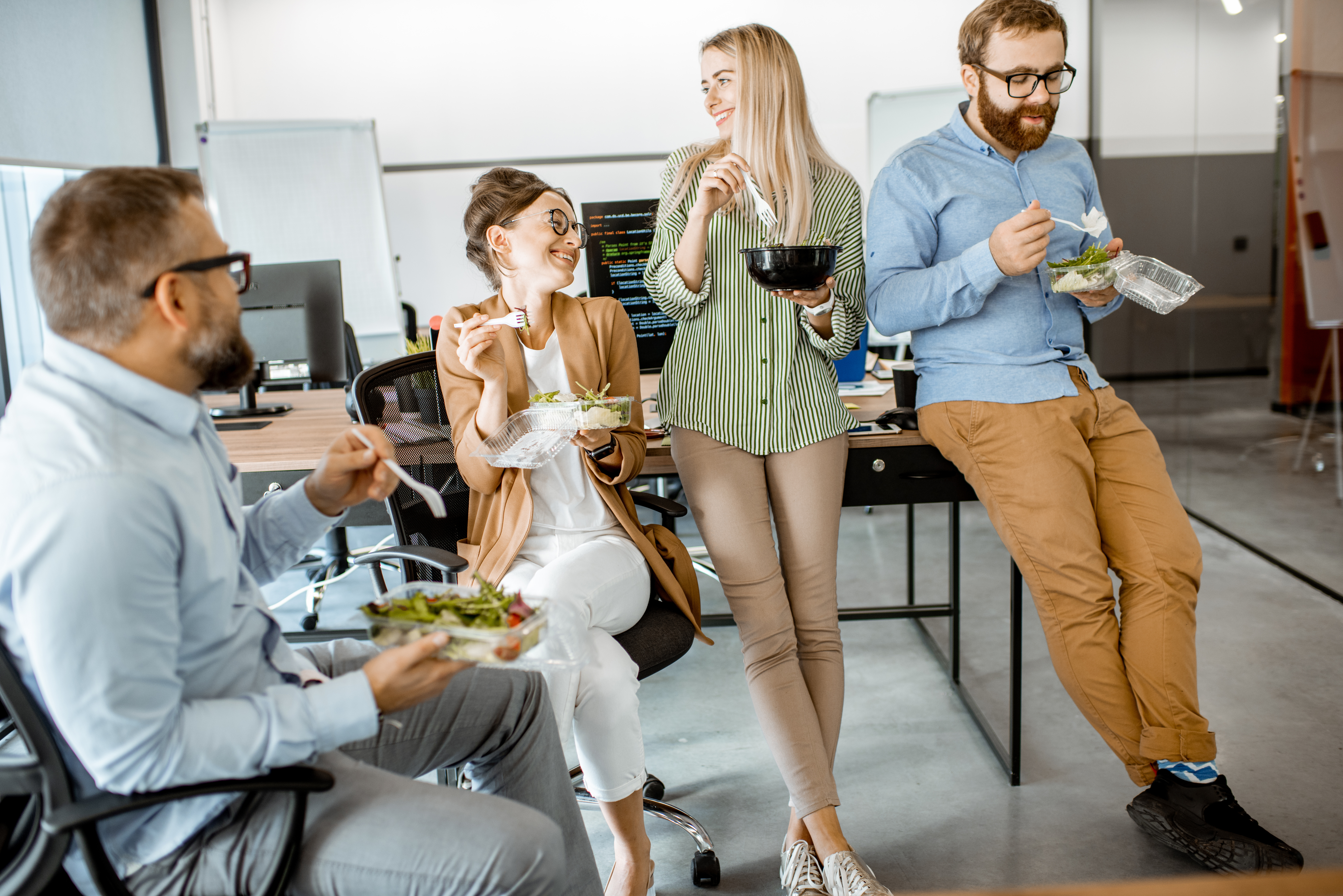
Food also builds community in ways that other culture perks cannot. Dining spaces are natural gathering points — places where people intersect across teams, roles, and schedules. When those spaces are designed intentionally, they encourage lingering, conversation and connection, especially valuable for hybrid teams that may otherwise rarely overlap in person.
Inclusive menu design is equally important. When employees see dietary needs and cultural preferences reflected in the café, satisfaction increases. Thoughtful programming amplifies this effect. Chef pop-ups, seasonal menus, localized ingredients and brands, and visible storytelling about sourcing and nutritional benefits turn dining into a shared experience. We consistently see higher volume on days featuring chef activations, themed events, or wellness-aligned menus.
Read more:
Data makes it sustainable
To deliver both experience and efficiency, modern dining programs must rely on data. Point-of-sale insights, daypart trends, preference tracking and service feedback loops help employers understand what their workforce actually wants. These tools allow programs to adapt quickly, reduce food waste, and align supply with real demand — especially important in workplaces with fluctuating attendance.
Another Infuse client knew fluctuating attendance made a one-size-fits-all dining model difficult to sustain. By using point-of-sale data and real-time guest feedback to refine menus, staffing levels, and service windows, the program aligned more closely with actual demand. The result: less food waste, stronger guest satisfaction, and a dining experience that remained consistent even as hybrid schedules continued to evolve.
Reimagining food as a true workplace benefit requires a challenger mindset that prioritizes experience over convention and sees dining as a culture engine, not a cost center. When done right, food becomes one of the most effective tools companies have to bring people together, support well-being and make the office worth the return.