
Innovative program helps Wellesley combat employee stress
The university partners with meQuilibrium for a wellness program to help workers develop coping skills.
Follow Us
© 2026 Arizent. All rights reserved.

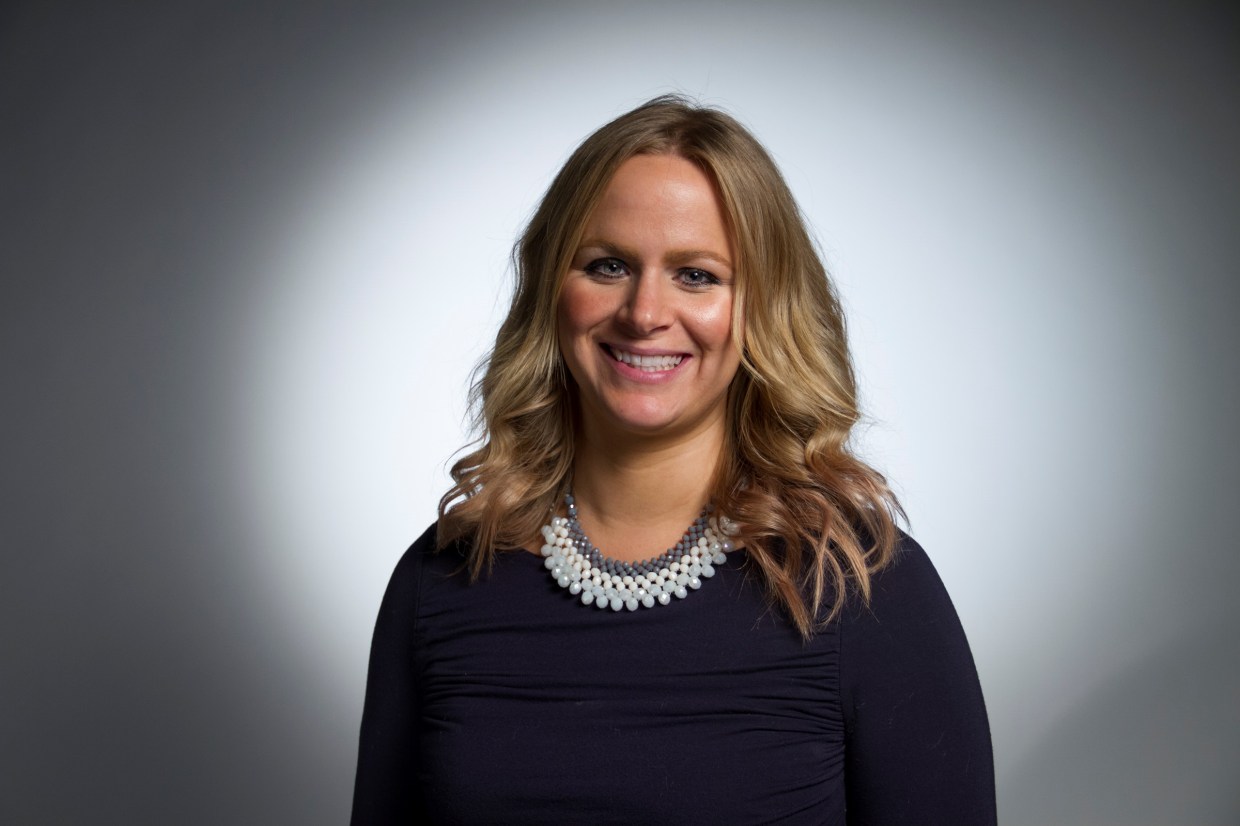
The university partners with meQuilibrium for a wellness program to help workers develop coping skills.
A growing range of cost transparency tools are attempting to help employees make better health care decisions.
The Dave Thomas Foundation for Adoption releases its annual list of companies with the best adoption benefits.
The debate over active and passive management detracts from the fact that Americans simply arent saving enough for retirement.
Never before have there been so many investment options for retirement savings.
To battle rising health care costs, Jackson Labs makes a big investment in a two-pronged approach combining a preferred provider along with building incentives into its plan design.
Never before have there been so many investment options open to retirement plan sponsors and participants. Still, at a time when most employers are focused on health care reform, selecting said options requires great care.
Do you work sitting on your butt all day? Yeah, me too – and we're not alone.
Last September, after the Patient Protection and Affordable Care Act gave the Department of Health and Human Services authority to review premium rates in states that didn't have strong enough review programs, the agency began handing down decrees of "unreasonable" premium rates for insurers that proposed increasing rates by an average of 10% or more – meaning HHS can publically shame an insurer.
For all employers' focus on curbing obesity statistics through healthy eating and exercise programs, it can be easy to forget that smoking remains the leading cause of preventable death in the United States. One employer, Nelnet, is remaining vigilant about stamping out smoking among its employee population.
Leading U.S. organizations are turning to prevention-based employee health benefits to improve workforce health and reduce health care costs. Yet, according to a survey released by Virgin HealthMiles, there's a critical awareness gap threatening that strategy's success.
Although premenstrual syndrome is a well-known – if not well-understood – women's health condition, premenstrual dysphoric disorder is an even lesser-known related illness. PMDD is marked by many of the same symptoms as PMS – bloating, trouble sleeping and concentrating, irritability, headaches, backaches and food cravings – but to a more intense degree.
High-deductible health plans are popular among employers because – at a time when health care costs are increasing at an average 10% per year – the plans tend to save companies a lot of money.
With the movement from traditional paid leave plans to paid time-off banks, many employers may wonder if the switch is effective in managing employee absences. Nearly one in five employees in the United States receive leave in the form of a PTO bank, but the contours of such policies are often little understood – especially outside of the human resources community, according to a new study out by the Institute for Women's Policy Research and CLASP, a nonprofit that works to improve the economic security of low-income families.
The growing trend among employers to enforce companywide social media policies has sparked the birth of the Password Protection Act of 2012. The new legislation prevents companies from requiring employees to provide access to their personal social networking accounts. While many companies may create a social media policy to protect their corporate reputation, a new Workplace Options and Public Policy Polling survey of American workers shows that companies who scrutinize their employees' personal accounts and social media activity may be doing more harm than good.
Employers and their employees hold different perspectives on how to best achieve retirement preparedness through 401(k) plans, according to the results of two newly released studies from Schwab Retirement Plan Services. Taken together, the studies indicate that, despite efforts by employers to educate workers on the 401(k) offering, most workers are unengaged and financially unprepared for retirement. CFO Research Services, on behalf of Schwab, surveyed more than 200 senior finance and human resources executives from large and midsized U.S. companies about their perceptions of 401(k) plans in the workplace. Key findings include:
Later this month, employers will know – based on the Supreme Court ruling whether to uphold the Patient Protection and Affordable Care Act – if their employees must have health insurance. Should the law and all of its provisions be ruled constitutional, the cost of offering health benefits may prove too much for some employers, allowing employees to seek coverage from state-run insurance exchanges.
A 65-year-old couple retiring in 2012 is estimated to need $240,000 to cover medical expenses throughout retirement, according to the latest retiree health care costs estimate calculated by Fidelity Investments. This represents a 4% increase from last year, when the estimate was $230,000.
There are few guarantees in life, and the ones there are – like death and taxes – aren't very appealing. What does appeal to most Americans, on the other hand, is the guarantee of a secure retirement. However, as retirement confidence surveys and savings rates continue to show, a financially sound retirement is not yet a reality for many U.S. workers. Christine Marcks, president of Prudential Retirement, believes that annuities can bring the retirement guarantee that Americans desperately want and deserve. In this exclusive interview with EBN, Marcks lays out her reasons for championing annuities and how to expand their reach within workplace retirement plans.
Dr. Sean Truman grew up in Nairobi, Kenya, where his father worked for the United Nations. He attended the International School of Kenya in Nairobi, where his mother was a teacher. He knows what it means to be an expatriate.