- Key Insight: Learn why reallocating wellness budgets toward on-site primary care can change outcomes.
- What's at Stake: Rising spend and benefits competitiveness if engagement and outcomes don't improve.
- Expert Quote: "Wellness must be placed directly in employees' path," says Karthik Ganesh, OnMed CEO.
- Source: Bullets generated by AI with editorial review
Leaders are realizing that traditional solutions aren't enough to combat rising healthcare costs, meaning they'll need to explore more creative approaches to improve outcomes.

Processing Content
Annual wellness programs — including health risk assessments, online wellness portals, self-guided educational content and on-demand health and lifestyle content — cost organizations between $150 to $1,200 per employee per year, according to data from medical clinic Avion Health. But if those programs aren't leading to improved health outcomes and reduced spending, leaders should be exploring more innovative solutions to drive engagement and outcomes.
"Just because you put a wellness program out there doesn't mean employees are going to engage in it and suddenly take care of their health any better and drop your healthcare spend down," says Karthik Ganesh, CEO of healthcare provider OnMed. "You have to put wellness squarely in the path of employees."
Read more: How this small business launched an on-site healthcare clinic for its staff
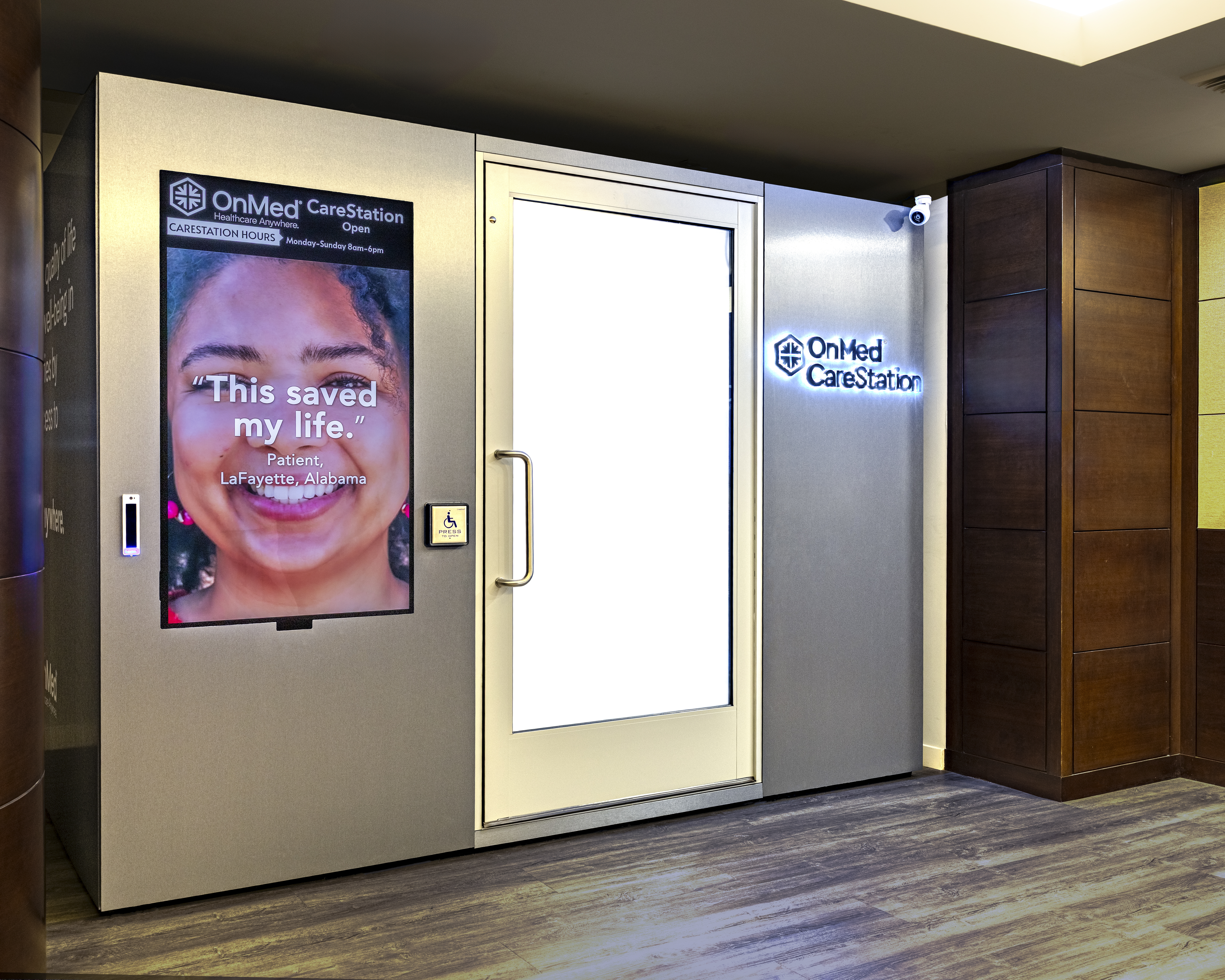
Ganesh says leaders should be spending the millions of dollars earmarked toward underused wellness programs toward on-site healthcare access instead. OnMed's care stations, for example, are 8x10 private clinical spaces run by primary care physicians equipped with standard equipment such as scales, blood pressure cuffs and pulse oxygen machines. The condensed size means that the station can be put up in a company's building, office buildings' lobbies or directly on a businesses' floor. Employees can schedule their appointments for a time that works for their schedule.
"It gives employees all of the psychological comfort of a clinic with all of the benefits of telemedicine," Ganesh says. "Employees just walk into the station, the door closes, and you have a clinician working with you and taking care of you in a very holistic manner."
On-site care can create a reliable healthcare option and help employees avoid high-cost trips to emergency departments and urgent care clinics for routine care. In fact, approximately 30-60% of emergency room visits are for non-urgent, routine care that could be treated in primary care settings, according to the National Committee for Quality Assurance.
Today, approximately 50% of large employers have some sort of onsite or near-site clinics, according to the National Association of Worksite Health Clinics. And while the trend has yet to break into midsized or small businesses, the benefit is already showing proven positive outcomes. Eighty-six percent of employees who used OnMed's care station reported they did not need a specialist referral — a common outcome of emergency room visits that often drives up healthcare costs. By offering a designated, secure, and convenient place for regular care, employers are increasing benefit utilization while keeping costs significantly lower.
Read more: Embedded clinical care is the future of healthcare navigation
"If the traditional system was supposed to work it would have worked already," Ganesh says. "Leaders have to be willing at this point in time to completely change the game and try something completely different."
Putting up in-building portable clinics isn't the only solution available to employers, especially if they don't have the budget or the resources to do so. Organizations can form partnerships with smaller, near-site clinics that are more accessible to their workforce. Individual businesses within the same building can also partner with each other to crowd-fund an in-building clinic for all.
Ganesh encourages benefit leaders to push the boundaries of tradition and seek new and progressive solutions.
"The time to be passive about healthcare is over," Ganesh says. "Take care of your employees because that's part of what your job is as a leader and take care of your own pocketbook because it's not getting any better."