Wellhub's CPO calculates the ROI of caring

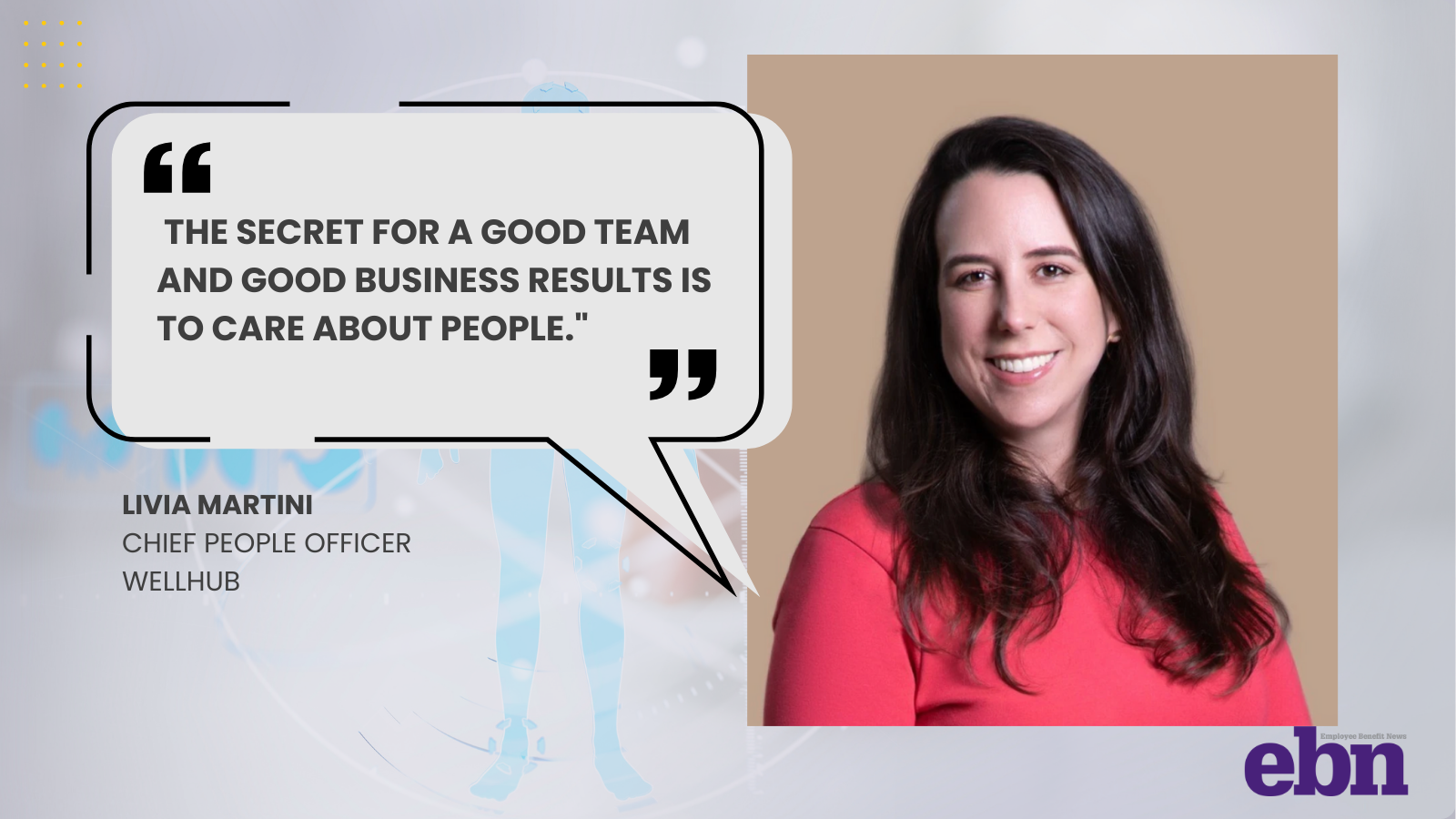
Livia Martini, CPO at Wellhub
  • Key insight: Discover how aligning flexible benefits to KPIs turns people programs into strategic drivers.
  • Expert quote: "Measuring people impact makes HR a business driver," says Livia Martini.
  • Forward look: Prepare for expanded flexible leave policies as companies link well-being to retention.
  • Source: Bullets generated by AI with editorial review

While finishing her MBA in 2013, Livia Martini told a recruiting counselor she wanted to join a company where the people team truly cared about its employees. "Good luck finding it," the counselor said. 

Processing Content

Martini eventually started a team of her own at global corporate wellness platform Wellhub. As chief people officer, her team aligns policies like flexible work arrangements and thoughtful benefits with business goals to ensure that caring for people is not "fluffy," but strategic.

"I had seen the power of a good people team — what it does to the [workforce's] morale [and] productivity," Martini says. "And the more I do this, the more I see that the secret for a good team and good business results is to care about people."  

Read more:  This adviser coaches ex-NFL players on health insurance

A better approach to business

Martini's drive to do things differently was set in motion right out of college, while working in a bank in Brazil. Her manager showed that it was possible to lead by a bigger purpose. 

"I fell in love with the leadership style of this guy, because they were making environmental sustainability front and center of everything they did," she says. "[He said,] 'We have a corporate responsibility to do good things for the world.' And I just said, 'Yep, this is what I want to do.'" 

Martini went on to work as an investment banker and manager consultant, giving her a strong appreciation of results-driven work. By combining care and compassion with data, she has been able to turn her people team into a valuable resource in the eyes of Wellhub's executive leadership, and create an environment, culture and benefits package that allow its diverse workforce to thrive. 

"Because my past is in very hard science, I look at things on the people side in the same way," Martini says. "You need to measure it. You need to track the impact. You need to understand what you're doing and why and how you're doing it. This has an amazing transformative power: It's how people see the people function, but also how the people function gets better business results. Teams that don't do it like this are bound to fail eventually." 

Read more:  GLP-1s could be another tool in combating substance use disorder in the workplace

Martini shares what building a caring workplace looks like in practice, how she decides what benefits to bring in, and her goals moving forward.   

What does an optimum workplace look like, and how can leaders measure success?
People are looking for belonging, to find a place where they can be themselves [and they] don't have to worry about other things, therefore they can focus on their work. It means [creating a] structure, environment, culture and processes that allow people to perform at their best. 

You can measure things that are byproducts of this like engagement and loyalty. Tenure is a great one; when you see that the tenure in your company is growing, this means that people are staying and developing. 

People need to feel autonomous, they need to have impact, and they need to feel that they are advancing. No two people are the same, so what we created here is a culture built on flexibility and accountability, which means I, as the chief people officer, will not tell someone what to do. I will give them guidance and guardrails, they're going to decide what is best within those guardrails, and then I'm going to hold them accountable for the results. 

How do you approach benefit design for such a diverse and global workforce?
We try to separate benefits into three buckets. One is the mandatory things — healthcare, for example. The second bucket is what I'm going to call universal well-being related, and the third bucket is the local needs. 

We try to maximize the second bucket, [which] supports [employees] doing what's best for [them]. This is vacation days. This is our product. This is leave of absences and things like that. We're trying to go as flexible as we can and be as much above the market as we can be in things where we see results. 

For example, in Brazil, the government requires 30 calendar days of vacation … [but] you can't do a lot of breaking up, and there's not a lot of flexibility. We see that if people have one more week that they can use in a very flexible way, it makes them [happy]. We also created our parental leave in the U.S. to have almost no differentiation between primary and secondary caretaker, [and to be] much longer than what is mandated, and for child birth, for adoption, or anything like that, because we want everybody to be able to thrive.

Our CEO took six weeks off for his child's birth. The bond that he created with his daughter is going to last for his lifetime. This is the type of thing that's important for us. Yes, it costs the company money, but it costs so little versus what an engaged, and well-rested employee with their well-being in check, can produce. 

In the third bucket, we're looking at specific local laws, or specific local incentives that would lead us to make different decisions for different countries. 

We want to incentivize all types of people to come to our company, because different points of view, different experiences, and different perspectives bring better business results.

Read more:  How this leader built a flexible and personalized benefit strategy

What is one of your main goals moving forward?
To have the people team truly understand their value within the ecosystem of the company. Sometimes the downside of the people function is that we're always serving others, and [the work we do is] not always seen. 

We need to care for ourselves as number one, such that we can care for others. The way to do this is to live and breathe what we preach, but also to understand the impact that we have. Only we can do what we do. How can we magnify this impact, and how can we strengthen our team to be extremely resilient, but also see the success that they're having at the company? I'm working towards that by making people autonomous, [letting] people make mistakes and then learn from them, and show them that it's OK.

For reprint and licensing requests for this article, click here.
Manager Diaries Workplace culture Employee benefits
MORE FROM EMPLOYEE BENEFIT NEWS