Why are 401(k) participation rates so much lower at smaller employers?
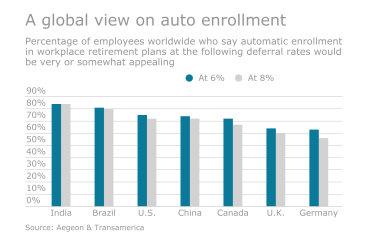
A reluctance to auto-enroll employees is one reason, but there are others for advisers to consider.

Follow Us
© 2026 Arizent. All rights reserved.

A reluctance to auto-enroll employees is one reason, but there are others for advisers to consider.
A number of large employers are responding to the troubling trend by offering financial wellness and education programs to employees.

Making plans transferable from employer to employer can help clients attract and retain top talent.

Employees should look into filing for Social Security as soon as they retire to generate extra income and allow their spouse to delay and grow their retirement benefit.


Updated calculators and a leaner interface are intended to raise awareness of “retirement readiness.”
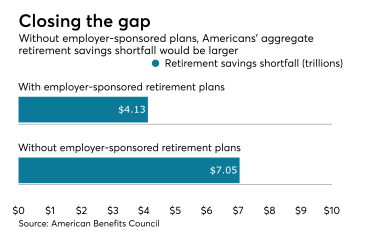
Regardless of the regulation’s future, employers need to ensure they’re passing costs on to plan participants that are reasonable in light of the services provided.

Regardless of the regulation’s future, employers need to ensure they’re passing costs on to plan participants that are reasonable in light of the services provided.

By taking these into account, advisers can do a better job of helping employees prepare for their golden years.
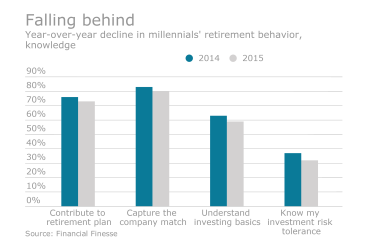
A study has found that while millennial employees are saving for retirement, they are making mistakes that can be easily corrected.

If plan sponsors don’t use technology to create seamless plan-to-plan portability, they risk turning their accounts into islands cut off from other retirement plans.
Updated calculators and a leaner interface are intended to raise awareness of “retirement readiness.”
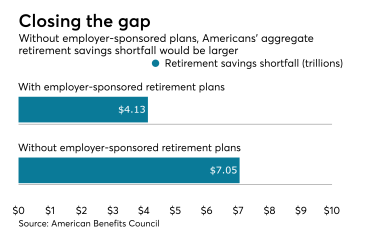
The updated census provides a golden opportunity for sponsors to clean up their plans.

From Roth 401(k) accounts to HSAs, companies are increasingly enhancing programs to help employees get ready for their post-work years.

The updated census provides a golden opportunity for sponsors to clean up their plans.
Despite the recent Fifth Court ruling, it’s too soon to say the regulation is dead. There may be a rehearing, and most importantly, best practice standards will live on.

As a retirement planning tool, contributions to these accounts can offer plan participants a more nuanced approach to retirement saving than a traditional 401(k) plan can on its own.

Despite the recent Fifth Court ruling, it’s too soon to say the regulation is dead. There may be a rehearing, and most importantly, best practice standards will live on.
From Roth 401(k) accounts to HSAs, companies are increasingly enhancing programs to help employees get ready for their post-work years.

Plan sponsors should connect with workers by integrating financial wellness concepts, including behavioral finance/economics elements, talking about loans and withdrawals and offering one-on-one meetings.

These funds can help workers put saving plans on autopilot, but they can also take on more risk than expected.
