Two-thirds of Americans aren’t putting money in their 401(k)
Two-thirds of all Americans don’t contribute anything to a 401(k) or other retirement account available through their employer.
Follow Us
© 2026 Arizent. All rights reserved.


Two-thirds of all Americans don’t contribute anything to a 401(k) or other retirement account available through their employer.

Thinking about taking a job at a small company? Don’t expect a good retirement plan.
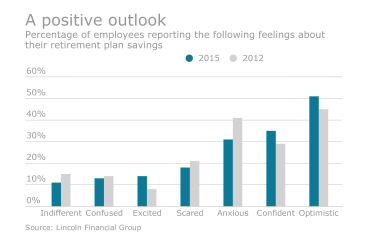
But employer auto-enrollment, rather than employee financial intelligence, may be the reason.
For Americans, few decisions are as financially consequential as choosing when to take Social Security. Or as hard.
The goal in California, Oregon, Illinois, Maryland, and Connecticut over the next few years is to give nearly every worker the chance to save for retirement at work.

Baby boomers suffer disproportionately from its financial fallout — especially women.

Americans are addicted to their jobs. U.S. workers not only put in more hours than workers do almost anywhere else. They’re also increasingly retiring later and taking fewer vacation days.

A startup has a way for workaholic Americans to get something for those days they just can’t take off.
Retirement plans lose touch with almost a million workers a year.

They are working at ages when their mothers were retired. Expect the trend to continue, experts say.
Most people go to the doctor for medical advice. Why can’t we all get a checkup for our financial health, too?
The shift away from pensions means “double disadvantages for the less educated,” a study finds.
When millennials are asked, they say retirement is a top priority. Millennials even put saving for retirement well ahead of student loans, credit card debt and job security.
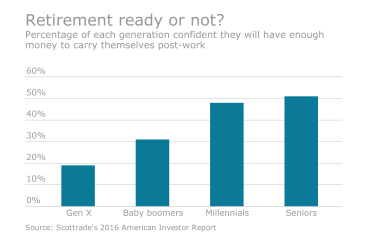
Company after company has repudiated traditional pensions, pushing younger workers into 401(k)-style retirement plans. For diligent savers, a 401(k) can accumulate a big balance, but when the time comes to start using it, things will get a lot more complicated than it was for their parents.
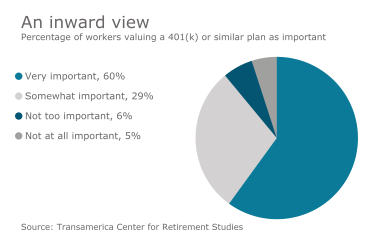
While experts agree automatic 401(k) features will help workers' retirement readiness, employers still remain skeptical – with many chalking their concerns up to added plan costs.
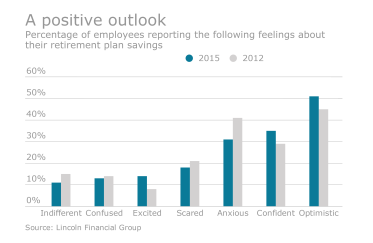
Most investors, including wealthy ones, end up better off with a mix of assets in traditional and Roth accounts, a new study finds.
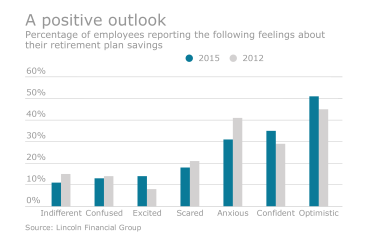
Almost 20% of Americans 65 and older are now working, according to the latest data from the U.S. Bureau of Labor Statistics. That’s the most older people with a job since the early 1960s, before the U.S. enacted Medicare.
With strategic federal-level assistance for retirement still lagging, states including Illinois, California and Oregon have stepped in with their own automatic IRA plans to boost employee savings.
Many employees may not be aware they have the option of a Roth 401(k), and those who do often don't have any idea which to pick — the traditional 401(k) or the Roth 401(k).
For a decade, a new kind of mutual fund has been taking over Americans retirement portfolios. The target-date fund is designed for people with no knowledge of investing.