- Key insight: Discover how embedded AI personalizes benefits decision-making across employees' everyday platforms.
- Expert quote: Sarah Liebel, Nayya COO, says organizations need integrated health-and-wealth data to guide benefits choices.
- Supporting data: Nearly three-quarters of employees now consult AI for health and financial questions.
- Source: Bullets generated by AI with editorial review
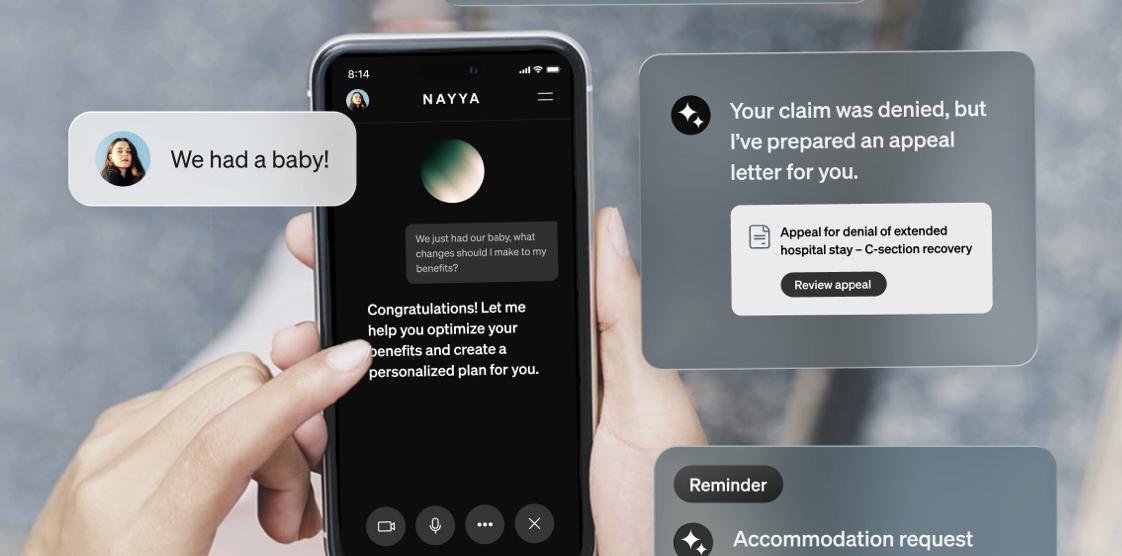
Nearly three-quarters of employees are turning to artificial intelligence for answers about health and finance, according to AI benefits-assistance platform Nayya. How can benefit leaders take advantage of this trend to
At Nayya, AI is integrated into a company's existing programs, including its human resources information system and benefits platforms, along with
Working in tandem with technology improves employee decision making and engagement in areas workers value most, such as healthcare and retirement, says Sarah Liebel, Nayya's COO and president. Employers see increased ROI on benefits, too.
"To be able to make the best choices around your benefits, you need to have data and you need to make recommendations that are across both health and wealth," Liebel says.
Read more:
How AI improves benefits interaction
By sending simple, customized suggestions through the communication channels employees use every day, AI can help facilitate enrollment and encourage better use of existing benefits. For example, if Nayya recognizes that someone received a promotion, it might recommend an increased contribution to their health savings account (HSA), Liebel says. The employee can then do so with the click of a button.
"Another example is our claims product," she says. "We can say, 'We noticed that you were just in the hospital. You purchased accident insurance during open enrollment. We identified it and filed [a claim] on your behalf, and just wanted to let you know that you have [money] coming back into your bank account. By the way, would you like to use that to increase your HSA contribution this month?' That's what technology is now allowing us to do for the first time."

Read more:
Improving administration and appreciation
When employees have access to reliable, tech-based benefits information, it reduces the burden on benefit professionals. Liebel points out that benefit leaders in organizations using Nayya's self-guided tool have seen a 46% reduction in inquiries. On top of that, employees are prompted to consider things that could impact their needs in the future, such as a home purchase, having a child, or suffering a health emergency — an additional step benefit leaders might not have the bandwidth to pursue.
"What's great about moving into the AI world is we guide people, because benefits are really complex," Liebel says. "We have so much data that we can expose people to more of an interactive interface to allow them to have more discovery."
A deeper understanding of benefits also boosts employee appreciation for their total rewards. A recent report from Nayya found that 40% of employees don't recognize medical insurance as an aspect of compensation. When employees better understand and use benefits that help them navigate health issues, financial concerns or both, their perception of employer support — and thus retention and productivity — improves, Liebel says.
Read more:
When benefit leaders bring in AI technology to improve employees' interactions with their offerings, the process becomes less transactional and more impactful, regardless of a company's size, Liebel says.
"[We] have a robust understanding of who your employees are so that we can take care of them the same way that you, as a benefits leader, would like to," Liebel says. "You don't have the time and luxury to get to know all of the nuances of each of their lives and their situations, [but] you can do that now through data … and then invest more time into building those relationships and value-add services that only a human can do."