Employees cite finances as leading barrier to workplace well-being

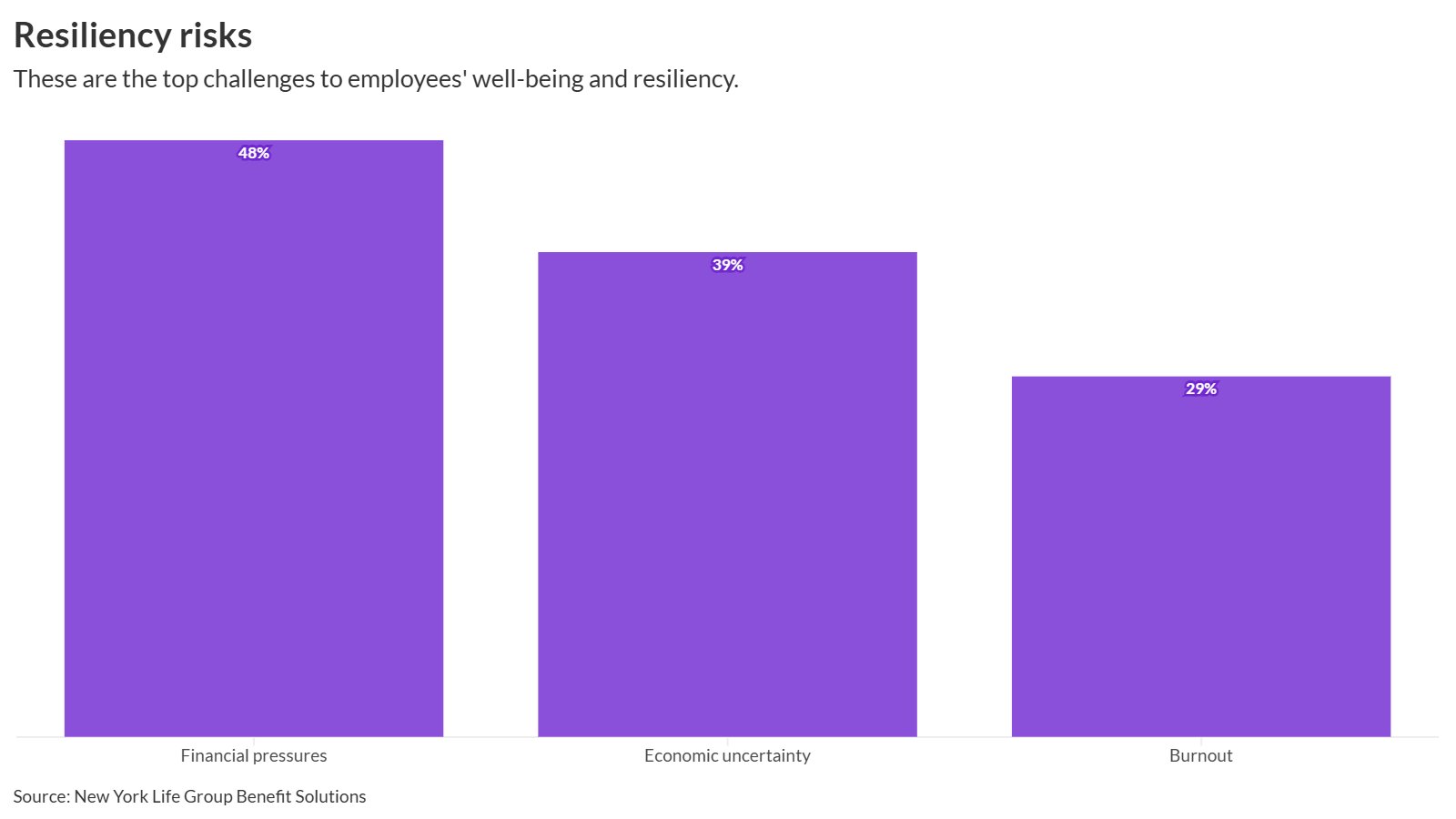
A chart showing resiliency risks.
  • Key Insight: Discover how financial strain now ranks as the top resilience risk for employees.
  • What's at Stake: Persistent financial stress threatens productivity, engagement, retention and employer brand.
  • Supporting Data: 48% of employees cite financial pressures as the top well-being challenge.
  • Source: Bullets generated by AI with editorial review

Financial challenges are the No. 1 risk to resiliency among U.S. employees, threatening a key component of workplace well-being, according to a new national survey. 

Processing Content

The findings from New York Life Group Benefit Solutions show that workers are struggling to recover when faced with stress, disruption or unexpected life events. 

Across industries and demographics, 48% of employees identified financial pressures as the top challenge to their well-being and resiliency, followed by economic uncertainty (39%) and burnout (29%). Employees say financial strain contributes to increased stress and fatigue at home, as well as difficulty concentrating and lower job satisfaction. 

"Resiliency is a critical aspect of workplace well-being," Scott Berlin, head of New York Life Group Insurance, said in a news release. "Employers have an opportunity to move beyond traditional wellness programs and take a more holistic approach — one that helps employees recover from challenges, adapt to change and stay engaged over the long term."

While there are many challenges surrounding resiliency in the workplace, the survey revealed a more positive outlook for well-being. Employees rate their overall well being as 7.5 out of 10, and 60% say their employer's support for well-being is good or excellent. 

A big opportunity for employers

Organizations have an opportunity to be more proactive in better understanding employee needs and aligning proper support, the report concluded. Most employers (75%) say they have a responsibility to support employee resiliency, yet just 43% of workers expect their employer to do so. 

Asked to identify the biggest gaps, employers cited manager empathy and post-stress check-ins (33%), clear communication about available resources (33%) and flexible leave during illness or recovery (29%).

"Building a resilient workforce doesn't happen overnight," Berlin said in the release. "It starts by understanding what employees need to recover and then thoughtfully aligning benefits, programs, policies and support systems in ways that work together. The goal is to create an environment that gives employees the time, flexibility and protection they need to bounce back — particularly in the moments that matter most."

Read more: Financial wellness benefits that help — and hurt — employees

Focusing on improving resiliency can feel like a daunting task for many employers, as it requires giving workers the time, space and support to navigate challenges in life. In the survey, 55% of workers say employer-provided resources help improve their resiliency. 

When asked what would make the biggest difference, employees cited paid time off, better work-life balance policies and flexible work arrangements.

"Training (HR) leaders to recognize stress signals, initiate meaningful check-ins and connect employees to the right benefits at the right time can make a material difference," Berlin said in response to email questions. "Resiliency isn't built by a single program — it's built through consistent, human moments of support when employees need it most."

The report also identified four benefits that companies can use to build resiliency among workers. The first is disability and leave management, which can provide employees with projected time away and financial stability during illness or injury. Poorly coordinated or unclear leave processes increase stress when workers are most vulnerable, and 41% of employees say more time off would improve resiliency. 

The second is life and accidental death and dismemberment insurance — benefits that can protect families from significant financial hardship during loss, maintaining a sense of security during a highly disruptive event. Additionally, voluntary benefits such as accident, critical illness and hospital indemnity can lessen out-of-pocket costs due to sudden medical issues. 

Read more: How employers can set every generation up for financial wellness

Lastly, well being programs, EAP and value-add resources can support daily stability, manage stress before it escalates and navigate major challenges with guidance. 

"You don't think about or use these benefits when the waters are calm, but when they're in place, they give employees the financial protection they need to manage and bounce back from periods of illness, injury, caregiving needs, or financial hardship and stress," Berlin said. "In many ways, these benefits are resiliency tools hiding in plain sight."

For reprint and licensing requests for this article, click here.
Financial wellness Employee benefits Wellness Health and wellness
MORE FROM EMPLOYEE BENEFIT NEWS