Redefining success for women: CEO shares strategies for 2026

  • Key Insight: Learn why shrinking sponsorship and flexibility are halting female career momentum.
  • What's at Stake: Reduced investment risks leadership pipeline stagnation and increased attrition.
  • Supporting Data: Many employers reinstating five-day office mandates; ERG budgets are being cut.
  • Source: Bullets generated by AI with editorial review

Women's advancement is at a crossroads. Lack of sponsorship within the workplace and reduced flexibility are stagnating and even stalling women's careers. 

Processing Content

"We are hearing this across the board from the companies that we work with, women in particular are still facing barriers like sponsorship, slower promotion and structural hurdles that are stalling career momentum," says Cate Luzio, founder and CEO of global professional education and networking platform Luminary.

For benefit and HR leaders, this moment represents both risk and opportunity. Pulling back on mentorship programs, ERG funding or skill-building investments may provide short-term savings — but it can also create long-term stagnation in leadership pipelines and retention challenges. Organizations that invest strategically in sponsorship, skill development and flexibility can differentiate themselves in a tight and shifting labor market.

Read more: For working mothers, the pandemic's flexibility is fading away

Luzio shares her perspective on the biggest challenges women are facing in 2026, why the C-suite shouldn't be the end goal, and what benefit leaders can do now to support workforce health for women and all employees.

During the pandemic, there was a focus on keeping women in the workplace — how has that changed, and what is the landscape like today? 
Luzio: During [the pandemic,] we saw an immense focus on losing women at a record rate. Companies were saying, 'We are sponsoring women. We are investing in the pipeline.' But now, because of government changes and broader shifts, we're seeing either paralysis or hesitation to make those big public statements. Leadership may be afraid to put a target on their back. When that spotlight dims at the top, it trickles down.

Whether sponsorship is happening or not, the women impacted are feeling less visible support — not having someone inside the organization who can support you when you're not in the room.

We're also seeing budgets being taken away from ERGs and women's networks. They didn't have large budgets before — now they're being asked to keep doing the work with even less. I also think we're seeing less of a focus on flexibility and more of a focus on activity over outcome. More companies are requiring five days a week back in the office. That disproportionately affects women, especially those juggling caregiving responsibilities.

Read more: From child care desert to on-campus school: An employer's solution for working parents

How can women continue to thrive in a workplace that continues putting hurdles in their way, and how can they define what their career success looks like? 
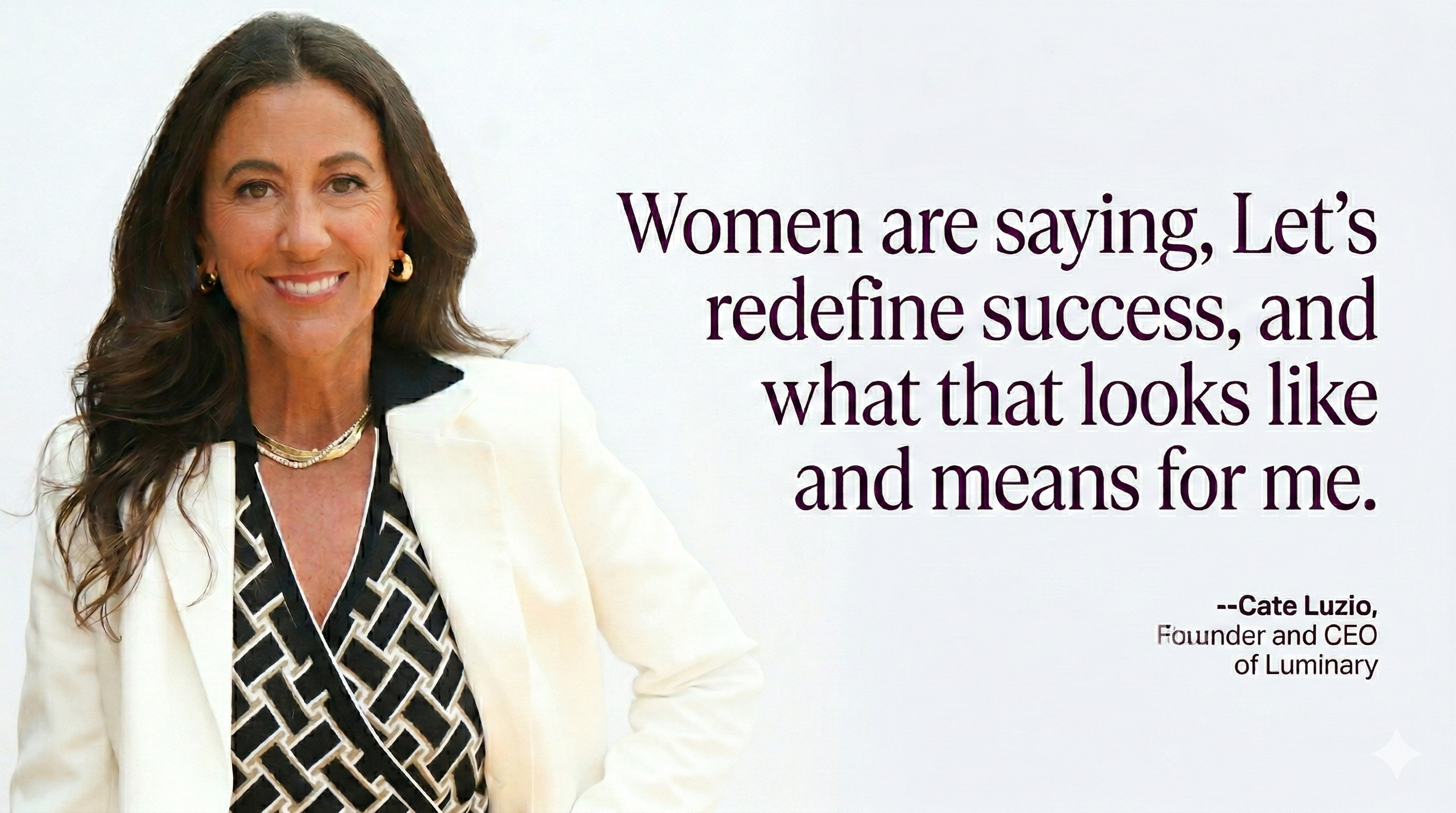
Luzio: We've jammed this notion that the only way you're successful is if you're in the C-suite. The C-suite is very small. Not everybody is fit for that role, regardless of gender. I've had women say to me, 'I'm happy in my job. I'm happy where I'm at. Why do I need to keep pushing for more?' That doesn't mean they're any less ambitious. Career paths ebb and flow, and that is OK. Women are saying, 'Let's redefine success, and what that looks like and means for me.' 

I think we've done a disservice to women and put this insane amount of pressure saying you have to be here by this time or you're not a success. And we've seen so many women saying, 'I need my company to invest in me and sponsor and mentor, but at the same time, I also want to be OK if I take a little bit more flexibility.' Nobody cares about your career more than you do. Making a plan is really important. Don't wait for your company to do that for you.

Read more: Why sponsorship — not mentorship — may be the key to helping women advance their careers

What benefits can help women make those plans for themselves?  
Luzio: I still think there should be transparency around compensation. Employers also need to be investing in skills building. And then I think if you're taking the time to do employee surveys and engagement, then you better take the time to actually analyze the results and put in place a plan, because the pendulum, while it's right now, currently swinging in the employer direction, we saw very quickly how that pendulum can shift during the pandemic back into the employees hands. 


For reprint and licensing requests for this article, click here.
Women in Leadership Benefits Forum & Expo Workplace culture
MORE FROM EMPLOYEE BENEFIT NEWS
Load More