- Key insight: Discover how internal CEO succession signals strategic focus on talent retention.
- Expert quote: Wendy Lee Berger - Internal successions signal stability and demonstrate organizational investment in talent.
- Supporting data: Shapero joined LinkedIn in 2008; Ternus has 25 years at Apple
Source: Bullets generated by AI with editorial review
Both LinkedIn and Apple
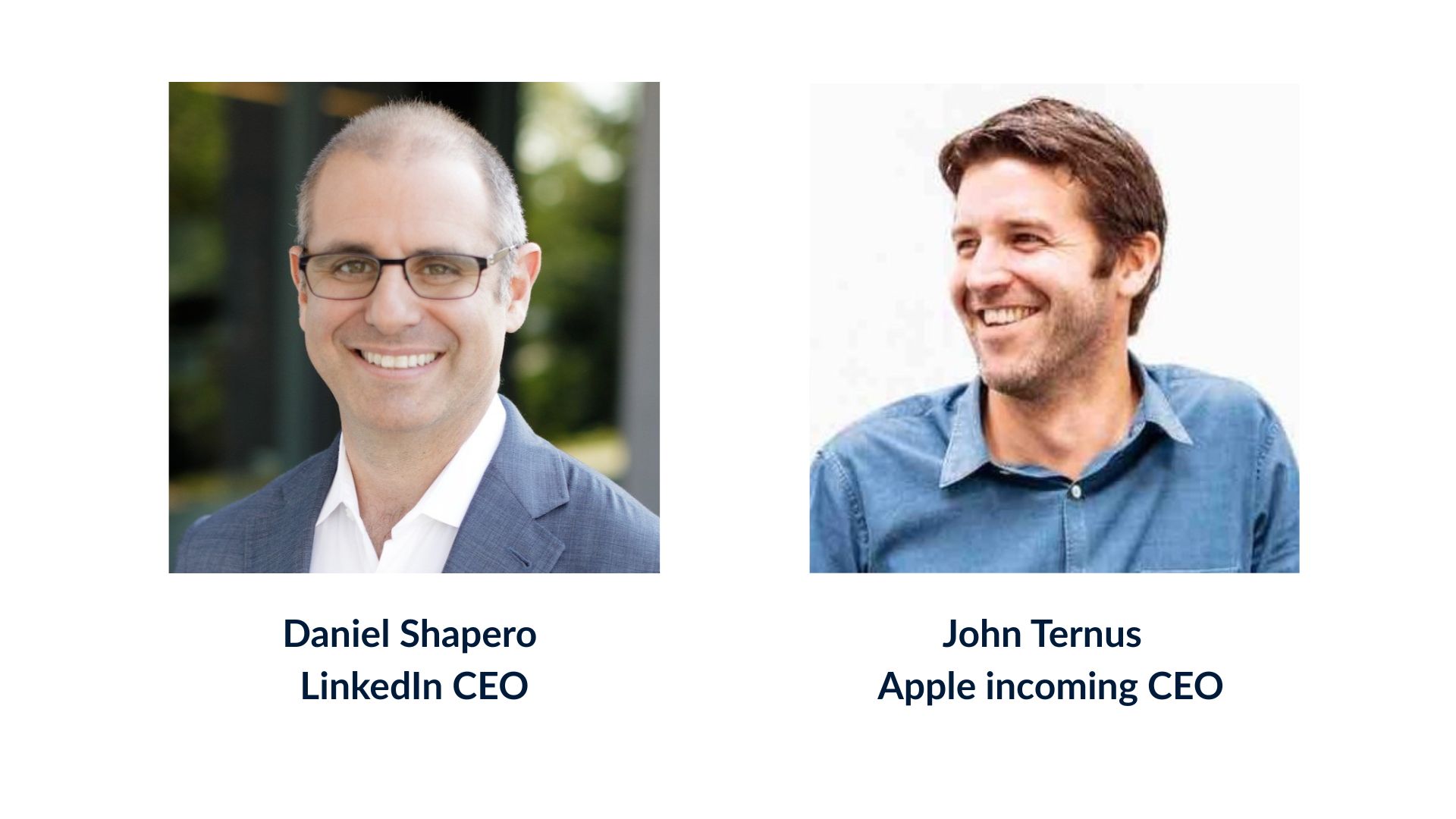
In April, Daniel Shapero was named the new CEO of LinkedIn, with plans for his predecessor, Ryan Roslansky, to remain at parent company Microsoft as an executive vice president, according to LinkedIn News. Shapero first joined the team in 2008 and served in leadership roles on the sales, marketing and product teams before becoming chief operating officer in 2021.
In a LinkedIn post two weeks ago, Shapero addressed the increasing focus his tech company will have on AI transformation, as well as the importance of
"The power of economic opportunity and the promise of LinkedIn has never been more important than it is today as the world is transformed by AI and professionals everywhere must transition along with it," Shapero stated in his post. "I'd like to take a moment to thank Mike Gamson for … teaching me about building exceptional culture, Ryan Roslansky for his leadership and partnership … and all my fellow LinkedIn employees for the opportunity to learn with and from them."
Read more:
In a LinkedIn post announcing the shift, Roslansky drove home the point that Shapero's experience at the company made him the right fit for the job. "He knows our members, our customers and carries the mission in a way that's genuinely rare," he said.
John Ternus, a 25-year Apple employee who will take over the position of CEO from Tim Cook effective Sept. 1, sent a similar address to his workforce, according to Bloomberg: "It has been such a privilege to lead the hardware engineering team, to be part of such remarkable work, and to see all of you in action, determined as ever to do everything we can for our users. I look forward to working with you very closely in my new role. Needless to say, I still plan to be very hands-on," Ternus said in his message.
Like Roslansky, Cook, who is set to serve on Apple's board of directors, focused on Ternus' company experience as pivotal for leading Apple into the future. "John Ternus has the mind of an engineer, the soul of an innovator, and the heart to lead with integrity and with honor," Cook said in a statement posted on Apple Newsroom. "He is a visionary whose contributions to Apple over 25 years are already too numerous to count, and he is without question the right person to lead Apple into the future."
Read more:
Long-time leadership development expert Wendy Lee Berger, global lead, client service and operations for experiential learning company Impact, said these types of transitions are an ideal way for new leaders to hit the ground running, and signal the opportunity for long-term careers to the rest of the workforce.
"It's much easier for someone to follow on the heels of their mentor in the organization versus a sudden board-level decision to pull out a CEO, because that signals there's some sort of instability or a problem," said Berger, who recently marked 20 years helping organizations train leadership with Impact. "It's about demonstrating that there's a long-term strategy, and from a people-value perspective, it shows that there's value in being from this organization, that we believe in our talent, and how we have grown our talent to be the leaders of the future."
Turning talk into action
Any company succession should be followed by clearly communicating to employees how the leadership change will impact them directly, said Berger. For instance, if increased AI use is planned, are their responsibilities staying the same, or will they shift and require upskilling or a pivot to something entirely new?
"This is an opportunity to either create or maintain stability in an organization … and stability is something that people are craving, especially when the context around them is ever changing," she said. "Senior leaders need to create a platform that allows people to understand what's happening, the actions they can take, and what support is going to come down [from the top] to make whatever shift they need to make in their role."
Berger sat down with EBN to share why clear messaging about change and intentional listening helps new leaders establish trust and avoid attrition, and how connecting with benefit leaders can help them get an essential early pulse on the needs of their workforce.
What are the best ways to establish trust as a new leader?
The biggest thing is having a new leader who wants to listen. It's great to have a welcome message, but then to fast-follow that with opportunities to meet people at the ground level through things like town halls and one-on-ones with key stakeholders. The pure act of being inquisitive and curious and connecting with people builds trust, and leadership doesn't work without trust.
Clear cadence of communication is also important. In any change, we should default to overcommunicating so that people have an expectation of what's happening. It helps to keep everyone aligned and informed. Lastly, communicate a clear decision-making process. When people understand how things happen, instead of feeling like they're constantly being pulled back and forth with surprise decisions, they feel more in the know and less like things are happening to them.
Why is early communication about any changes to employee roles important, especially in the age of AI?
In times of uncertainty, people are wondering, do I still fit here? What does that mean? What does this new technology mean for me? Am I being replaced? That sense-making piece needs to come from the top, aligned through to the bottom with the tools that are required for people to reskill.
[If there are] no opportunities given to you to reskill, that would signal that you're out — we're not going to try to retool you. That's where there's a misalignment of messaging, because we can't just assume that people are going to take the hint and reskill themselves. They're going to look for organizations that provide the reskilling they need, or they might find something that they feel is a better fit for them, versus staying with that company. This is a real hit to organizations — to lose talent and need to recruit new people and onboard them — and it's an operational lag that any new CEO would want to avoid.
Why should new leaders make connecting with benefit leaders and HR a top priority early on?
HR is much closer to the ground, and they're listening in very specific contexts. It would be a miss to not include your HR team in [meetings and listening events such as town halls]. HR leaders are helping teams problem solve, and they really understand not just the human dynamics, but the business implications of them, so it's important to get alongside HR leaders to hear that pulse check. If you have your HR people saying, "This is consistently what we've seen across teams in this part of the organization," that is a point of data that has a different level of reliability.