$1 trillion lost as workers delay mental health care

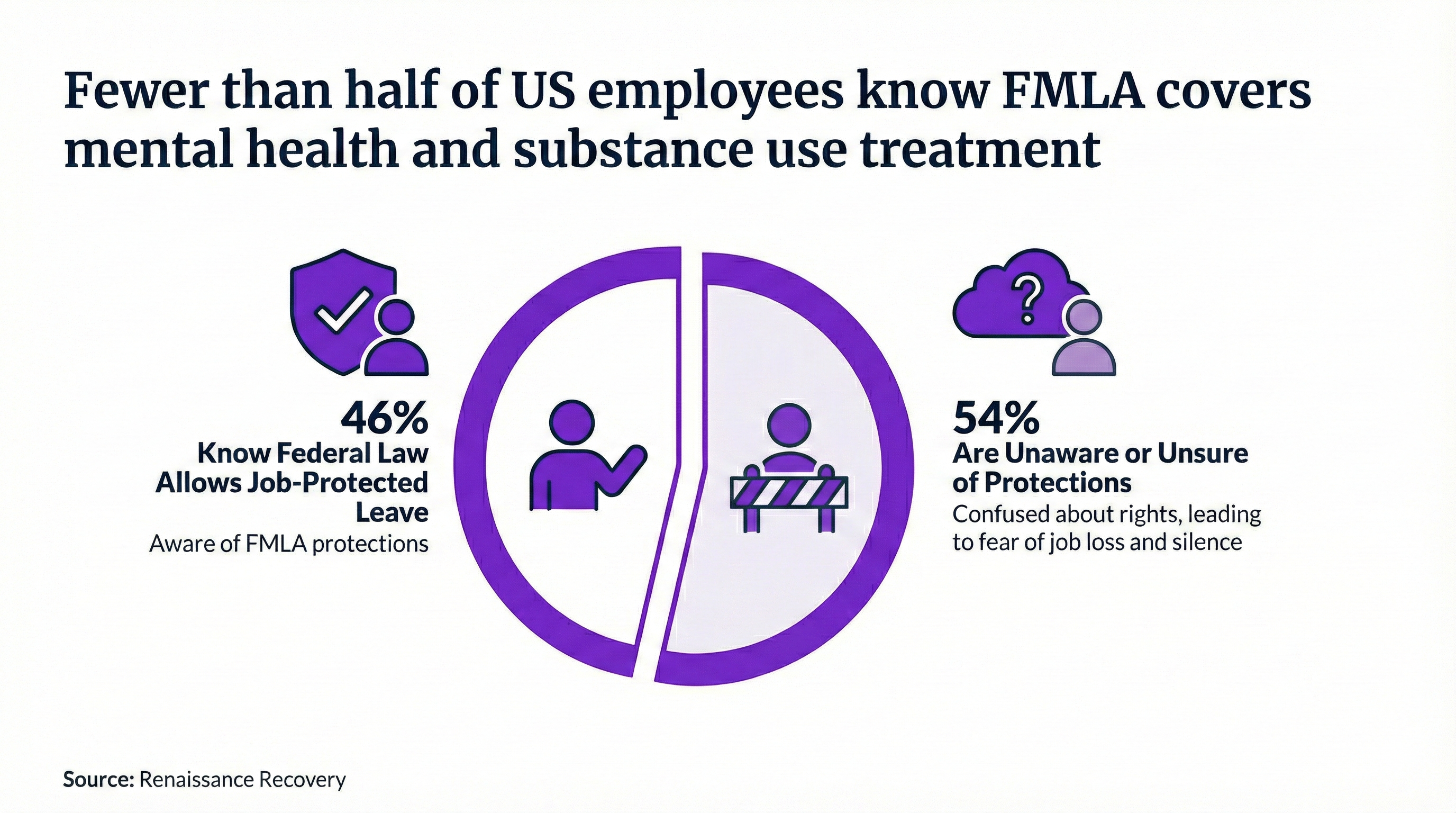
Infographic: 54% of employees are unaware or unsure FMLA covers mental health, while 46% know, according to a Renaissance Recovery study.
Visualization created with AI assistance based on original reporting.
  • Key Insight: Discover how mental-health stigma and benefits confusion are driving prolonged workforce disengagement.
  • What's at Stake: Rising productivity losses and talent attrition could materially affect employer financials and competitiveness.
  • Supporting Data: Over $1 trillion in lost wages from 2021–2025 tied to mental-health and substance issues.
  • Source: Bullets generated by AI with editorial review

U.S. employees lost more than $1 trillion over five years due to mental health and substance use issues, according to a new nationwide survey.


Processing Content

The study by Renaissance Recovery highlights the devastating impact that mental health and substance use challenges have on Americans' ability to earn a living. Many employees with these issues suffer in silence, the report points out, due to confusion around federal protections.

The study — which took place from 2021 to 2025 — focused on how time off work, reduced hours, or disrupted employment translated into lost income for people dealing with these conditions. Forty-one percent of respondents to the survey said a mental health or substance use issue had affected their ability to work, leading to a loss of 16% of their income. 

"This really drives home the fact that something we've suspected for a long time is true — stigma and access problems keep people from getting help," says Sam Blackmar, healthcare counsel for Renaissance Recovery. 

Read more: 'An epidemic that keeps growing': Supporting employees through substance use

The federal Family and Medical Leave Act (FMLA) guarantees eligible workers up to 12 weeks of unpaid, job-protected leave for serious health conditions, including mental health and substance use treatment. But according to the study, fewer than half of workers (46%) know that federal law allows eligible employees to take job-protected leave for those reasons.

Just 38% of respondents said they were very familiar with FMLA, while 27% had heard of it but didn't know the details. Another 16% said they had never heard of it. 

Understanding what benefits are available to access income support — such as short-term disability or state-paid family and medical leave programs — may help workers make more informed decisions about taking leave, the study found. 

"What this data shows is that many workers aren't just struggling with their mental health — they're struggling with uncertainty, fear and misinformation," Alina Nejadian, clinical director at Renaissance Recovery, said in a news release. "When people don't understand their rights or don't trust that they will be protected, they delay care, hide their struggles and often make their situation worse. Clear communication, supportive workplace cultures and better awareness of existing protections could make a meaningful difference for millions of employees."

Honesty remains elusive

The most common reason that people continued working during a mental health or substance use struggle was fear of job loss (22%), followed by not knowing leave was an option (18%). Fifteen percent were unable to afford unpaid time off, while 11% worried about harming their future career and 14% felt their condition wasn't serious enough to justify leave. 

More than 56% of respondents admitted they had lied or downplayed the real reason they needed time off, while 43% said a physical illness would feel like the safest excuse to give if they needed mental health leave tomorrow.

Many employees said continuing to work through mental health challenges came at a steep cost: 31% reported increased anxiety or stress, and 27% experienced exhaustion or burnout. Nearly 61% of respondents said continuing to work instead of taking leave made their condition worse. 

Read more: 2026 healthcare trends: The growing role of addiction and recovery support

Forty-two percent reported long-term career consequences, including slowed career growth, turning down opportunities or leaving a job altogether. 

On average, respondents estimated they lost $10,457 in income over five years due to delayed treatment or ongoing struggles, but that figure varied widely by state. Workers in Massachusetts experienced the greatest income disruption ($14,050), while those in Mississippi suffered the smallest ($7,698).

Company leadership needs to understand the adverse effects of untreated mental health and substance use disorders on the organization, Blackmar says, adding that benefit leaders should promote information about EAP programs and protections available to employees. 

"Like everything, it starts from the top down," says Blackmar. "A big thing is coming up with messaging about the importance of not just physical health, but also mental health."

For reprint and licensing requests for this article, click here.
Mental Health Health and wellness Healthcare Employee benefits
MORE FROM EMPLOYEE BENEFIT NEWS