Employers install worksite kiosks in latest telemedicine push
The move is part of a broader effort to raise productivity by reducing employee time spent traveling to and waiting for care.

Follow Us
© 2026 Arizent. All rights reserved.

The move is part of a broader effort to raise productivity by reducing employee time spent traveling to and waiting for care.
The move is part of a broader effort to raise productivity by reducing employee time spent traveling to and waiting for care.
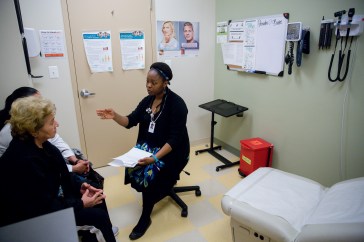
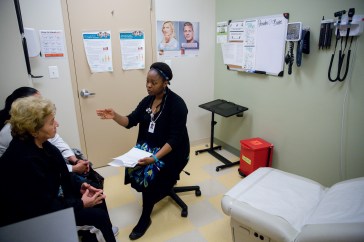
Remote connections can greatly expand access to care for more people, allowing patients to see a doctor from almost anywhere, says physician Tania Elliott.

New medical plans promote primary care and health counseling in an effort to lower employers costs.


New medical plans promote primary care and health counseling in an effort to lower medical costs.

Workers are increasingly turning away from traditional healthcare delivery models in favor of alternatives, according to Oliver Wyman research.

Low satisfaction and high costs are driving consumers away from traditional healthcare delivery models in favor of alternatives.
The HealthiestYou application encourages higher levels of utilization with mobile access, greater ease of use, according to benefit advisers.

Integrating telemedicine with voluntary benefits can mean substantial savings for employers and significant opportunities for brokers.

HealthiestYou application encourages higher levels of utilization with mobile access, greater ease of use.

Worker have been slow to move online for medical visits, but research shows employee utilization rates soar when co-pays are eliminated, says Willis Towers Watson’s Allan Khoury.

Worker uptake of the benefit has been slow, yet research shows utilization rates soar when there is no employee co-pay, according to Dr. Allan Khoury of Willis Towers Watson.
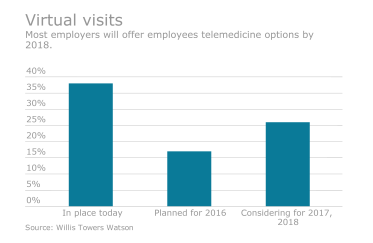
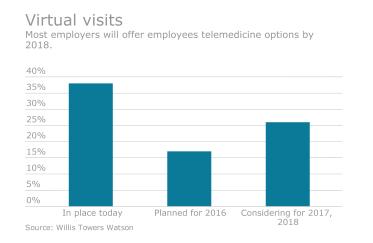
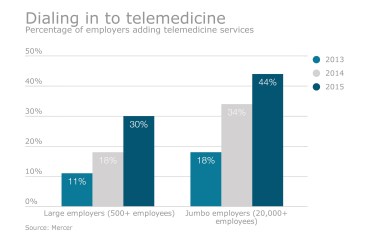
The use of telemedicine is growing, with almost two thirds of organizations offering or planning to offer such a service by 2018.

Premium increases continue to motivate employers to consider cost-saving solutions they previously may have shunned, says Arthur J. Gallagher’s Paul Fetterolf.


Expert panel at EBA’s Workplace Benefits Renaissance event say clients are now receptive to telemedicine, self-funding and other solutions they previously dismissed.

The usage of telemedicine is growing, with almost two thirds of organizations offering or planning to offer such a service by 2018.

Telemedicine offers potential savings to employers and employees, while improving medical care access and convenience.
As the diverse health needs of the U.S. population grow, so does the need for doctors who can understand and empathize with the language and cultural context of their patients.