- Key insight: Learn how leaders pair custom AI agents with human skills to elevate strategic work.
- What's at stake: Failure to reskill risks lost productivity, talent flight and stalled efficiency.
- Supporting data: Over 80% of employees use ChatGPT or similar tools daily.
- Source: Bullets generated by AI with editorial review
Employees are
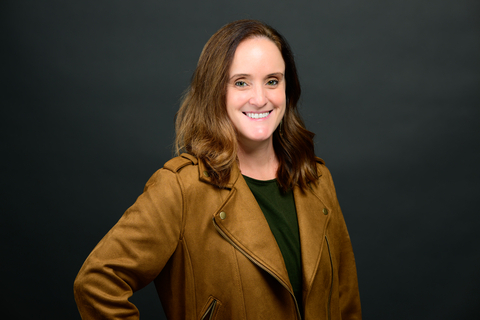
"Over 80% of our folks are using ChatGPT or another platform every day, multiple times a day," says Nikki Morello, chief transformation officer at human insight platform UserTesting. "The next wave is going to be these agents doing things that humans would have done a year ago, allowing humans to really elevate their game and do the work that AI will never be able to do for them."
To take employees from concerned to confident with generative AI tools, Morello started off by
"[Our] leadership team recognized you're either going to join the AI wave or it's going to take you under," she says. "The company was super excited, because we had jumped in quickly and were leading the pack."
Read more:
UserTesting developed a custom GPT for its employees, who can use it to generate ideas based on their job and the company's objectives. Having used it herself, Morello notes the time-saving and creative benefits it offers.
"Something that would have taken me at least 30 minutes took me five," she says. "Then you can take what AI gives you and say, 'Great, now we're done,' or you can brainstorm with it and go back and forth. [It helps solve] those process problems that people would like to do more efficiently. The more we got out there and did that, the more people were willing to buy in."
Morello shares the advantages of creating a partnership between people and technology, and how this plays into a bigger business-growth picture.
How are tech tools boosting employee productivity today?
A lot of roles get bogged down in administrative details. Every company everywhere is trying to figure out how to offset some of that really transactional stuff with the lowest-cost resources, so that you can elevate humans. That's really a major unlock here: Finding those areas where you say, this could definitely be more efficient if we just had some automation in there. If AI understands how to run the process for us, then people get to go do the thing that people are good at, which is human-connection strategy.
Read more:
When leaders adopt a people-first approach to tech, what are the positive impacts?
People feel like we're bought in; like we're supporting their journey. [For example,] our head of marketing believes it is his responsibility to teach his team how to leverage AI, because if he doesn't, their jobs will cease to exist, and they will not be able to [continue] the meaningful work they've been doing.
I don't think anyone should say AI isn't taking jobs away — it will take some — [but] it will also create space for new jobs. If we don't find that transition path from what we did yesterday to what we do tomorrow, that's where people get really scared. We have to take that fear and turn it into empowerment — help people realize that humans are better than AI in countless ways — and reduce some of the tension.
How does greater efficiency with tech tools fit into a larger growth and retention strategy?
We have been, first and foremost, making sure we create a performance culture. We have Mercer working with us right now, doing an entire overhaul of our career paths and compensation structure so that we can give people growth paths. I fundamentally believe the company owes it to employees to give them the appropriate pay for the market, that we have a comp structure that's transparent, that's understandable, and that [shows] where the opportunities are.
We also need to ensure that employees feel the power of owning their own growth. One of the things we've been launching over the past couple of months is more real, intentional performance and growth conversations with our leaders and employees alike. [We've said,] let's spend an intentional hour every single quarter talking about what's happening in your part of the world, where you want to grow, and how we can enable that.
In a world where things are changing fast, [we must make] sure we create a space and have a structure that's not scary, that's not cumbersome, that doesn't slow people down, but enables that conversation to happen. Even in a world with AI, the human growth conversation will never go away, so creating space for that is critical.
Read more:
How do you get your own team excited about what's next in terms of change and growth?
HR has to be solid and strong in order to have a company that lives and breathes that same feeling. I don't think there's a magic wand to get people bought in; we've just spent a lot of time having really honest conversations, and I, as the leader, owe it to them to show that I actually do want to hear their feedback.
I'll give an example. We've been working through an intentional culture reset for our organization, because it's been through so much change. We've stabilized the business in a lot of great ways, but when we talk about our new values, we hadn't done a lot of the intentional work to make people feel connected to them. I spent an hour with the full people team, and said, 'Pick this apart. Here's what I'm going to say to the company. Here's what we've landed on. Tell me if a word triggers you the wrong way, because words really matter in this kind of message.'
I got such great feedback from the team. We changed several of the messages. We tweaked a little bit here and there. I knew what was going to land really well. When it comes to AI, when it comes to growth, when it comes to all the things that we're doing, just creating that space for [employees] to not just feel bought in, but actually engage in the process, is really important.