- Key Insight: Learn why longevity misperception reduces retirement savings and shortens planning horizons.
- What's at Stake: Underfunded retirements could strain employer benefits and public pension systems.
- Supporting Data: Only one in three Americans correctly estimates life expectancy at age 65.
Source: Bullets generated by AI with editorial review
Workers who expect to live longer in retirement are more likely to plan and save for it, according to a new report from the TIAA Institute.

Only one in three Americans can correctly identify how long a 65-year-old will typically live, and that misperception has real consequences
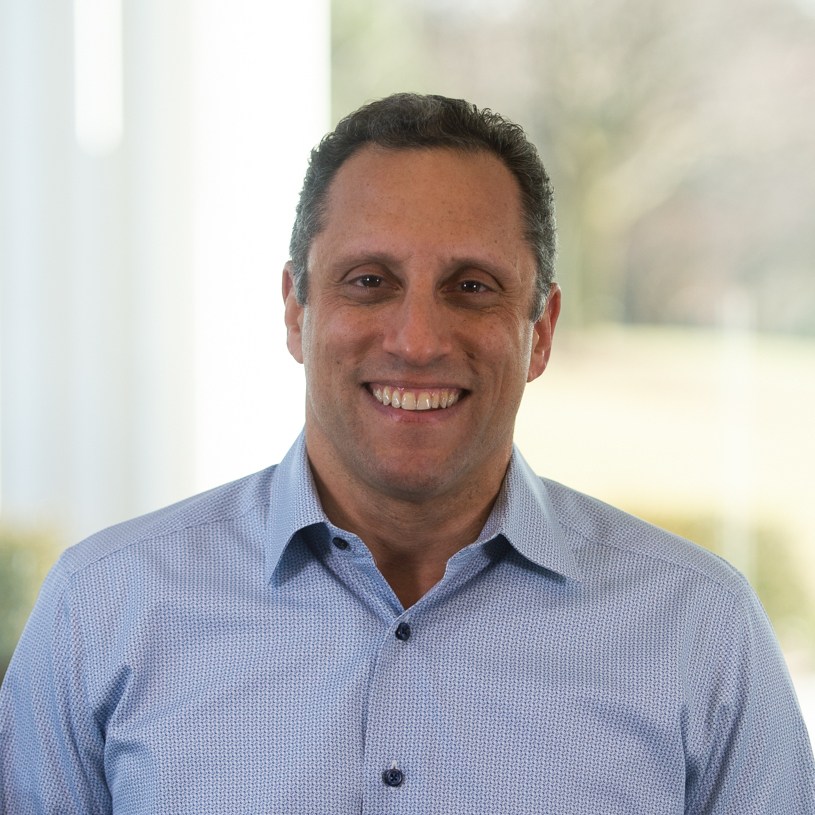
"That's a striking number, and what makes it more concerning is how stable it's been across multiple years of research," Surya Kolluri, head of TIAA Institute, said via email.
Poor literacy longevity can create a self-fulfilling prophecy, where workers who underestimate how long people generally live after age 65 set their
"They save less, plan less diligently, and are far less likely to think seriously about converting their savings into lasting income," he said. "The result is that a 20, 30 or even 40-year retirement becomes financially precarious, not because people didn't work hard or save appropriately, but because they were planning for the wrong finish line."
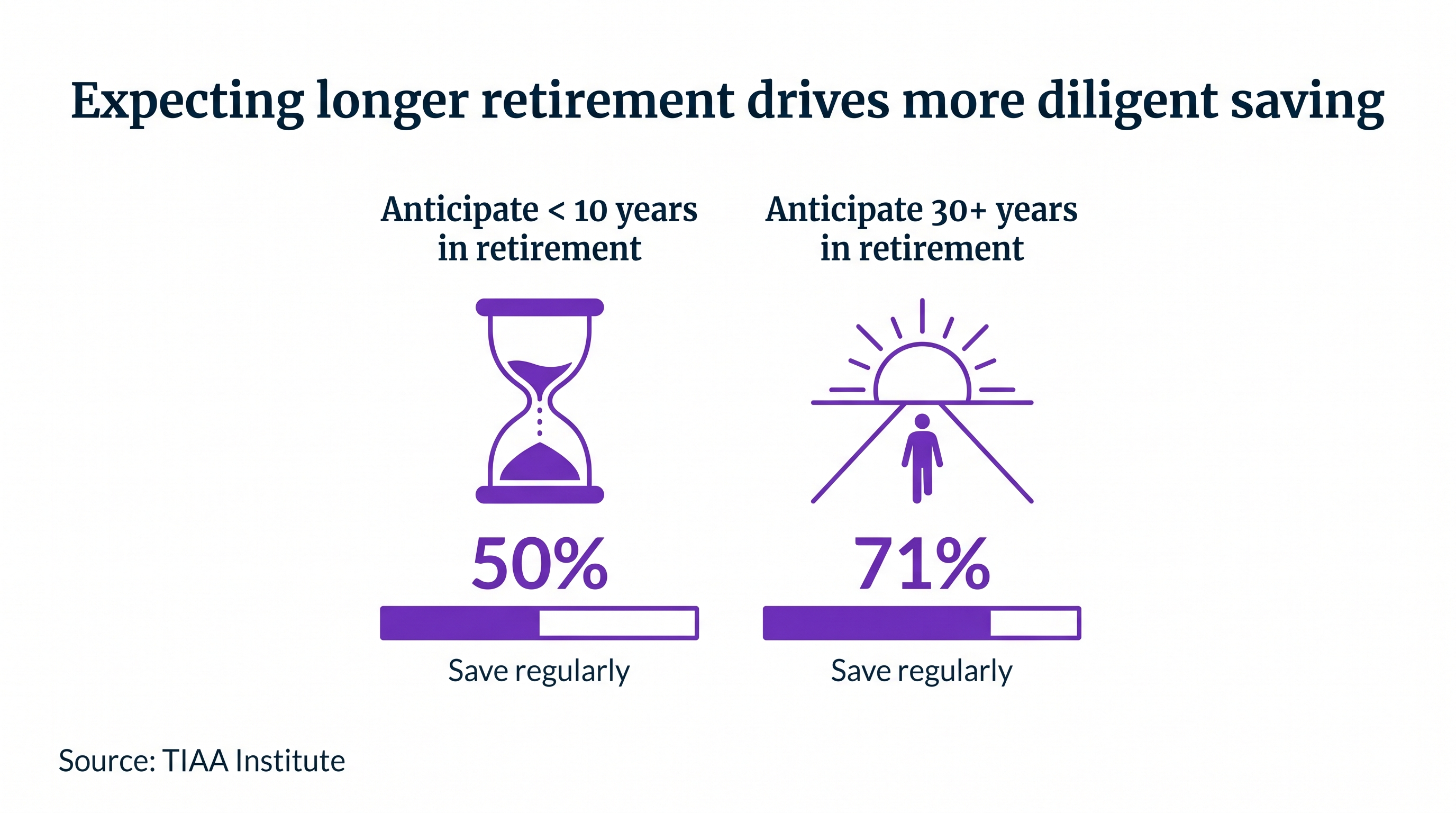
The report, titled "Planning for the unknown: The impact of longevity expectations on retirement readiness," shows that only about one-half of workers who expect to spend fewer than 10 years in retirement save on a regular basis. Among those who do save, contributions are modest — 26% save 5% or less of their earnings and only 11% save more than 10%.
By comparison, 71% of workers who anticipate 30 or more years in retirement save regularly and at higher rates. Just 10% save 5% or less of their earnings, while 41% save more than 10%.
How long workers
Read more:
In contrast, workers who underestimate how long 65-year-olds typically live tend to expect shorter retirements, with 59% anticipating fewer than 20 years.
"To be financially secure, it is critically important that people know how long retirement actually lasts," Annamaria Lusardi, senior fellow at the Stanford Institute for Economic Policy Research, said in the report. "Poor longevity literacy leads to expectations of shorter retirements, which in turn results in less saving and planning.
Other key findings
According to TIAA research, men are more likely than women to underestimate life expectancy: 36% of men do so, compared with 29% of women. One explanation for this, according to Kolluri, could be that women tend to be closer to healthcare and caregiving decisions within their household.
"That lived proximity to health and end-of-life issues may sharpen their intuition about longevity in a way that affects how they answer these questions," Kolluri said. "Men, on the other hand, may be more oriented toward
Read more:
When it comes to age groups, Gen X and Gen Y underestimate life expectancy more frequently than baby boomers. "One hypothesis is the closer you are to retirement, the sharper your thinking may be on the issue of longevity," Kolluri said. "You're forced to engage with the question more concretely, whether
Kolluri advises workers — regardless of gender or generation — to estimate their lifespan and add 10 years. On average, he said, a 64-year-old man will live to 84 and a woman to 87.
"If your plan doesn't account for that range," Kolluri said, "you're taking on more risk than you realize."