At this childcare center, time off is mandated to ensure employees unplug

Open office space, employees working together
Adobe Stock
  • Key insight: Learn why this childcare company has its workforce unplug simultaneously.
  • What's at stake: Businesses risk losing talent when employees feel too intimidated to use their vacation days.
  • Expert quote: "Even if you have the most generous time-off policy, sometimes people have a hard time either allowing themselves to take that, or turning off when they do." Britt Riley, founder and CEO of Haven
    Source: Bullets generated by AI with editorial review

Processing Content

Well before Britt Riley founded her membership-based childcare and parent support company Haven in 2019, she knew that, "if ever I were given the gift to have people showing up and helping to bring to life something that was my idea … I would work every day to ensure they are taken care of."

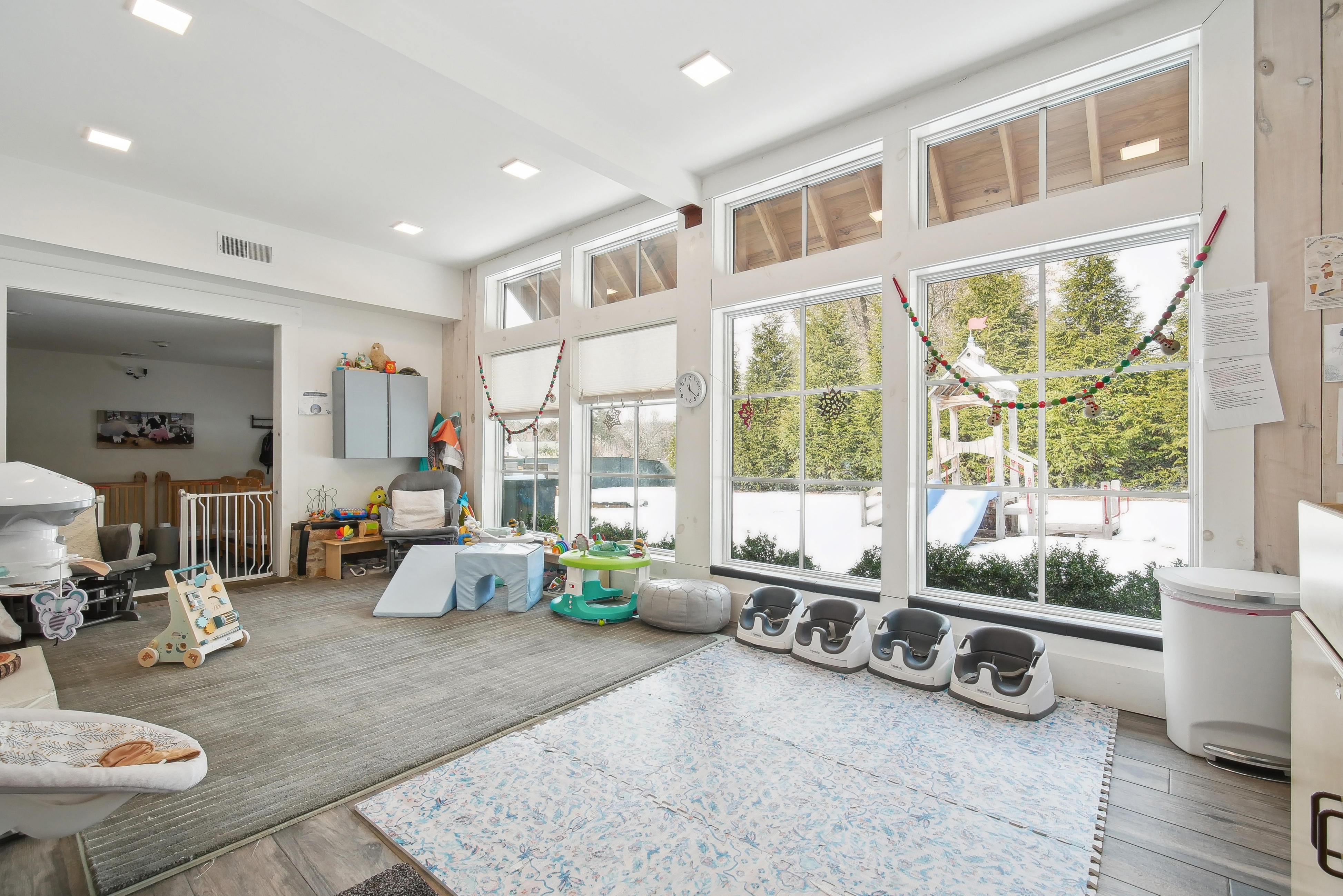
Haven's on-site licensed childcare, workspace and fitness amenities are available for Haven's staff at its three locations in Rhode Island and New Jersey, just as they are for members. Along with certified curriculum-based classrooms for children up to age 5, options include quiet or collaborative areas for work, drinks and snacks, group fitness classes, wellness services, and equipment like bikes and treadmills. 

"Our team members can sign up [for classes and services] as well," Riley said. "Everybody gets breaks during the day. If the massage therapist happens to be there, and you're able to schedule a break and get coverage, then there you go."

Haven's staff of nearly 100, some of whom work remotely nationwide, also have benefits like unlimited time off, one companywide week off in the summer and winter, continuing education assistance, and accommodations based on individual needs

Read more:  What Trump's 'Great Healthcare Plan' means for drug costs and price transparency

Riley's mindset stems from an early career experience at Patagonia, which she cites as a perfect example of an employer proving "you can do things differently, you can make it work, and it can be successful." The outdoor clothing company has a long-standing reputation as employee focused, with popular benefits like flexible work schedules and on-site childcare. "They live that absolutely in their bones, and they always have, so I went on the journey of my entire career with those values in my mind," Riley said. 

The mandatory two weeks off on top of unlimited time off is an intentional effort to let employees truly unplug, Riley said. This is something employees in general struggle with: Nearly one out of four (23%) of U.S. workers didn't take any time off, according to a survey of more than 3,000 by career website FlexJobs, and 42% took between one and 10 days. One quarter said their manager would discourage them from taking a full week at once. 

"Even if you have the most generous time-off policy, sometimes people have a hard time either allowing themselves to take that, or turning off when they do," Riley said. "We turn off the whole company for the entire week, which means that no one has to be worried about the other shoe dropping, an email they have to respond to, or something happening that they have to jump into. [In general,] we wouldn't blink if someone said their child has a recital or there's a game that they want to go to or they need to go to an appointment. I've seen far too many times when people put off those meaningful moments because they feel scared to do it in their workplace — it doesn't make any sense to perpetuate that kind of situation."

Read more:  Leading benefits professionals buying into AI, with caution

The 'ripple effect'

Once employees experience this, there's an impact on the culture and the business, she said. "People show up for you differently. They stick around. They work harder, they work for a purpose, so the ripple effect of it for us has been so far-reaching. Time is … the most irreplaceable thing we have as humans, and as a business owner, leader or manager, people need to take that far more seriously than ever … because at the end of the day, if you take care of your people, you will be a successful business."

When team members feel cared for, they are more present on a daily basis, but also in terms of staying with the company, said Riley. At Haven, this even includes excitement to return after giving birth 

"I can't tell you how many times employees had their babies and are actually really eager to come back because they're part of a village and they're part of exactly the setup you want postpartum," she said. "It makes me so happy, because obviously they've got an entire group of people who are throwing a huge hug around them and their new baby, and I think that means a lot. It's why we exist."

Haven's culture focuses on the recruitment side as well, Riley explained. "Showing up for our teams in all the different ways that we do is what has allowed our culture to explode into something which people shout from the rooftops — how much they enjoy their time at Haven, and they bring their friends in. We have many team members who've worked through all different roles with us. It just feels like the way it should be done."


For reprint and licensing requests for this article, click here.
Employee retention PTO Employee benefits
MORE FROM EMPLOYEE BENEFIT NEWS
Load More