As pay transparency rules expand, companies scramble to keep up

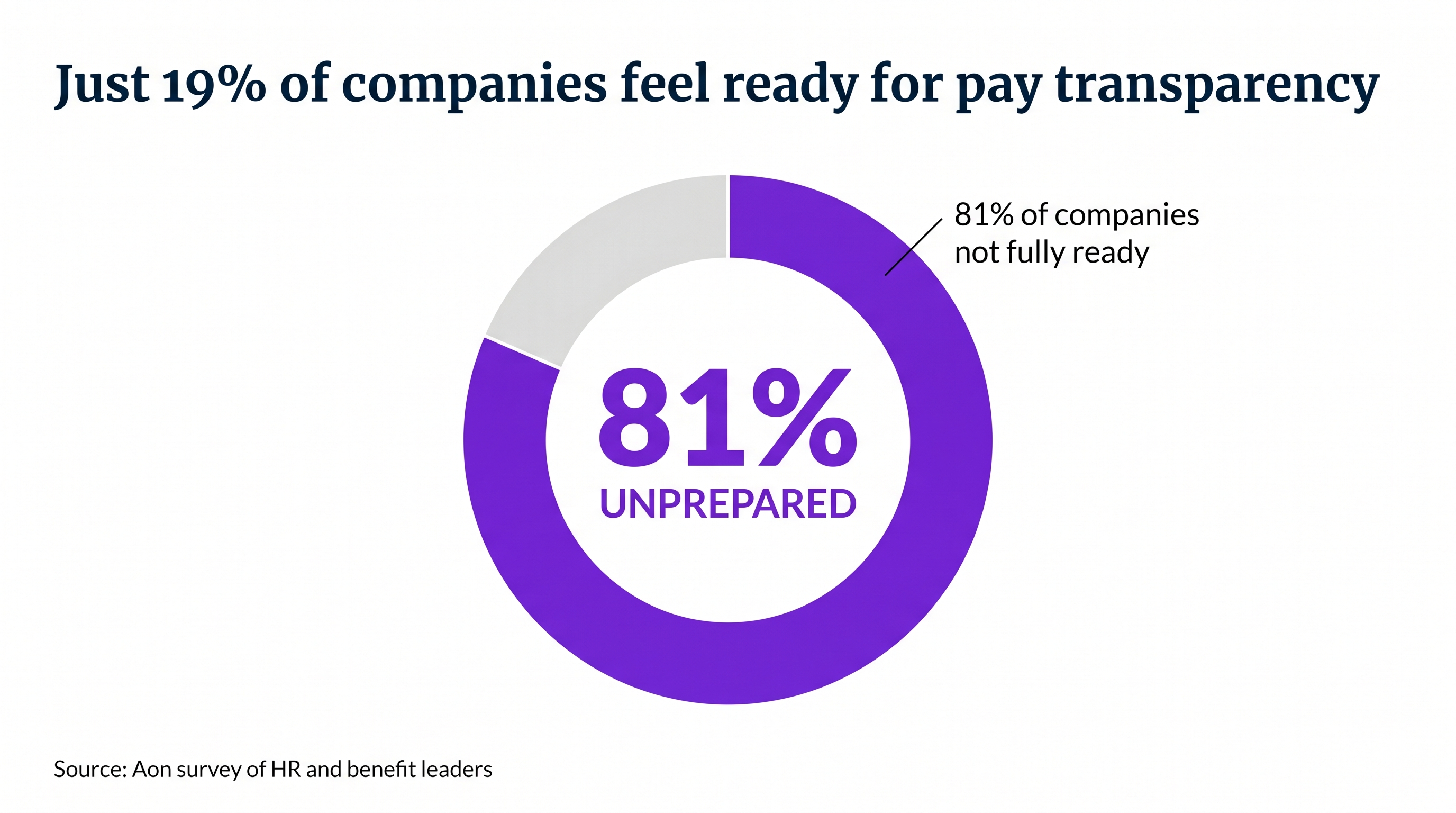
A pie chart infographic illustrating that 81% of companies are not prepared for pay transparency.
Visualization created with AI assistance based on original reporting.
  • Key Insight: Learn how pay transparency can become a strategic advantage for retention.
  • What's at Stake: Noncompliance risks, talent loss, and reputation exposure for benefits and HR leaders.
  • Forward Look: EU rules starting June and expanding state laws will escalate reporting and remediation demands.
    Source: Bullets generated by AI with editorial review

A growing number of states and municipalities are adopting pay transparency laws, adding new compliance and compensation pressures for benefits leaders.


Processing Content

Sixteen states and Washington, D.C., have enacted pay transparency legislation with more expected in the coming year. The trend has also spread to the European Union, where starting in June companies with 100 or more employees will be required to report on gender pay gaps and take action to address them. 

Although these changes add extra work for benefit leaders, pay transparency can also be used as a strategic advantage to build trust among employees, strengthen engagement and improve retention, according to Brian Levine, partner at Merit Analytics Group.

"It's an issue that has been top of mind in the social consciousness," Levine says. "One state put it into place, and then another state put it into place, and it has generated some momentum behind it." 

Pay transparency laws vary by state, but according to Paycor some examples include: Requiring employers to post salary ranges in job advertisements; mandating employers to disclose pay scales to job candidates or current employees upon request; and prohibiting employers from asking applicants about their salary history during the interview and hiring process.

Regulations for pay transparency are evolving quickly, yet many companies aren't prepared to meet compliance requirements. 

Aon, a leading global professional services firm, surveyed more than 1,400 HR and benefit leaders last year to assess their overall progress toward pay transparency. The study found that just 19% of companies felt that they were ready for pay transparency.

Read more: Pay transparency has left middle managers unprepared to defend salary discrepancies

Twenty-nine percent of companies reported that their level of readiness had not improved in the last 12 months, while 60% of organizations said they are taking a geographically targeted approach to pay transparency, only where compliance is required.

The study also examined how often businesses are auditing their own pay practices. Just 26% of companies have conducted a pay equity analysis in the last 12 to 18 months, and 12% said they have never conducted one.

Levine says benefit and company leaders should conduct these audits at least once a year and ask questions such as, "Are there any differences that are unexplainable, that might be attributable to gender or race?" 

"It requires some in-depth review just like with other compensation, performance and other management practices," Levine says. "It should be a real deep-dive." 

What's the case for pay transparency?

Pay transparency laws are designed to reduce income disparities among genders, races and other group classifications. According to an article by the Cornell Journal of Law and Public Policy, promoting pay equity is "necessary and admirable" because on average, women working full-time are paid less than men, and Black, Latino and Indigenous workers are paid less than white workers. 

"By equipping applicants and employees with wage information once hidden from them, these laws intend to empower individuals to negotiate fairer compensation with their employers," according to the article, titled "Pay Transparency Laws: The Good, the Bad, and the Ugly?" 

"Pay transparency laws seek to ultimately eradicate discriminatory pay gaps by giving workers the knowledge needed to investigate, catch, and hopefully remediate pay inequity."

Read more: The missing link: Pay transparency is critical to DEI initiatives

In many cases, employees are already aware of what their peers make, so it's important for companies to be transparent and train managers how to answer the inevitable questions that will arise about income disparities, Levine says. 

"The government puts into place these transparency regulations with the intent of giving employees more power to bargain over their pay," Levine says. "You, as the employer, need to be ready to share not only what you're legally required to share, but now you need to be able to explain, 'Here is why you, Sally, are paid the way you're paid, but here's the range. Here is why you're paid where you are in the range.'"


For reprint and licensing requests for this article, click here.
Compensation Workforce management Employee benefits Regulation and compliance
MORE FROM EMPLOYEE BENEFIT NEWS
Load More