- Patient and family health history. Assess any eye or vision problems patients suffer from and any previous eye or health conditions patients have experienced that help provide insight into overall health, including medications and allergies.
- Visual acuity measurement. Use a reading chart to evaluate how clearly each eye is seeing separately and allow the doctor to observe and address any challenges the patient experiences.
- Preliminary tests. To evaluate the specifics of visual function and eye health that impact overall health.
- Refractive status. To determine the lens power a patient needs to compensate for any refractive error as well as the curvature of the eye to prescribe glasses or contact lenses. The prescription is verified with actual lenses for the patient’s specific needs to assure accuracy by the doctor before leaving the office.
For reprint and licensing requests for this article, click here.
More From Employee Benefit News
Screen time surges for desk workers, straining eyes and productivity
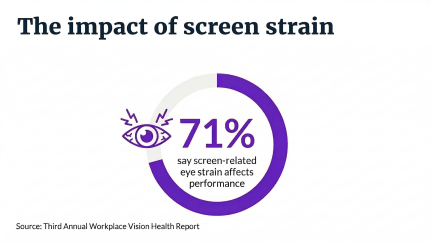
Desk workers are spending nearly 100 hours a week on screens, a new survey finds, with most saying eye strain is affecting their work performance.

Benefits Think How digital health programs can reduce employer medical costs
Digital health programs can reach, monitor and support consumers in ways that are not possible with traditional healthcare delivery methods.

Simon C. Matthews, M.D.
Johns Hopkins School of Medicine
9-to-5 screen time: UnitedHealthcare advises workers on how to care for their eyes
UnitedHealthcare Vision’s CEO and chief eye care officer delve into the impact of blue light on eye health.


Benefits Think Online vision care is set to be the next ‘big thing’ in healthcare
Strategies for employers to leverage virtual care to ensure your vision benefits see peak utilization.

Antonio Moraes
XP Health
Mobile eye clinic brings vision benefits to remote workers
Mobile optometrist 20/20 On-site is making it easier for people to use their vision benefits during the pandemic.