
-
Advisers say many of their clients have built well-being programs with biometric screenings, health risk assessments and other features.
March 22
-
The Florida-based beer distribution company brewed up a plan with its insurer, UnitedHealthcare, to engage workers with wearable fitness devices.
 March 21
-
While employers debate the ROI of wellness programs, a more pressing concern is the cost of poor workplace health. New research shows lost productivity due to employee comes with a huge price tag.
March 21 HealthMine
 -
The Cornerstone Insurance Group beefs up its offerings — and even hires a staff wellness director — to win over clients.
 March 21
-
Moving beyond biggest loser-type competions and step challenges, employer-based programs are entering a new phase that make use of targeted incentives to create specific outcomes.
March 18 Hodges-Mace
 -
The international environmental consulting team offers employees access to mental health therapy 24/7 through its online Learn to Live system.
 March 18
-
Targeted incentives and automated employee follow-up can improve outcomes.
March 17 Hodges-Mace -
Tiered incentives may encourage more workers to get active, but for employers they represent an increase in administrative overhead, says David Contorno, CEO of Lake Norman Benefits.
March 17 E Powered Benefits
 -
While plan sponsors and others debate whether wellness programs actually save healthcare costs, a more pressing concern for employers is the real price of poor workplace health.
March 16HealthMine -
More employees are distracted from their job responsibilities as soaring college loans add to their financial pressures.
March 11 The Financial Literacy Toolbox -
An increased focus on health, combined with unprecedented access to information, has this group of workers more interested in workplace wellness and more likely to stay at their jobs because of it.
 March 10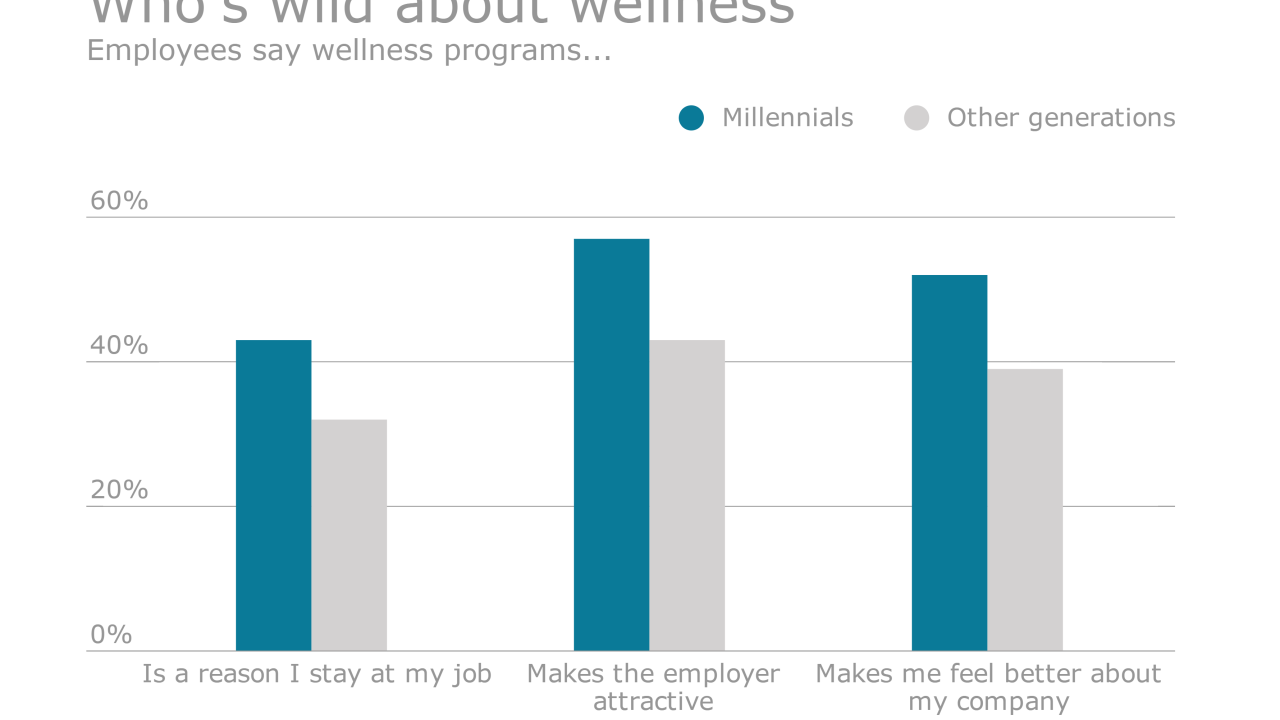
-
As soaring college loans add to their financial pressures, more employees are distracted from their job responsibilities.
March 10 The Financial Literacy Toolbox -
The international environmental consulting firm offers employees access to mental health therapy 24/7 through Learn to Live, an online system built to address psychological issues such as social anxiety, depression, stress and worry.
March 9
-
Programs that teach workers to be in the moment help boost their productivity by helping them ignore irrelevant or less important tasks.
March 7 eMindful
 -
By enhancing sleep quality and reducing chronic pain, these online training sessions are said to save medical costs and heighten productivity.
March 7 eMindful -
The market for wearable wellness is growing but workers are still reluctant to share the data from the devices with their employers.
 March 3
-
But when it comes to sharing the medical data collected by these technologies, they are keeping their employers at arm’s length.
March 3
-
Employer-sponsored health improvement programs must strive to include sleep as a key element of good health. Here are three strategies benefit managers can use to encourage better sleep habits among workers.
March 3 American Specialty Health
 -
When employees come back to work after major health events like heart surgery, employers need to be aware of comorbid conditions such as depression or anxiety.
March 1 The Standard
 -
With medical inflation out pacing general inflation 7 to 1, advisers need to help their clients design benefit plans based on the actual health status of their employees.
March 1


