- Key insight: Discover how rising antiviral use signals deeper systemic strain employers must address.
- What's at stake: Escalating flu burden could increase plan costs, workforce absenteeism and clinical capacity risk.
- Supporting data: CDC: 78 million cases, >1M hospitalizations, 67,000 deaths over current and last flu seasons.
Source: Bullets generated by AI with editorial review
Severe flu cases continue to rock American households, the health system and the workplace, with
The last two
For benefit leaders, understanding these trends' impact on health and cost can help get
"Increased use of antiviral medications is often a sign that people are getting sicker, and that has real consequences across the system," Dr. Amy Flaster, chief medical officer at The Cigna Group, said in comments published by its pharmacy and benefits division Evernorth. "It can mean more time away from work for employees, higher costs for health plans, and additional pressure on clinicians, pharmacies and hospitals when capacity is already stretched."
Read more:
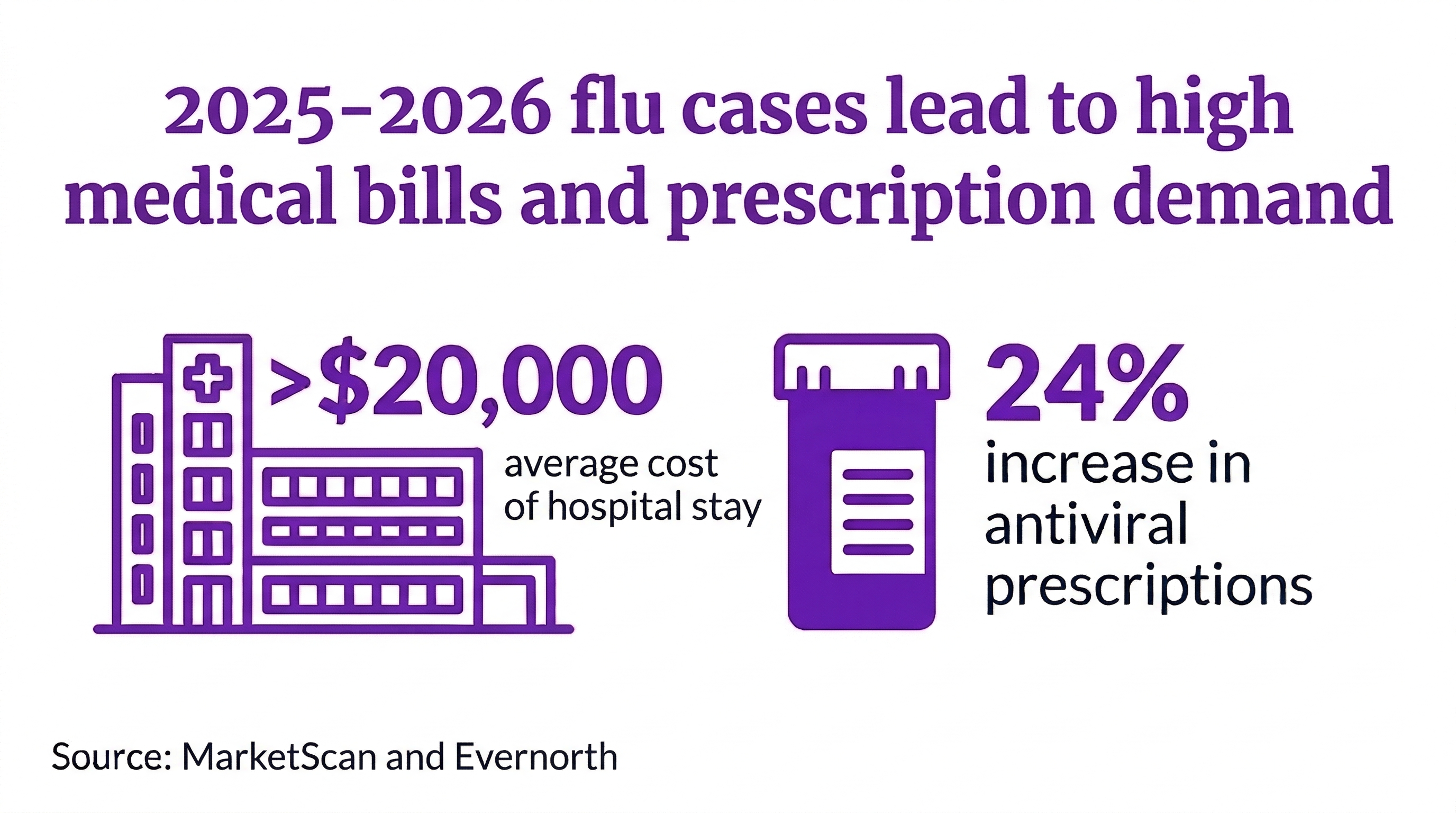
The effect of the flu's intensity on healthcare resources has been dramatic. Last season, the CDC estimates there were 23 million flu-related medical visits. This season, people have been seeking treatment earlier than normal: Data from Evernorth shows that flu antiviral prescriptions for this season were up 24% by the end of 2025 compared to the previous season, and its 24/7 online care service, MD Live, saw a 400% increase in flu-related appointments between November and December 2025.
The highest rate of antiviral use this season has been children under age 17, highlighting particular strain on working parents.
"When young children fall ill, working parents often experience unexpected work interruptions as they juggle caregiving alongside their responsibilities," says Dr. Flaster. "This underscores the importance of prevention and early care for younger populations."
Read more:
Impactful benefits and practices
Benefit leaders can play a major role in helping employees stay healthy, or seek and afford care when necessary. Constructing a comprehensive guide to everything from preventive care to health-related savings options gives employees a chance to understand benefits before they need them.
"Preventive care is an area where benefit leaders can make a real difference," says Dr. Vontrelle Roundtree, associate chief medical officer at MD Live. "Flu vaccinations, routine primary care visits, and screenings are often covered at no cost — but employees don't always realize it."
Dr. Vontrelle points out that health savings and flexible savings account reminders should be part of this communication, since they can cover eligible over‑the‑counter needs such as medications and test kits. Explaining how to access covered telehealth services is another essential, she says.
"Virtual care can help employees get evaluated sooner — often within the first 24 to 48 hours — when antivirals and supportive treatments are most effective, without the barriers of travel, time off, or exposure to others," she explains.
Read more:
Helpful reminders of good safety practices such as washing hands, covering coughs and sneezes, cleaning surfaces and seeking care at the earliest sign of symptoms can also be sent out via email, text, mail and company communication platform, and posted on site, says Dr. Flaster.
"Clear communication paired with easy‑to‑use digital tools helps employees understand what care is covered and where to access it," says Dr. Vontrelle. "When employees know where to go for care and act sooner, it can lead to faster recovery, fewer complications and less disruption in the workplace."