- Key insight: Discover how employer-delivered financial guidance is becoming essential to workforce retention.
- What's at stake: Rising employee financial stress threatens productivity, benefits ROI and talent competitiveness.
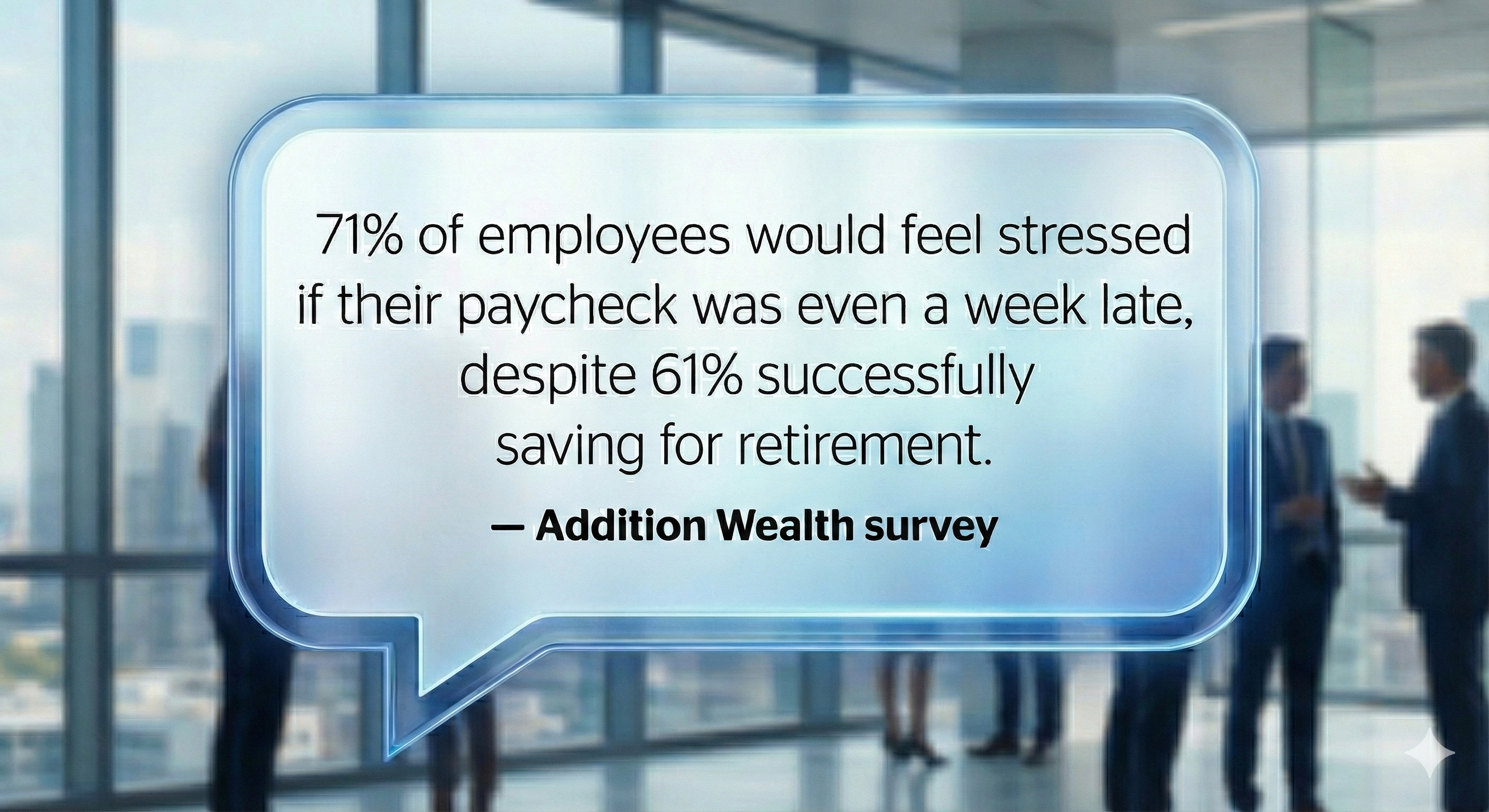
- Supporting data: Nearly 60% report moderate-to-high financial stress; 71% would be stressed by one-week pay delay.
- Source: Bullets generated by AI with editorial review
It takes more than money in the bank to establish peace of mind for today's employees.
Employees' financial stress is
In addition to building savings, employees require
"We have shifted from a world where people had one job for their whole lives, and that job would come with a pension that would enable them to manage their money well and know how they would be able to live in retirement," she says. "Now we've moved to a world of defined contribution, where individuals are responsible for paying for their daily financial needs, but also saving for their futures."
Read more:
On top of that, employees are dealing with the highest inflation expectancy since 1981, according to University of Michigan's Surveys of Consumers. Coupled with ongoing concerns about rising healthcare costs and job market uncertainty, it's no surprise that employees' emotions are running high. Plus, today's ever-growing number and types of product solutions made to help employees navigate these stressors can feel overwhelming, Mahony says.
"The challenge is layered on when the responsibility of navigating all of that and understanding, 'Am I making the best decisions for myself and for my family,' falls onto the individual, and they don't have the right financial support to feel great about how they get from A to Z," she says.
Democratizing financial guidance
Addition Wealth teams up with employers to help employees make sense of all their options, regardless of their life stage or financial situation. The platform gathers information provided by employees, as well as what other benefits are offered through the employer, and offers tailored insights through a combination of AI-driven technology and professionals, such as Certified Financial Planners and Certified Public Accountants.
For example, if an employee is managing student loan debt, Addition's tools can help them understand any associated employer offerings that may help them, or work out another type of plan so they take the most effective approach to repayment.
"Our goal is to bring personal financial expertise to the masses and ensure everybody can make the most out of every hard-earned dollar that they have," says Mahony. "We provide employees with access to digital tools, financial education, deep-dive programming on specific topics, and then unlimited access to financial advisors who act as fiduciaries on their behalf."
Read more:
The workplace is a perfect setting for financial education and support, and benefit leaders can capitalize on Addition's method of drawing in and communicating about their other offerings to employees, Mahony says. Its experts and resources can offer advice on everything from setting up emergency savings to investing in a company's equity options to navigating the financial aspect of major life changes such as large medical bills, inheritance, divorce or death.
The result is a win-win — employees fully understand the value of their benefits, and they are less stressed because they know they are making better decisions, she explains. Employees' family members can also take part in these interactions on the platform — an intentional approach since so much of an individual's financial situation is tied to their loved ones, Mahony says.
Read more:
"We love to support employees' understanding of how to maximize the value of [their] benefits," Mahony says. "The adviser can be prepped with that information … and when the employee shows up, they're served up the information that is helpful and relevant for them."
By offering a benefit that assists with so many areas of concern, employers can help their employees get on the path to a more stable, secure financial future — and engage in a healthier way with their work.
"Financial education should be integrated at every moment in time of someone's life," Mahony says. "When employers are able to support their employees with their financial needs, the employees' stress decreases, they have a better understanding of all the resources that they have access to, and they can check things off the list and go back to focusing on their jobs."