10 best cities for retirement
According to WalletHub research, these cities top the list in affordability, quality of life and healthcare.

Follow Us
© 2026 Arizent. All rights reserved.

According to WalletHub research, these cities top the list in affordability, quality of life and healthcare.
If an employer offers a match, employees should contribute at least enough money to get it.

Retirement expert Ted Benna’s new guide features three models that could appeal to businesses looking to simplify the savings process.

Workers want personalized, on-demand guidance offered through digital channels, a new Betterment for Business survey finds.
The average retirement age is 61, with only 4% of seniors working until the age of 70 or older, according to a Gallup survey.

According to WalletHub research, these places rank low in affordability, quality of life and healthcare.
The average retirement age is 61, with only 4% of seniors working until the age of 70 or older, according to a Gallup survey.

United Income, a new money manager backed by some of the biggest names in retirement, is pitching big data as a solution.
Between taxes and penalties on early withdrawals, many clients will only be getting 65 cents for every dollar they take out.

Certified planners can help employees wrangle complex money problems by addressing the root causes that are affecting work performance.
A lack of widespread auto-portability in the present U.S. retirement system is causing many plan sponsors to pay plan cash-outs to terminated employees.

Between taxes and penalties on early withdrawals, many people will only be getting 65 cents for every dollar they take out.

When it comes to establishing a robust retirement program, BP’s Cliff York relies on open communication, using current data to provide employees what they need to have success in their post-work years.

Each pre-retiree couple is in a unique circumstance, and needs to account for their health and longevity, as well as their willingness and ability to work.

A lack of widespread auto-portability in the present U.S. retirement system is causing many plan sponsors to pay plan cash-outs to terminated employees.
New data from United Benefit Advisors suggests that firms with fewer than 100 employees can compete for talent along with bigger companies.
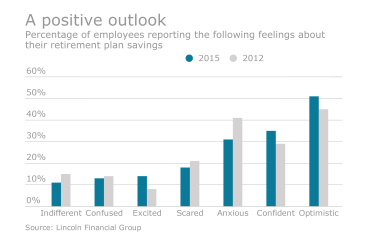
Staying in a plan’s qualified default investment alternative rebalances employee accounts and ensures age-appropriate allocations.

Certified planners can help employees wrangle complex money problems by addressing the root causes that are affecting work performance.
Employers need to help their workers understand and prepare for additional medical charges when they stop working.

Not tapping tax-deferred retirement accounts until the age of 70 1/2 can be a wrong move, as required minimum distributions can be big enough to push retirees to a higher tax bracket.