‘Put your money where your mouth is’: Employers stumble on what’s next for DEI
Despite vocal promises to improve diversity and inclusion in the workplace, discrimination is still rampant and employers aren’t doing enough to advance their efforts.

Follow Us
© 2026 Arizent. All rights reserved.

Despite vocal promises to improve diversity and inclusion in the workplace, discrimination is still rampant and employers aren’t doing enough to advance their efforts.
Over the past year, Black workers are more likely to say they’ve been treated more fairly, value their co-workers more and feel more supported by management.

Despite BLM, #MeToo and other movements for equality and justice, employers don't understand enough about the impact of neglecting DEI on company health.

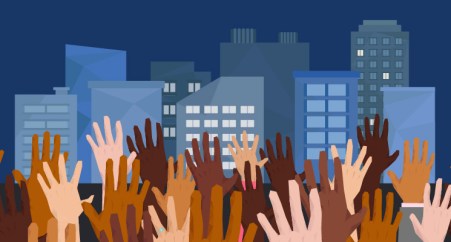
In an effort to diversify its workforce, the company hopes to reach this goal by 2025.

When helping BIPOC communities plan for their financial future, there is no “one-size-fits-all” approach.


In an effort to fast-track the hiring process, companies are considering cutting corners where they can.

Black, Hispanic, Asian, and other minority “Laborers & Helpers” accounted for 61% of the additional employees, the data show.
Women ranked the best companies to work for, based on factors like culture, representation and benefits.
A new survey by Indeed reveals that life is still not getting any easier for working parents.

Mari Kemp, senior vice president of Human Resources at Ease, recognizes her employees as people, not numbers.

Karsten Vagner, senior vice president of people at Maven Clinic, is creating an engaged and mindful company community.

The financial wellness platform hopes to help other minority groups build a solid financial foundation and bring more equity to the financial services industry.
Currently, only 23% of the company’s leaders are female.

Black and Latinx directors each hold about only 1% of board seats, with women at about 10%.

Don’t just assume your strategies are satisfying female employees — ask them.

Previously diversity and inclusion and mental health initiatives would live in separate corporate domains, but employers increasingly understand the inextricable link between these two issues.

Experts see generational and creative limitations, question fit for certain job categories and fear bias creeping into applicant vetting.

The lawsuit claims the work environment was “fraught with discrimination against women, including verbal and physical abuse.”
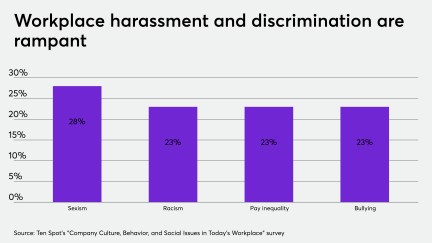
Despite an uptick in company-wide DEI initiatives across the board, unconscious bias is still running rampant.

Hiring more journalists of color helps newsrooms get away from homogeneous perspectives that can limit their audiences.