Ginger and Headspace announce mental health merger
The new platform, called Headspace Health, will provide accessible mental health support to more than 100 million people worldwide.

Follow Us
© 2026 Arizent. All rights reserved.

The new platform, called Headspace Health, will provide accessible mental health support to more than 100 million people worldwide.
Sonia Millsom, chief commercial officer at family-health startup Maven, shares insight on the growth of the market and the future of supportive workplaces.


Employers will need to reexamine how they offer healthcare benefits.


Major health systems, clinics and private practices alike pivoted swiftly to telemedicine during COVID-19, but video services were not equally prepared for the titanic influx in users.

Strategies for employers to leverage virtual care to ensure your vision benefits see peak utilization.

The lessons we’ve learned about telehealth over the past year point the way to a better healthcare delivery model for all of us.

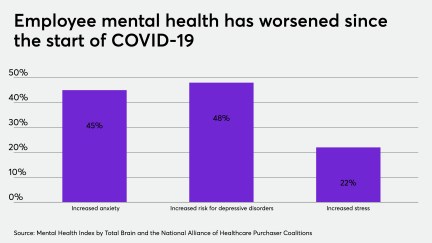
“There's going to be a long tail of mental health issues as we come out of the pandemic because the reasons that lead to these mental health increases are still there.”
The appeal of these companies has grown as employers increasingly seek to address a shortage of high-quality primary care and reduce spending on the health of their workforce.

Telehealth served as a lifeline for many during the pandemic, ramping up from a minority share of office visits to a majority, at least for a while. Still, it cannot replace hands-on care for some conditions.

The right tools and consumer-centered approach to health will help workers stay engaged – and keep them out of the hospital.

Why employers need to elevate virtual care strategies — and think beyond the best practices of 2020.

Employees already spend more than a third of their waking hours on a device, so why not meet them where they’re at by offering interactive, easy-to-access digital health and well-being options.

The use of telemedicine has surged as a result of COVID-19.

Telehealth can provide high-quality, high-value care, but the last year has also demonstrated that not all services are up to par.

Addressing drug and alcohol addiction needs to be a long-term strategy for employers.
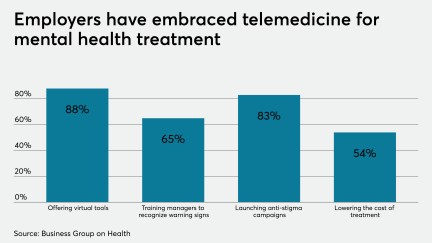
“We can see a future where over the next 10 years, most healthcare interactions will be online,” says Robin Glass, president of Doctor on Demand.

Amazon has various healthcare initiatives under way.
Employers should not turn to telemedicine or other digital solutions blindfolded. They should carefully assess what they aim to achieve and how these solutions will help them get there.

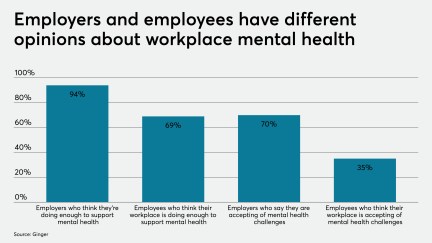
Managers need to be more vocal about their own mental health challenges to make treatment and support more accessible.
Telehealth benefits are an accessible way to offer benefits to at-risk employee groups.