Mental health: Top concerns, benefits to offer, and proven ROI

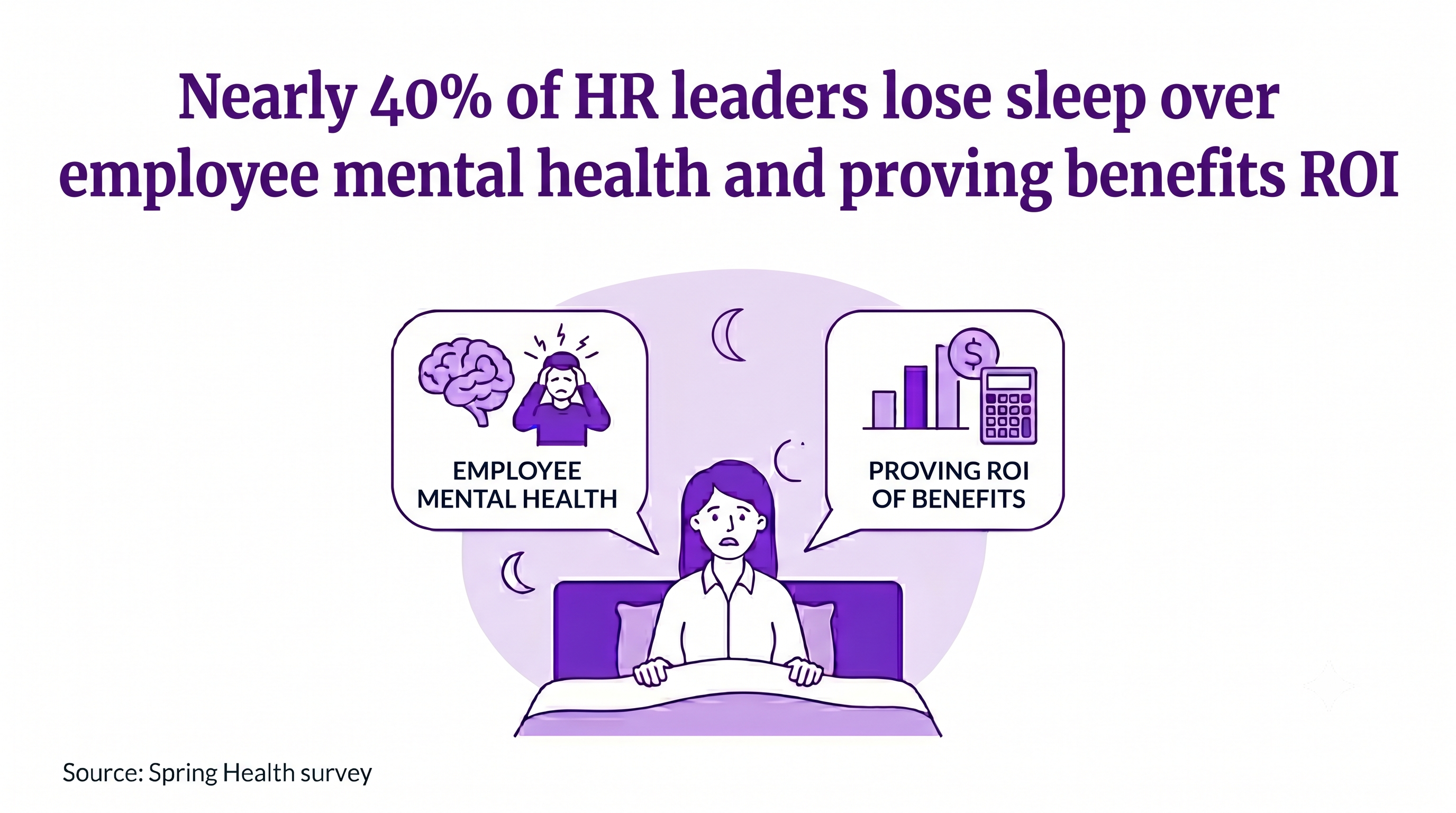
Infographic of mental health and benefits ROI concerns for HR professionals
Visualization created with AI assistance based on original reporting
  • Key insight: Learn how blending benefits and culture can deliver measurable ROI in mental-health outcomes.
  • What's at stake: Rising burnout and ROI pressure threaten workforce continuity and benefit budgets.
  • Supporting data: 95% of HR leaders prioritize mental health; only 9% report reduced health-plan spend.
    Source: Bullets generated by AI with editorial review

Processing Content

More than halfway through Mental Health Awareness Month and with plenty of time before open enrollment, benefit leaders can find a wealth of current information and advice on how to strengthen support for this area through their offerings.


Ninety-five percent of global benefit and HR professionals said mental health is an important part of their business strategy, according to a recent survey from digital mental wellness platform Spring Health. Yet only 9% said their strategy was reducing their health plan spend. Nearly 40% said pressure to prove ROI of benefits and a rising level of burnout and employee mental health concerns keeps them up at night. 

The effect of poor employee mental health on employers and workers themselves is devastating: The American Institute of Stress reports employee stress-related business losses of $300 billion, and "U.S. employees lost more than $1 trillion over five years due to mental health and substance use issues," according to a nationwide survey from Renaissance Recovery. 

By staying up to speed on current concerns, reassessing what they have in place and forming data-backed strategies that include benefits and cultural components, leaders can create more impactful mental health support, demonstrate business gains, and maybe get better sleep.

"When employees feel better and function better, they tend to use less medical care, are more focused and engaged at work, and are less likely to go on disability or remain on it for extended periods," said Dr. Jennifer Birdsall, chief clinical officer at EAP and mental health services provider ComPsych.

What's got employees stressed

Anxiety over AI, finances, personal safety and rising substance use are all major contributors to employees' mental health.  

Personal safety concerns
Whether walking to their cars or working on a job site alone, employees need to feel secure.   

"Nearly 70% of companies have reported a safety incident involving an employee working alone in the past three years, and one in five of these incidents were classified as quite or very severe," said Kenny Kelley, CEO of Silent Beacon, which makes wearable panic buttons. 

Read more: 

AI
The pressure to adapt to AI and fear of job loss has workers on edge. Employers should work to develop communication and training that boosts confidence among their workforce.

"It's starting to show up in very visible ways. Simultaneously, expectations are rising, and many employees don't feel supported. That imbalance is manifesting in concerning levels of anxiety and unhealthy coping mechanisms," said Alison Borland, chief people and strategy officer at Modern Health. 

Read more:  

Substance use
Nearly two-thirds of people suffering from a substance use disorder are employed, according to data from the Centers for Disease Control and Prevention — becoming a recovery advocate can help employers support employees and protect their bottom line. 

"These are topics that are taboo and they are not always talked about openly because they're not a visible or physical disability," said Zakia Natour, the director of people and talent at addiction and recovery platform Eleanor Health. "But if you don't give these employees a safe space to navigate what they're going through personally, they're unlikely to get treatment or the support they need."

Read more:   

Financial concerns
From rising fuel prices to childcare to retirement shortfalls, workers feel financial strain every day. Tapping into where they feel the most pressure can help leaders design the right kinds of support. 

"Concerns over macro trends like inflation or the job market seemed to have resulted in employees reducing contributions to workplace benefits, including 401(k)s and savings accounts," Craig Rubino, head of corporate relationship management and engagement at Morgan Stanley at Work, said in an email interview.

Read more: 

How and why to extract ROI

Mental health support is table stakes, yet more than a third of employees say they either lack access or aren't aware of any employer-provided resources. 

"Mental health becomes a workforce continuity issue when challenges surface longer leaves, delayed recoveries and more complex return-to-work experiences — making mental health a key driver of absence management, disability outcomes and workforce stability," wrote Andrew Stocker, President of employee benefits at Voya Financial, in a recent article for EBN.

Read more: 

Ways to get employees involved

From training employees to recognize signs of mental distress to engaging with the community to investing their time and HSA dollars, employees can be encouraged and empowered to prioritize mental health. 

"We're building people equipped enough to get those in need to either resources or next steps that they can take, and doing it free of cost," said Justin Goodman, founder of employee mental health training nonprofit Project55. 

Read more:  


For reprint and licensing requests for this article, click here.
Mental Health Employee benefits Wellness program ROI
MORE FROM EMPLOYEE BENEFIT NEWS
Load More