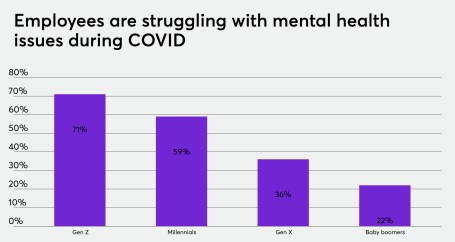
COVID mental health is a disaster for Gen Z and millennial employees
Mental health is in a free-fall for younger employees. An expert from The Standard shares what employers must do to help their workforce through these challenges.

Follow Us
© 2026 Arizent. All rights reserved.

Mental health is in a free-fall for younger employees. An expert from The Standard shares what employers must do to help their workforce through these challenges.
Brought about by an extended period of emotional exhaustion and chronic disappointment, pandemic fatigue represents a real threat to both the physical and mental health of our workforce and, ultimately, to our economy.

Achieving a pre-pandemic office culture may not be possible, but a new normal shouldn’t be daunting.


Nearly two-thirds of employees have left a job or want to leave their current job for the sake of their mental well-being.
Alex Iwanchuk helped launch CBD brand Feals to help consumers achieve wellness. But as an employer, he’s looking for ways to support his team’s mental health, too.


After bearing the brunt of layoffs last year, younger workers are now a covetable asset in a competitive talent market. And they want to know what a company stands for — and stands behind.

It may be beneficial for managers to share their own mental health challenges to get closer to their teams, says Gail Golden, an organizational psychologist.
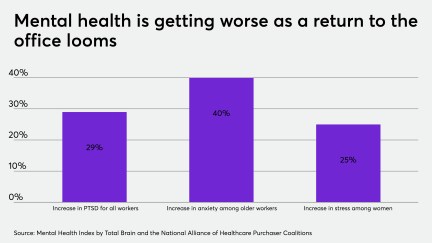
Stress, anxiety and depression levels are ramping back up after slight improvements earlier in the year.
Early adoptions of the program helped decrease musculoskeletal-related injuries by 32% from 2019 to 2020.
As the founder and CEO of mental health platform Real, Ariela Safira knows that rest is important. So she’s making sure her own employees get it.

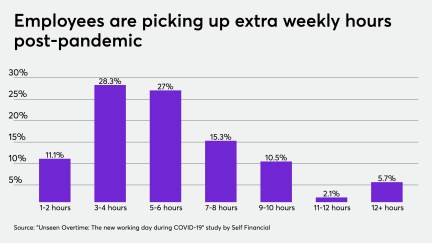
The biggest toll of unpaid overtime may not be the fiscal repercussions, but the psychological ones.
Younger employees are dealing with mental health and professional challenges that are making them reconsider their future plans.
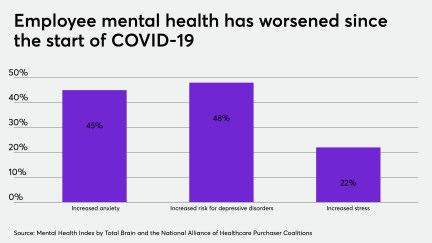
COVID-19’s damage may be felt in the workplace long after the disease has receded thanks to the mental and emotional toll the pandemic has taken on employees.

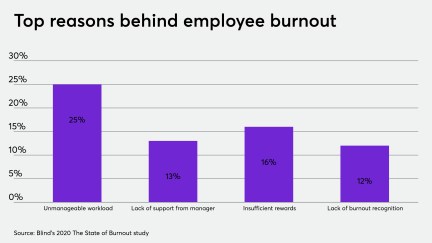
Large workloads and lack of job security are the top two factors adding to work-related stress.

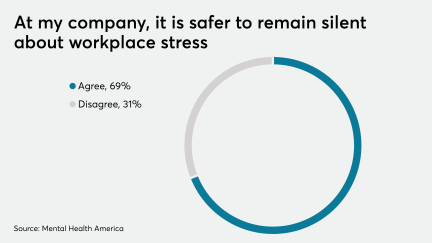
Adolescents and young adults may be getting sick at lower rates, but they’re still deeply affected by the impact of current events.
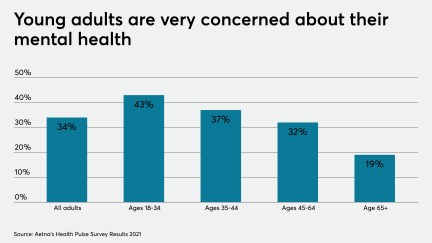
He wants to drive conversation around the post-pandemic work culture and hopes employers will implement a more-flexible approach.

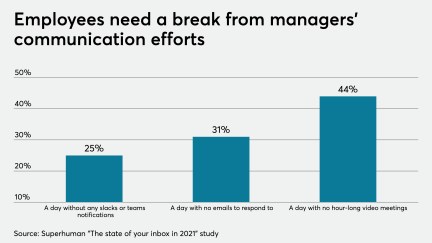
Managers feel the need to overcompensate due to remote work but it’s hurting their workforce.
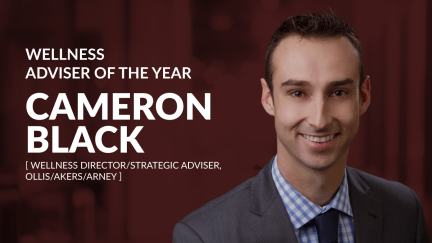
Black shares which wellness programs are essential for helping employees cope with challenges posed by the pandemic.
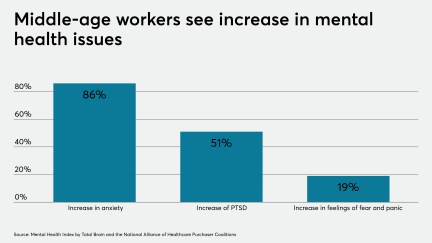
Middle-age employees have experienced an 86% increase in anxiety since the start of the pandemic.
Mental health issues impact individuals, families and organizations, but three critical steps to whole-person care can make a material difference.